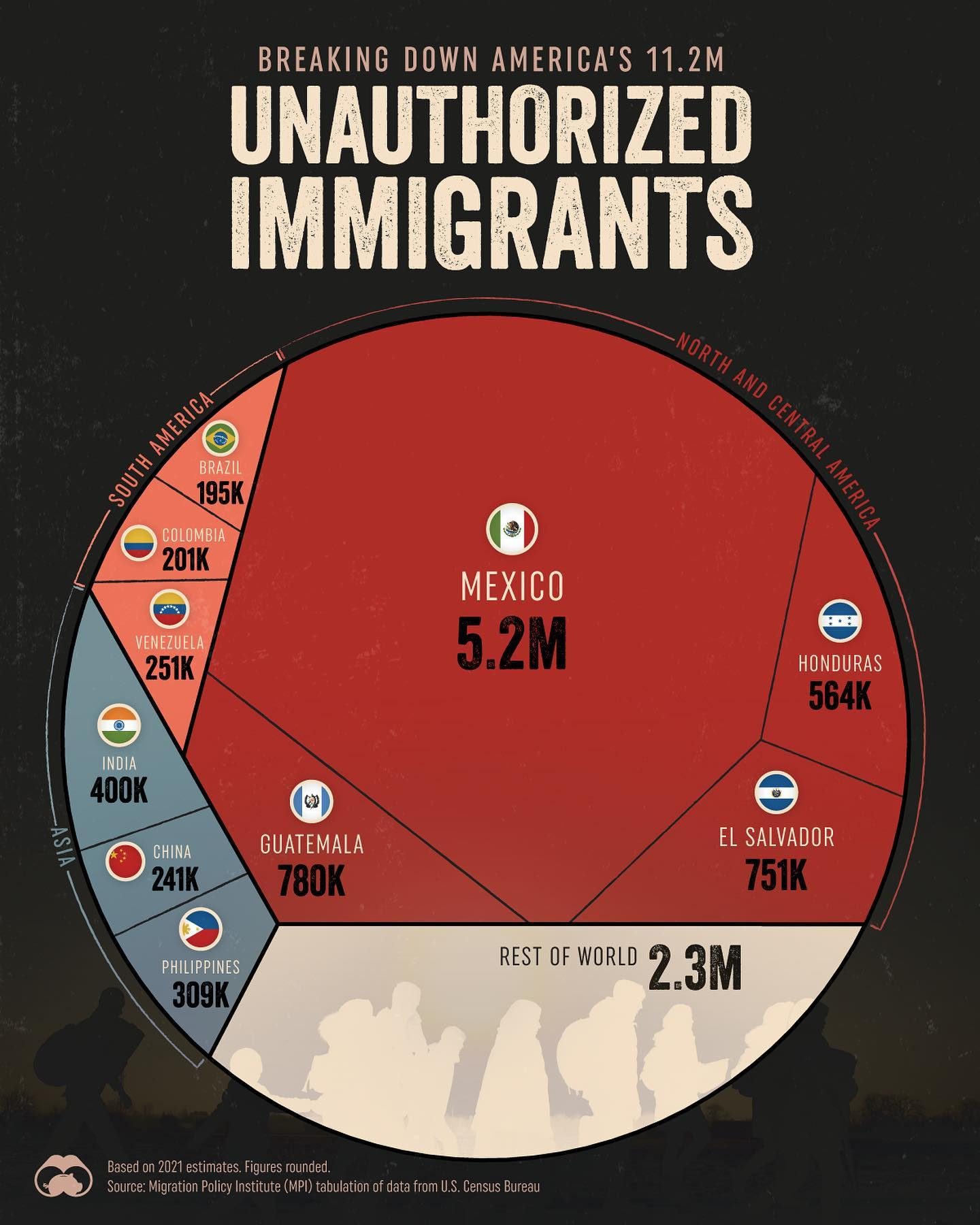
The Breakdown of America’s Unauthorized Immigrant Population by Country of Origin
Over 11.2 million immigrants currently reside in the U.S. without authorization, making up over a quarter of the country's total immigrant population. Mexico, Venezuela, and China are the top countries of origin, contributing 9.3 million of the 11.2 million unauthorized immigrants in the U.S.
Why This Matters
The unauthorized immigrant population in the U.S. is a significant component of the overall immigrant population. It plays a crucial role in shaping the country's demographic landscape, labor market, and social and economic policies. Understanding the geographical origins of these immigrants can provide valuable insights into migration patterns and the ongoing debates surrounding immigration reform.
Main Discussion
The Top Countries of Origin
Mexico, Venezuela, and China are the countries of origin for the largest unauthorized immigrant populations in the United States.
Mexico
Mexico is by far the top country of origin for unauthorized immigrants in the U.S. with a total of 5.2 million. Mexico’s share has declined by 32% since 2008, but it continues to be the most significant contributor to the unauthorized population.
Venezuela
Venezuela stands as the second-largest source of unauthorized immigrants in the U.S. with 251,000. This significant number reflects the ongoing political and economic instability in Venezuela, which has driven many of its citizens to seek refuge and better opportunities abroad.
China
China contributes 400,000 unauthorized immigrants to the U.S. This number is driven by a variety of factors, including economic opportunities, family reunification, and educational pursuits. China's large population and the allure of the U.S. as a destination for education, work, and business also contribute to this figure.
Other Notable Countries
Other countries, such as El Salvador, Guatemala, and Honduras, also contribute significantly to the unauthorized immigrant population. El Salvador has 751,000, Guatemala has 780,000, and Honduras has 564,000. These Central American countries have been affected by high levels of violence and poverty, prompting many of their citizens to seek refuge and better living conditions.
Regional Distribution
Looking at the regional distribution, South America, Asia, and North and Central America contribute significantly to the unauthorized immigrant population. South America, including countries like Brazil, Colombia, and Venezuela, has 547,000 unauthorized immigrants. Asia, with countries like China, India, and the Philippines, has 950,000. North and Central America, predominantly consisting of countries from the Northern Triangle, has 2,095,000.
The Role of Migration Trends
Migration trends and immigration policies play a significant role in shaping the unauthorized immigrant population. For example, the declining share of Mexican unauthorized immigrants can be attributed to stricter border controls and economic opportunities in Mexico, which have reduced the incentive for unauthorized migration.
Practical Tips
Understanding the Data
The data provided by the Migration Policy Institute (MPI) offers a comprehensive breakdown of the unauthorized immigrant population. It is important to understand the sources and methods used in compiling this data to gain a more accurate picture. The MPI’s tabulation of data from the U.S. Census Bureau ensures a high level of reliability and accuracy.
Policy Implications
Understanding the geographic origins of unauthorized immigrants can inform policy decisions. For instance, targeted programs aimed at reducing unauthorized immigration from specific countries or regions can be more effective than a one-size-fits-all approach.
Recognizing the Diversity
Recognizing the diversity among unauthorized immigrants is crucial. Different countries of origin may have unique needs and challenges, requiring tailored solutions and support.
Important Takeaways
- Mexico, Venezuela, and China are the leading countries of origin for unauthorized immigrants in the U.S.
- The unauthorized immigrant population is diverse, with significant contributions from various regions, including South America, Asia, and North and Central America.
- Migration trends and immigration policies play a significant role in shaping the unauthorized immigrant population.
- Understanding the geographic origins of unauthorized immigrants can inform effective policy decisions and targeted support programs.
Conclusion
The unauthorized immigrant population in the United States is a complex and dynamic issue, with significant contributions from various countries and regions. Understanding the geographic origins of these immigrants and the factors driving their migration can help inform policy decisions and targeted support programs. By recognizing the diversity and complexity of the unauthorized immigrant population, we can work towards more effective and humane solutions.
Watch the Reel
Questions readers ask
Why has the percentage of unauthorized immigrants from Mexico in the U.S. decreased since 2008?
Several factors have contributed to this decrease. Enhanced border security measures, stricter immigration enforcement, and economic improvements in Mexico have reduced the inflow of Mexican immigrants. Additionally, changes in U.S. immigration policies have influenced migration flows from Mexico.
Which countries are now significant contributors to the unauthorized immigrant population in the U.S.?
After Mexico, the next largest contributors are Venezuela and China. The number of Venezuelan unauthorized immigrants has risen due to political instability. Meanwhile, Chinese immigrants come to the U.S. seeking economic opportunities.
What is the total number of unauthorized immigrants currently residing in the U.S.?
The current estimated number of unauthorized immigrants in the U.S. is over 11.2 million, accounting for over a quarter of the country's total immigrant population.
How do unauthorized immigrants from different countries impact the U.S. labor market?
Unauthorized immigrants from various countries contribute to the U.S. labor market in diverse ways. They often take on jobs in sectors like agriculture, construction, and services, filling roles that are crucial to the economy. The skills and work ethic they bring can help drive certain industries, but they also pose challenges related to job competition and wage depression.
What are the main factors driving unauthorized immigration to the U.S. from Venezuela and China?
Venezuela's political instability and economic turmoil have been the primary drivers of unauthorized immigration to the U.S. from Venezuela. For China, economic opportunities and improved job prospects in the U.S. motivate many unauthorized immigrants.
What role does the unauthorized immigrant population play in shaping U.S. policies?
The unauthorized immigrant population significantly influences U.S. policies, especially in areas such as labor, social services, and immigration reform. Understanding the geographical origins and reasons for immigration can help policymakers create more informed and effective strategies to address issues related to unauthorized immigration.
Recent articles
Fresh deep dives from the latest Reels we unpacked.




Comments
Be the first to comment.