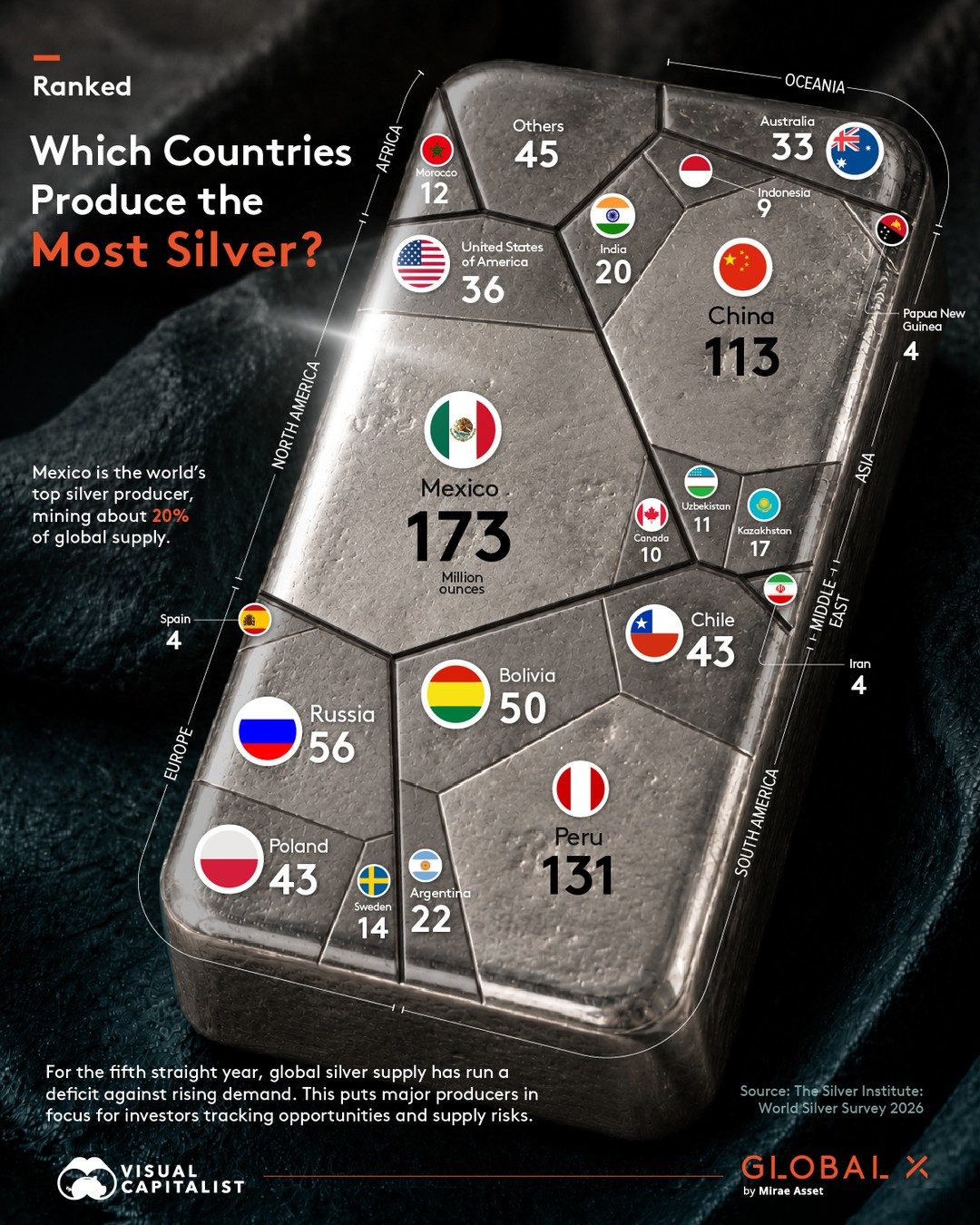
Silver Production by Country
Mexico stands as the world's leading silver producer, mining an impressive 173 million ounces in 2025. This represents nearly a fifth of the global silver supply, a critical statistic that underscores the country's dominance in the silver mining sector. Silver is a vital precious metal with diverse industrial and investment applications, making its supply dynamics a subject of significant interest.
Context / Why this matters
The concentration of silver production among a few major mining nations highlights the strategic importance of these countries in the global market. Mexico's leadership in silver production is not just a point of national pride but also a critical factor in the global supply chain. Understanding which countries produce the most silver helps shed light on the geopolitical and economic forces shaping the precious metals market.
Main discussion
Mexico's Silver Dominance
Mexico's prominence in silver production is well-documented. The country mines 173 million ounces of the metal in 2025. This figure represents about 20% of the total global silver supply, making Mexico the undisputed leader in this sector. This high production rate positions Mexico as a key player in the global market, influencing both supply and prices.
Other Major Silver-Producing Countries
While Mexico leads the pack, several other countries are significant contributors to the global silver supply.
-
China follows closely behind Mexico, producing 113 million ounces. China's robust mining industry and technological advancements make it a formidable player in the silver market. The country's production is driven by significant investments in mining infrastructure and a strong domestic demand for the metal.
-
Russia produces 50 million ounces of silver. Russia's silver production is supported by its vast mineral resources and a well-established mining sector. The country has been investing in expanding its mining capabilities to meet both domestic and international demands.
The Global Silver Supply Deficit
The global silver supply has been in a state of deficit for the fifth consecutive year. This persistent shortage underscores the growing demand for silver across various industries, from electronics and jewellery to renewable energy and medical applications. The deficit highlights the need for increased mining efforts and efficiency in extraction processes to balance the supply and demand equation.
Concentration of Silver Production
The concentration of silver production among a few countries raises questions about the stability and sustainability of the global silver supply. The top silver-producing nations—Mexico, China, and Russia—account for a significant portion of the world's supply. This concentration can lead to supply chain disruptions if any of these countries face political, economic, or environmental challenges.
Practical tips
For investors and industry stakeholders, understanding the global silver production landscape is crucial. Here are a few practical tips to navigate this market:
Diversify Investments
Due to the concentration of silver production, diversifying investments across different regions and mining companies can mitigate risks. Investing in countries with a strong mining regulatory framework and stable political environment can provide a buffer against potential disruptions.
Monitor Market Trends
Keeping an eye on global market trends, geopolitical developments, and industry reports can offer valuable insights. Factors such as changes in mining regulations, technological advancements, and shifts in global demand can influence the silver market significantly.
Explore Sustainable Practices
Supporting companies that prioritize sustainable mining practices is not only environmentally responsible but also financially prudent. Sustainable practices can lead to better long-term prospects for mining operations, ensuring a stable supply of silver.
Stay Informed on Supply Chain Dynamics
Staying informed about the supply chain dynamics, including production costs, logistics, and trade policies, can help in making well-informed decisions. Knowledge of these factors can provide a competitive edge in the market.
Important takeaways
- Mexico is the world's largest silver producer, mining 173 million ounces in 2025, representing about 20% of the global supply.
- China and Russia are the second and third-largest producers, with 113 million and 50 million ounces, respectively.
- The global silver supply is in a deficit for the fifth consecutive year, reflecting high demand and the need for increased production.
- The concentration of silver production among a few countries highlights potential risks and the importance of diversifying investments and staying informed about market trends.
- Sustainable mining practices and a deep understanding of supply chain dynamics are crucial for long-term success in the silver market.
Conclusion
Silver production is a critical aspect of the global precious metals market, with Mexico leading the way. Understanding the production dynamics and the supply chain concentrations is essential for investors, industry stakeholders, and policymakers. By staying informed and adopting strategic practices, one can navigate the complexities of the silver market effectively.
Watch the Reel
Questions readers ask
Which countries are the top producers of silver besides Mexico?
While Mexico is the leading producer, other top silver-producing countries include Peru, China, and Russia. These countries, along with Mexico, collectively account for a significant portion of the global silver supply, making them key players in the global market.
How does Mexico's silver production impact global prices?
Mexico's silver production can influence global prices due to its substantial output. Fluctuations in Mexico's production levels, whether due to mine output changes or geopolitical factors, can affect the overall supply and demand dynamics, potentially leading to price volatility in the silver market.
What are the primary uses of silver mined in Mexico?
Silver from Mexico is used in a variety of industries, including electronics, jewelry, and coins. Its applications in industrial processes and investments contribute to the metal's high demand, making Mexico's production crucial for maintaining a steady global supply.
What is the expected silver output from Mexico in 2025?
Mexico is projected to mine 173 million ounces of silver in 2025, which is nearly a fifth of the global silver supply. This output underscores Mexico's dominance in the global silver mining sector and its important role in the world's supply dynamics.
How does Mexico's silver production compare to other countries?
Mexico's silver production significantly outpaces that of other countries, with an output of 173 million ounces in 2025. This places Mexico firmly at the top of the list of global silver producers, ahead of countries like Peru, China, and Russia, which also have substantial silver mining industries.
What factors contribute to Mexico's leadership in silver production?
Mexico's leadership in silver production can be attributed to its rich mineral reserves, advanced mining technologies, and favorable geological conditions. The country's extensive mining infrastructure and skilled workforce also play a crucial role in maintaining its high output levels.
Recent articles
Fresh deep dives from the latest Reels we unpacked.




Comments
Be the first to comment.