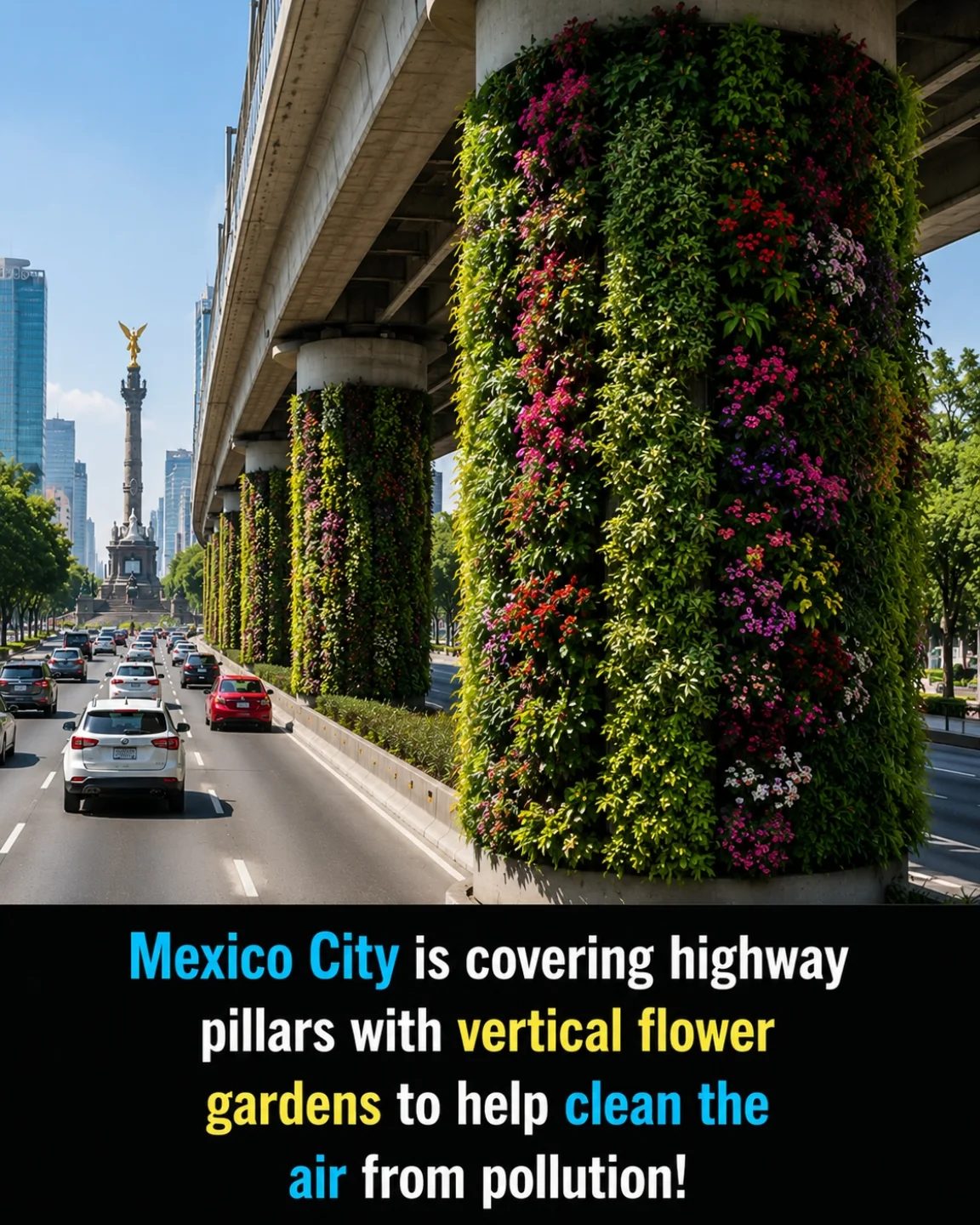
Vertical Flower Gardens in Mexico City
In the heart of Mexico City, an innovative environmental initiative is transforming the urban landscape. Highway pillars, once stark and utilitarian, are now adorned with vibrant vertical flower gardens. This unique project not only beautifies the city but also plays a crucial role in mitigating air pollution.
Context / Why this matters
Mexico City, like many large metropolitan areas, faces significant air pollution challenges. The city's vertical flower gardens initiative addresses this issue by integrating nature into the urban infrastructure. By covering highway pillars with lush greenery, the city aims to absorb pollutants and improve air quality. This approach is particularly effective in densely populated areas where space for traditional gardens is limited.
Main discussion
The concept of vertical gardens
Vertical gardens, also known as living walls or green walls, are gardens that grow upwards rather than outwards. They are designed to maximize the use of space in urban environments. Vertical gardens can be installed on building facades, walls, and even pillars, turning otherwise unused surfaces into green spaces.
Environmental benefits
The primary environmental benefit of vertical flower gardens is their ability to absorb pollutants. Plants naturally filter out harmful substances from the air, including nitrogen oxides, particulate matter, and other toxins. By strategically placing these gardens along highways, Mexico City is directly targeting one of the major sources of air pollution: vehicle emissions.
Urban aesthetics
Beyond their environmental benefits, vertical flower gardens significantly enhance the urban landscape. The vibrant colors and lush greenery create a visually appealing contrast to the concrete and metal of the cityscape. This not only improves the overall aesthetic but also creates a more pleasant and inviting environment for residents and visitors alike.
The scale of the project
The initiative in Mexico City is ambitious in scale. Highways are a dominant feature of the urban landscape, and by transforming their pillars into gardens, the city is making a substantial impact. This large-scale implementation highlights the city's commitment to environmental sustainability and urban beautification.
Practical tips
Starting a vertical garden
For those inspired by Mexico City's initiative, starting a vertical garden at home or in a community space can be a rewarding project. Here are some practical tips to get started:
- Choose the right location: Select a spot that receives adequate sunlight and has a stable, load-bearing structure to support the garden.
- Select appropriate plants: Opt for hardy, low-maintenance plants that can thrive in vertical environments. Succulents, ferns, and certain flowering plants are good choices.
- Install a watering system: Ensure your vertical garden has a reliable watering system, as vertical gardens can dry out more quickly than traditional gardens. Drip irrigation or automated watering systems are ideal.
- Use lightweight soil: Choose a lightweight, well-draining potting mix to prevent excessive weight and ensure healthy plant growth.
- Regular maintenance: Regularly prune and maintain your vertical garden to keep it looking its best and to prevent pests and diseases.
Community involvement
Community involvement is essential for the success and sustainability of vertical garden projects. Engaging local residents in the planning, implementation, and maintenance of these gardens fosters a sense of ownership and pride. Community workshops, volunteer programs, and educational sessions can help build enthusiasm and spread knowledge about the benefits of vertical gardening.
Important takeaways
- Vertical flower gardens offer a practical solution for improving air quality in urban areas.
- These gardens enhance the aesthetic appeal of cities, creating more pleasant and inviting environments.
- Initiatives like those in Mexico City demonstrate the feasibility of large-scale vertical gardening projects.
- Community involvement is crucial for the success and sustainability of vertical gardening initiatives.
- With the right planning and maintenance, vertical gardens can be a beautiful and beneficial addition to any urban landscape.
Conclusion
The vertical flower gardens initiative in Mexico City serves as a powerful example of how urban environments can be transformed into more sustainable and aesthetically pleasing spaces. By integrating nature into the urban infrastructure, cities can address environmental challenges while enhancing the quality of life for residents. This innovative approach offers a blueprint for other urban areas looking to improve air quality, beautify their landscapes, and foster community engagement through greening initiatives.
Watch the Reel
Questions readers ask
How do vertical gardens in Mexico City help reduce pollution?
Vertical gardens in Mexico City help reduce pollution by absorbing harmful particles and gases from the air through the plants. This process, known as phytoremediation, allows the plants to filter pollutants, improving air quality in the surrounding areas.
What are the main benefits of transforming highway pillars into living walls?
Transforming highway pillars into living walls provides several benefits. It enhances the city's aesthetics, reduces noise pollution, and creates a more enjoyable environment for commuters. Additionally, these vertical gardens help to cool the surroundings, mitigating the urban heat island effect.
How does Mexico City's vertical gardens initiative improve the urban landscape?
By turning highway pillars into vibrant vertical gardens, Mexico City's initiative adds a touch of nature to the urban landscape. This transformation not only improves the visual appeal of highways but also provides a more pleasant and engaging environment for residents and visitors alike.
What types of plants are typically used in Mexico City's vertical gardens?
The vertical gardens in Mexico City are designed to be hardy and resilient, given the urban environment. Native plants, as well as other species known for their air-purifying qualities, are often used. These plants are chosen for their ability to thrive in the specific conditions of the city, including exposure to pollution and varying weather.
How are the vertical gardens in Mexico City maintained?
Maintenance of the vertical gardens involves regular watering, pruning, and monitoring for pests or diseases. The city employs dedicated teams to ensure the health and longevity of these living walls, utilizing irrigation systems and manual care to keep the plants thriving.
What are the long-term goals of Mexico City's vertical gardens initiative?
The long-term goals of Mexico City's vertical gardens initiative include improving air quality, enhancing urban biodiversity, and creating a more sustainable and livable city. By expanding this project across more highways and urban areas, the city hopes to significantly reduce pollution levels and foster a greener environment.
Can vertical gardens in Mexico City be replicated in other cities?
Yes, the concept of vertical gardens can be replicated in other cities. However, the specific implementation may vary based on local climate, plant availability, and urban infrastructure. Cities interested in this approach should consider their unique environmental conditions and tailor the project accordingly.
Related deep dives
Similar reads based on topic and creator.




Recent articles
Fresh deep dives from the latest Reels we unpacked.




Comments
Be the first to comment.