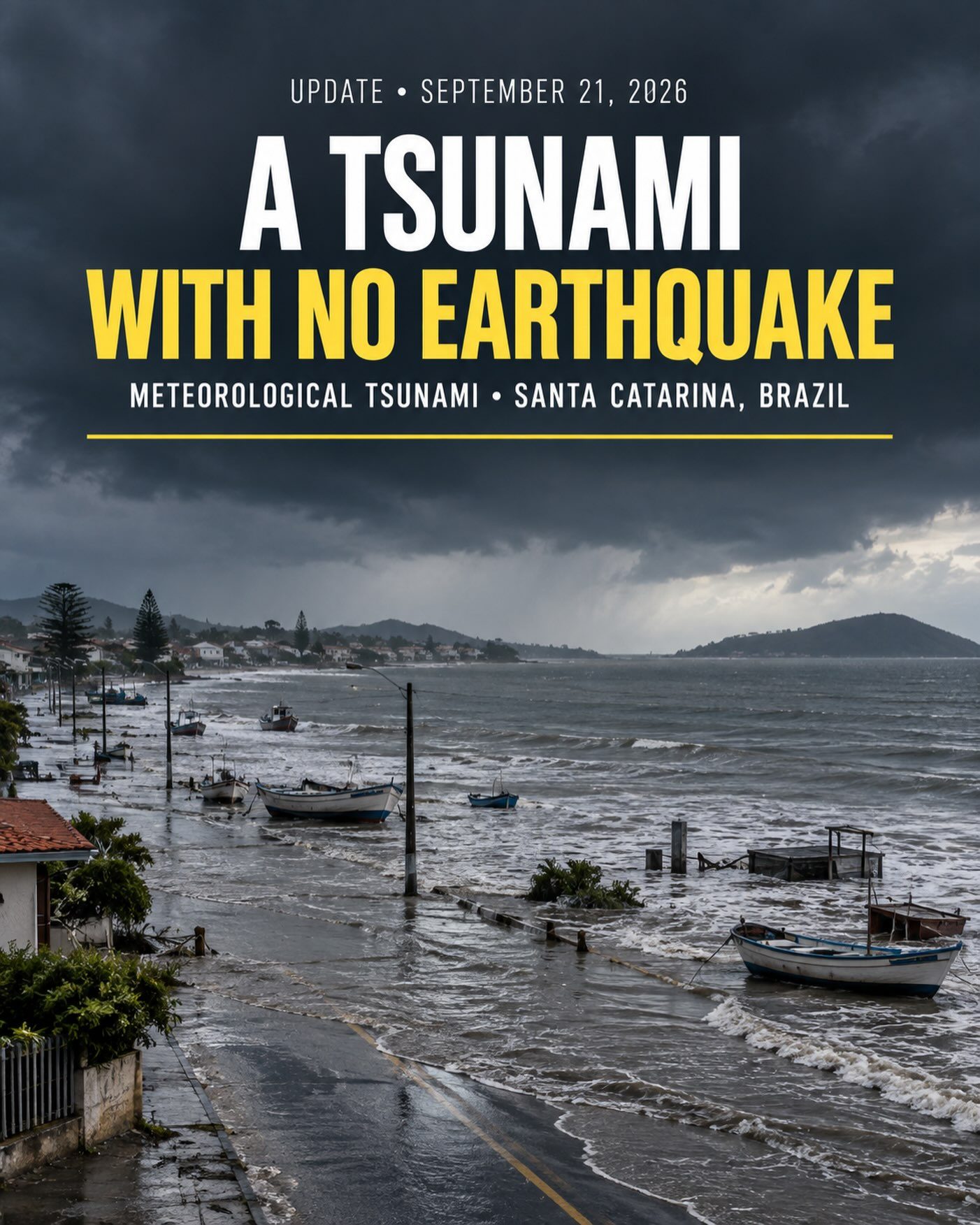
A Tsunami, but Not as Expected
In the coastal town of Santa Catarina, Brazil in 2026, a tsunami occurred. Unlike the typical tectonic tsunamis that occur after an earthquake, this event was meteorological – it was triggered solely by weather patterns, shattering expectations of coastal hazards. Meteo-tsunamis are smaller and less frequent than the better-known tectonic variety. That makes their study hard to incentivize, but in nations, like Brazil, where a considerable percentage of the population resides near the coasts, they are worthy of attention. Typically, tsunamis are characterized by their destructive power. They are usually caused by violent earthquakes; the sudden release of energy causes a massive shift in the ocean floor, sending tidal waves crashing onto the coast. However, this type of tsunami behaves differently. The meteorological tsunami in Santa Catarina is far from the common picture portrayed by Hollywood. These meteo-tsunamis gather strength not from the geological upheaval but from a combination of atmospheric disturbances, such as sudden changes in pressure and extreme weather events, like squalls or severe thunderstorms. A phenomenon like this illustrates the often overlooked capabilities of weather systems to wreak havoc. The tsunami in September 2026 in Santa Catarina, Brazil was a meteorological one. The water flooded the streets and reached the buildings, making it clear this was more than a typical flooding event. This phenomenon occurred without an earthquake, highlighting its meteorological nature.
The Unusual Culprit
Meteorological tsunamis are a rarer incidence, making fewer than 1% of their tectonic counterparts. This rarity comes from the nature of their formation. Unlike the geological tsunamis, meteorological tsunamis peak power is transient. A meteorological tsunami relies on weather events, such as squalls or severe thunderstorms. This means that the event can dissipate relatively quickly, and the area can recover without the lasting impact of a typical tsunami. The event in Santa Catarina was more like an extensive storm surge than the sustained destruction of a typical tsunami.
The Power of Weather
Water levels can rise as a result of the interplay between several factors, such as meteorological conditions and local geography. The sudden changes in air pressure are thought to push water onshore, especially in enclosed bays and harbors where water resonates, much as in a bathtub. The event highlights one peculiarity of meteorological tsunamis: they are likely to take place in confined waters. A sudden change in air pressure can alter the ocean surface height. Some of the key factors include wind direction and speed, the shape of the coast and the angle of the ocean floor. Compliance libraries related to accurate weather forecasts are essential for predicting and mitigating the risk of tsunamis. These are usually the result of a meteorological event, such as a squall or severe thunderstorm. These events result in rapid changes in atmospheric conditions, which, in turn, impact the ocean's surface. As a result, sea level surges have become more common in recent years. Thus, understanding these interactions is pivotal to predicting and mitigating the risk of tsunamis. In conclusion, the tsunami in Santa Catarina, Brazil occurred in the absence of an earthquake. But the storm surge created a set of conditions that can turn an ordinary storm into a catastrophic event. The tsunami in Santa Catarina, Brazil, serves as a reminder of the power of weather systems and the importance of preparedness in coastal communities.
Watch the Reel
Related deep dives
Similar reads based on topic and creator.
Recent articles
Fresh deep dives from the latest Reels we unpacked.
Comments
Be the first to comment.