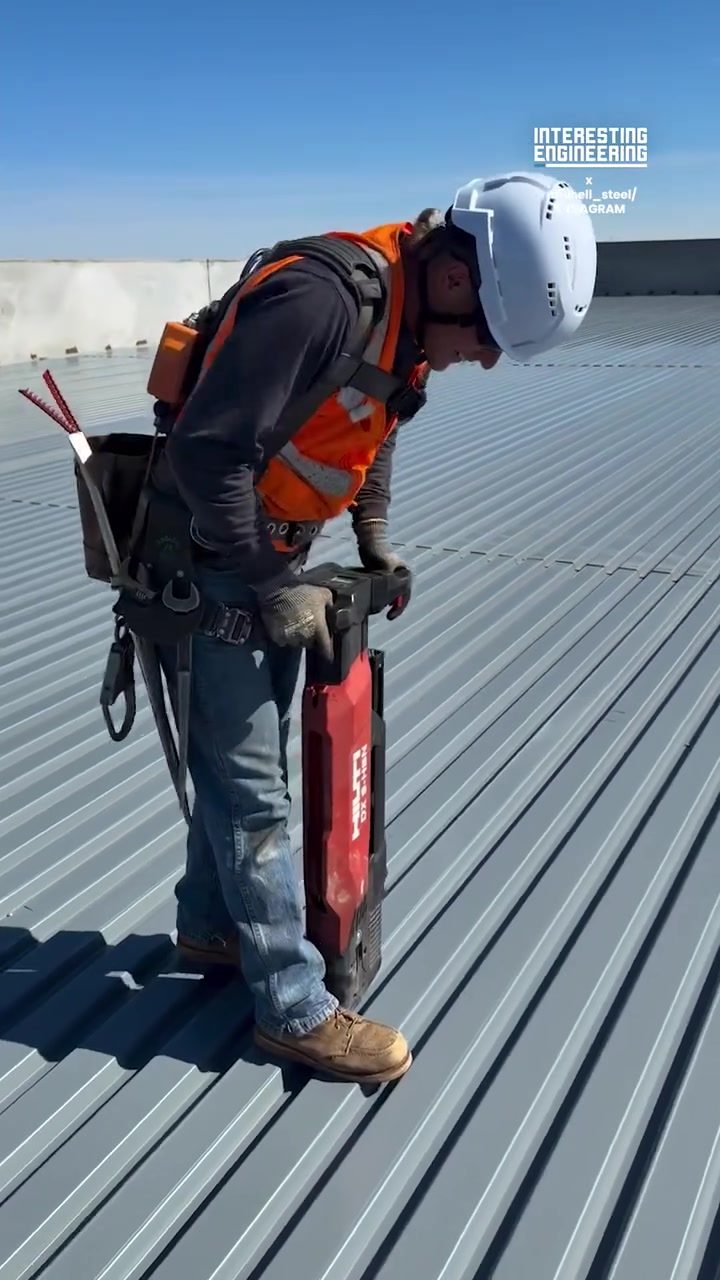
Metal Roofing Installation
Metal roofing systems are a durable and efficient choice for both residential and commercial buildings. The installation process requires specialized tools and a keen eye for detail to ensure a secure and long-lasting finish.
Context / Why This Matters
Metal roofing offers numerous benefits, including longevity, resistance to weather elements, and energy efficiency. Proper installation is crucial to maximize these advantages. Understanding the tools and techniques used in metal roofing installation can help homeowners and contractors make informed decisions about their roofing projects.
Main Discussion
Pneumatic Fastening Tools
One of the key tools highlighted in the installation process is the pneumatic fastening tool, often referred to as a nail gun. This heavy-duty tool is designed to punch nails through steel, providing a sturdy and secure attachment for metal roofing panels. The use of pneumatic tools significantly speeds up the installation process and ensures that the nails are driven in uniformly, which is essential for the roof's overall stability.
Safety Gear
Safety is paramount when working on a roof. The installation process involves working at heights and handling heavy materials, making it crucial to use appropriate safety gear. This includes hard hats, safety glasses, gloves, and tool belts to keep all necessary equipment within reach. By following these safety measures, workers can minimize the risk of accidents and ensure a smooth installation process.
Installation Process
The installation of a metal roofing system involves several steps. First, the underlayment is laid on the roof deck to provide a watertight barrier. Next, the metal panels are aligned and secured using the pneumatic fastening tool. It's important that the panels are properly overlapped and attached with nails at specific intervals to ensure a tight, watertight seal. Special attention is given to the edges and corners, where additional sealing may be necessary to prevent leaks.
Roofing Panels
The choice of metal roofing panels can vary depending on the building's architectural style and the homeowner's preferences. Common types of metal roofing panels include standing seam, corrugated, and metal shingles. Each type has its own installation specifications, and the panel type will influence the fastening technique. For example, standing seam panels require clips and specialized fasteners to allow for thermal movement, while corrugated panels are typically fastened directly to the deck with nails or screws.
Practical Tips
-
Choose the Right Tools: Invest in high-quality pneumatic fastening tools specifically designed for metal roofing. These tools will make the installation process more efficient and ensure a secure attachment.
-
Install Underlayment: Always install a proper underlayment before laying the metal panels. This will provide an additional layer of protection against water infiltration and enhance the roof's insulation properties.
-
Follow Manufacturer Guidelines: Each type of metal roofing panel comes with specific installation guidelines. Follow these instructions closely to ensure proper installation and to maintain the manufacturer's warranty.
-
Ensure Proper Ventilation: Adequate ventilation is essential for preventing moisture buildup and extending the lifespan of your roof. Consider installing soffit vents and ridge vents to promote airflow.
-
Regular Maintenance: Conduct regular inspections to identify and address any issues early. Look for signs of wear, corrosion, or damage, and address them promptly to maintain the roof's integrity.
Important Takeaways
Metal roofing installation is a specialized task that requires the right tools, knowledge, and safety measures. By understanding the installation process and following best practices, you can ensure a secure and long-lasting metal roof. Always prioritize safety and use high-quality tools to achieve the best results.
Conclusion
Metal roofing systems offer a reliable and long-lasting solution for protecting your building. By using specialized tools like pneumatic fastening tools and adhering to safety guidelines, the installation process can be efficient and effective. Whether you're a homeowner or a contractor, investing in the right tools and following best practices will ensure that your metal roofing project is a success.
Watch the Reel
Questions readers ask
What are the key benefits of choosing metal roofing over traditional materials?
Metal roofing offers several advantages, including exceptional durability, resistance to weather elements, and energy efficiency. It can last up to 50 years or more with minimal maintenance, making it a cost-effective choice in the long run. Additionally, metal roofing can help reduce energy costs by reflecting heat away from the building.
What is the significance of using a pneumatic fastening tool in metal roofing installation?
Pneumatic fastening tools, such as nail guns, are crucial for securing metal panels efficiently and accurately. They ensure that the panels are fastened at the correct depth and angle, preventing leaks and ensuring a secure finish. Additionally, these tools make the installation process faster and more efficient.
Why is proper roofing underlayment important in metal roofing installation?
Roofing underlayment serves as a secondary layer of protection against water infiltration. It helps to protect the roof deck and provides an additional barrier in case of any panel damage or lifting. Proper underlayment also helps to meet building code requirements and ensures the longevity of the roofing system.
What safety precautions should be taken during metal roofing installation?
Safety is paramount during metal roofing installation. Workers should use appropriate safety gear, including gloves, safety glasses, and non-slip footwear. Fall protection is also essential, and workers should be trained to use this equipment properly. Additionally, proper ventilation should be ensured when working with adhesives or paints.
What are the advantages of a well-executed metal panel fastening technique?
A secure metal panel fastening technique ensures that the roof is watertight and can withstand harsh weather conditions. Proper nailing and placement of fasteners prevent panel movement, reducing the risk of leaks and damage. Additionally, a well-executed fastening technique enhances the overall appearance and durability of the roof.
Can metal roofing installation be a DIY project for homeowners?
While it is possible for experienced DIY enthusiasts to tackle metal roofing installation, it is generally recommended to hire a professional. Metal roofing installation requires specialized tools, precise techniques, and knowledge of safety protocols. Improper installation can lead to leaks, reduced efficiency, and potential damage to the building. Before attempting a DIY project, homeowners should thoroughly research and assess their capabilities.
What are some common mistakes to avoid during metal roofing installation?
Common mistakes include overdriving or underdriving nails, not using the correct type of fasteners, and improperly placing panels. Additionally, failing to ensure proper ventilation, not using appropriate safety gear, and neglecting to follow manufacturer guidelines can lead to problems. Careful attention to detail and adherence to best practices can help avoid these pitfalls.
Recent articles
Fresh deep dives from the latest Reels we unpacked.




Comments
Be the first to comment.