Metal Recycling Rates: A Comprehensive Look
Metal recycling is a critical process that not only conserves natural resources but also reduces the environmental impact of mining and production. Understanding the recycling rates of various metals provides insights into their sustainability and the efficiency of current recycling practices. This article delves into the recycling rates of select metals, highlighting the factors that influence these rates and the importance of recycling in a circular economy.
Context: Why Metal Recycling Matters
Metal recycling is essential for several reasons. Firstly, it conserves finite natural resources by reducing the need for raw material extraction. Secondly, it lowers the energy consumption and greenhouse gas emissions associated with mining and processing virgin materials. Lastly, it helps in managing waste and reducing landfill usage.
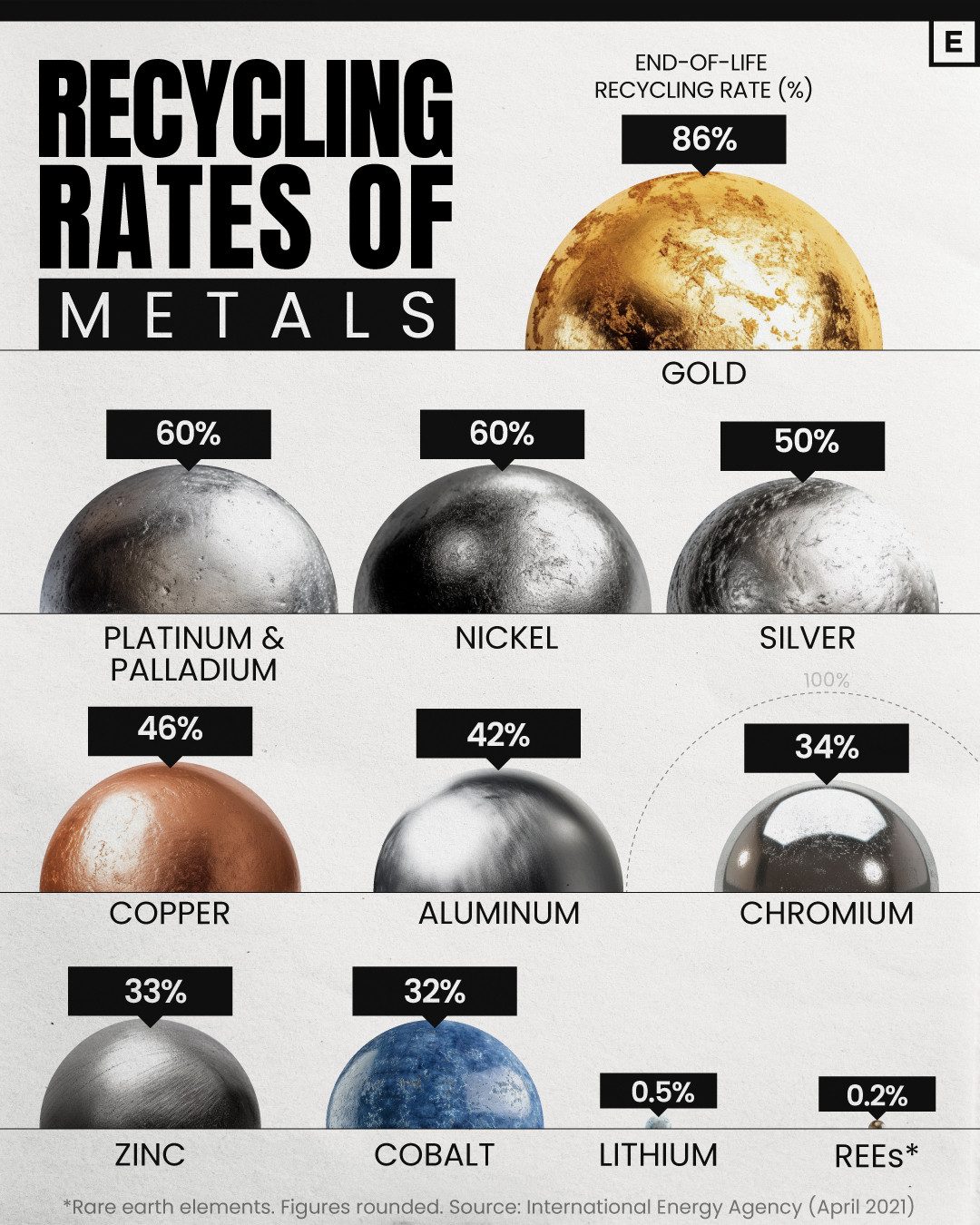
The recycling rates of metals vary significantly based on factors such as their value, demand, and the availability of recycling infrastructure. Metals with high value, like gold, and those with widespread use, like steel, typically see higher end-of-life recycling rates. This is why gold, for instance, has a remarkable 86% recycling rate — it is commonly reused in jewelry and electronics.
Main Discussion
High-Value Metals
High-value metals are often recycled at higher rates due to the economic incentives they present. The recycling rates for some of the most valuable metals are as follows:
Gold
Gold stands out with an impressive 86% recycling rate. Its value and widespread use in jewelry, electronics, and other applications make it a prime candidate for recycling. The high demand for gold ensures that a significant portion of it is reused, reducing the need for new mining activities.
Platinum and Palladium
Platinum and palladium follow gold closely with a 60% recycling rate. These metals are primarily used in catalytic converters for automobiles, as well as in jewelry and electronics. Their high value and the established recycling infrastructure contribute to their relatively high recycling rates.
Silver
Silver has a 50% recycling rate. Similar to gold and platinum, silver is extensively used in jewelry, electronics, and industrial applications. Its versatility and value make it a popular choice for recycling.
Industrial Metals
Industrial metals, while not as valuable as precious metals, are still crucial for various industries. Their recycling rates are influenced by their widespread use and the availability of recycling facilities.
Nickel
Nickel has a 60% recycling rate. It is primarily used in stainless steel production, batteries, and other industrial applications. Its widespread use and the established recycling infrastructure contribute to its high recycling rate.
Copper
Copper has a 46% recycling rate. This metal is extensively used in electrical wiring, plumbing, and various industrial applications. Copper's high conductivity and durability make it a valuable material for recycling.
Aluminum
Aluminum has a 42% recycling rate. It is widely used in packaging, construction, and transportation. Aluminum's lightweight and recyclable properties make it a popular choice for various industries. However, aluminum has a lower recycling rate than copper due to contamination and the complexity of separating different types of aluminum.
Specialty Metals
Specialty metals are used in niche applications and often have lower recycling rates due to limited demand and the lack of specialized recycling infrastructure.
Chromium
Chromium has a 34% recycling rate. It is primarily used in stainless steel production and chrome plating. The specialized nature of its applications and the lack of recycling infrastructure contribute to its lower recycling rate.
Zinc
Zinc has a 33% recycling rate. It is used in galvanizing, batteries, and alloys. Despite its widespread use, zinc's recycling rate is relatively low due to the complexity of extracting it from end-of-life products.
Emerging Metals
Emerging metals, such as lithium and rare earth elements (REEs), present unique challenges for recycling due to their scarcity and the complexity of their applications.
Lithium
Lithium has a very low recycling rate of 0.5%. It is primarily used in batteries for electric vehicles and portable electronics. The rapid growth in demand for lithium-based batteries has outpaced the development of recycling infrastructure, resulting in a very low recycling rate.
Rare Earth Elements (REEs)
Rare earth elements have a 0.2% recycling rate. These elements are used in a wide range of high-tech applications, including electronics, magnets, and renewable energy technologies. The low recycling rate is due to the complexity of separating and purifying REEs from end-of-life products.
Practical Tips for Improving Metal Recycling
Improving metal recycling rates requires a multi-faceted approach that involves individuals, industries, and governments. Here are some practical tips:
For Individuals
-
Separate and Recycle: Make sure to separate recyclable metals from other waste and dispose of them properly. Many communities have specific guidelines for recycling metals.
-
Repurpose and Refurbish: Consider repurposing or refurbishing metal items to extend their lifespan before recycling them.
-
Buy Recycled: Support products made from recycled materials to create demand for recycled metals.
For Industries
-
Invest in Recycling Infrastructure: Industries should invest in developing and improving recycling technologies to increase the efficiency of metal recycling.
-
Promote Circular Economy: Implement circular economy practices that focus on reuse, repair, and recycling of metals.
-
Collaborate with Recyclers: Work with recycling companies to ensure that metals are properly collected and recycled.
For Governments
-
Implement Regulations: Enforce regulations that mandate the recycling of certain metals and hold industries accountable for their waste management practices.
-
Provide Incentives: Offer financial incentives for recycling metals to encourage participation from both industries and individuals.
-
Fund Research: Invest in research and development to improve recycling technologies and find more efficient ways to recycle metals.
Important Takeaways
-
High-Value Metals: Metals like gold, platinum, and silver have high recycling rates due to their economic value and widespread use.
-
Industrial Metals: Metals like nickel, copper, and aluminum have moderate recycling rates due to their extensive use in various industries.
-
Specialty and Emerging Metals: Metals like chromium, zinc, lithium, and REEs have lower recycling rates due to their specialized applications and the lack of recycling infrastructure.
-
Importance of Recycling: Recycling metals is crucial for conserving natural resources, reducing energy consumption, and minimizing environmental impact.
Conclusion
Understanding the recycling rates of various metals provides valuable insights into their sustainability and the efficiency of current recycling practices. While metals like gold and platinum have high recycling rates, others like lithium and REEs face significant challenges. Improving metal recycling requires a concerted effort from individuals, industries, and governments. By promoting recycling, investing in infrastructure, and implementing regulations, we can enhance the sustainability of metal use and contribute to a more circular economy.
Watch the Reel
Questions readers ask
What are the primary benefits of metal recycling?
Metal recycling conserves finite natural resources by reducing the need for mining. It also lowers energy consumption and greenhouse gas emissions associated with mining and production, making it a key process in minimizing environmental impact.
What factors influence the recycling rates for metals like gold and platinum?
The recycling rates for high-value metals like gold and platinum are significantly influenced by their economic value and demand. These metals are often recycled from electronic waste and catalytic converters, where valuable metals can be extracted and reused.
How do recycling rates for metals like aluminum and copper compare to those for precious metals?
Aluminum and copper have high recycling rates, but they are typically lower than those for precious metals like gold or platinum. This is due to the widespread use of aluminum and copper in various industries. Both have established recycling infrastructure, making them relatively easy to recycle.
Why is it important to consider the end-of-life stage in metal recycling?
The end-of-life stage is crucial in metal recycling as it determines how efficiently metals can be recovered and reused. Proper waste management and recycling infrastructure at this stage can significantly increase recycling rates and reduce waste.
How do international efforts impact global metal recycling rates?
International efforts play a significant role in improving global metal recycling rates. Collaborations between countries can enhance recycling technologies, infrastructure, and policies, leading to better metal recovery and reuse. These efforts are vital for creating a circular economy where metals are continually recycled.
What are the recycling rates for nickel and chromium?
Nickel and chromium have moderate recycling rates, driven by their use in stainless steel and other alloys. Nickel has a recycling rate of around 50-60%, while chromium is often recycled as part of stainless steel, with rates averaging 20-30%.
Are there specific industries that benefit the most from metal recycling?
The automotive and electronics industries benefit significantly from metal recycling. These industries rely on metals like copper, aluminum, and precious metals (e.g., gold, platinum, and palladium) for their products. Efficient metal recycling helps these industries reduce costs and maintain a steady supply of raw materials.
Related deep dives
Similar reads based on topic and creator.


Recent articles
Fresh deep dives from the latest Reels we unpacked.




Comments
Be the first to comment.