Mental Health Among Entrepreneurs
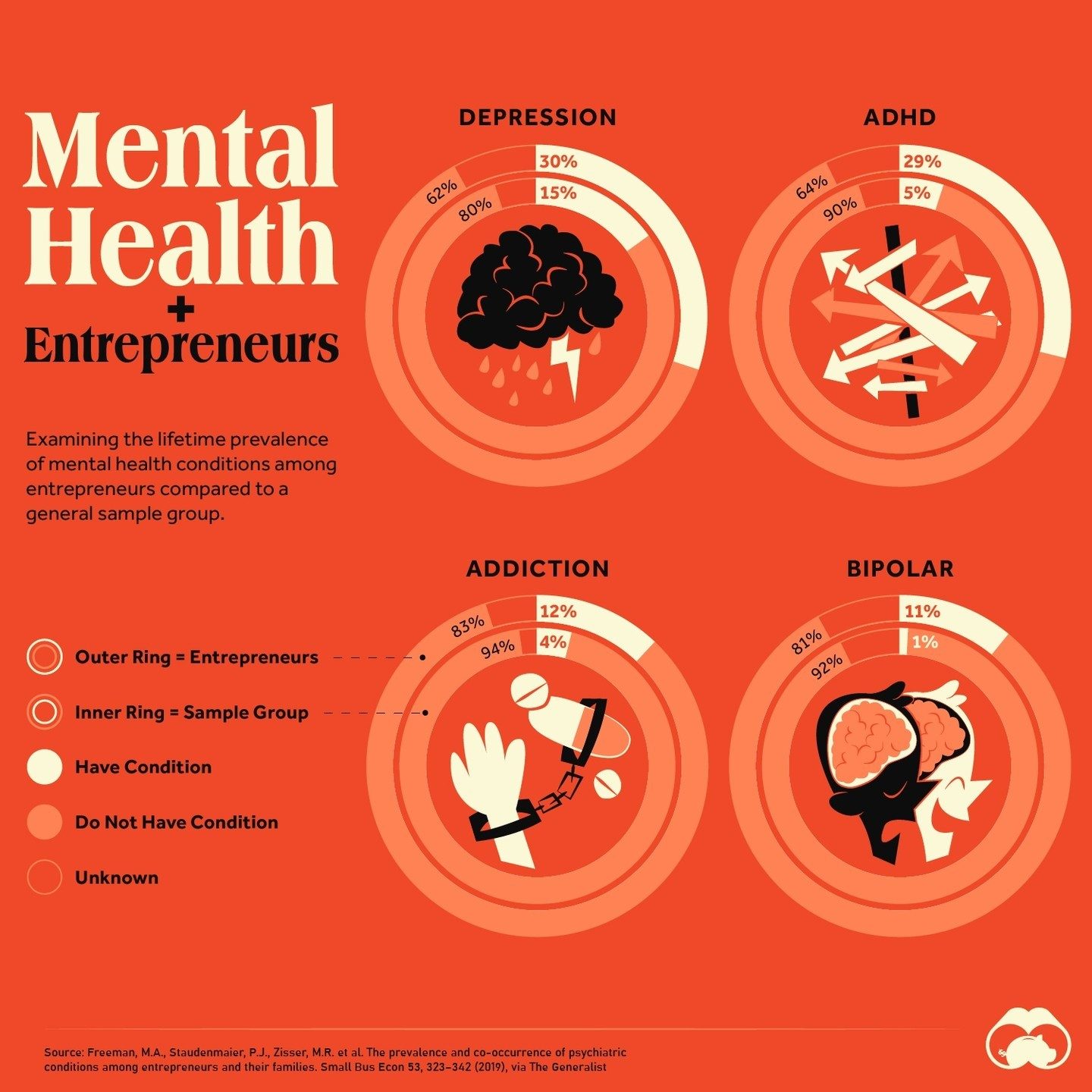
The relationship between entrepreneurship and mental health is a multifaceted one, shaped by the unique challenges and rewards of starting and running a business. Entrepreneurs are often hailed for their risk-taking, persistence, and creativity, but these traits can also make them more susceptible to mental health issues. Neurodivergence, which encompasses natural differences in brain function among individuals with conditions such as autism, ADHD, dyslexia, and bipolar disorder, is prevalent among successful entrepreneurs. This is highlighted by a 2019 study, which reveals that entrepreneurs experience mental health and addiction issues more frequently than the general public and have a higher prevalence of these illnesses in their families.
Context / Why This Matters
Understanding mental health among entrepreneurs is crucial for several reasons. Entrepreneurship is a high-risk, high-reward venture that can lead to significant financial and personal gains. However, it also exposes individuals to intense stress, long working hours, and constant decision-making. These factors can exacerbate existing mental health conditions or trigger new ones. Additionally, the stigma surrounding mental health in the entrepreneurial community can prevent individuals from seeking help, leading to a cycle of untreated conditions that can impact both personal well-being and business performance.
Main Discussion
Prevalence of Mental Health Conditions
The stark contrast in mental health conditions between entrepreneurs and the general population is evident in various areas. Entrepreneurs show a higher prevalence of depression, with 83% experiencing it compared to 62% in the general sample group. This disparity is significant, considering the emotional toll that depression can take on an individual's ability to function effectively in a high-pressure environment.
ADHD, characterized by impulsivity, inattention, and hyperactivity, is also more prevalent among entrepreneurs. With 94% of entrepreneurs diagnosed with ADHD compared to 90% in the general population, this condition can be both a strength and a challenge. While it can fuel creativity and drive, it can also lead to difficulties in focusing and managing time effectively.
Addiction rates are also higher among entrepreneurs, with 12% experiencing addiction issues compared to 4% in the general population. The pressures of entrepreneurship, combined with the need to make constant decisions and take risks, can lead to the misuse of substances or behaviors as coping mechanisms.
Bipolar disorder, which involves extreme mood swings, is also more common among entrepreneurs, with 11% experiencing this condition compared to 1% in the general population. The emotional rollercoaster of starting a business can exacerbate the symptoms of bipolar disorder, making it difficult for entrepreneurs to maintain a stable emotional state.
Factors Contributing to Mental Health Issues
Several factors contribute to the higher prevalence of mental health issues among entrepreneurs. The constant need to innovate and take risks can be emotionally draining, leading to feelings of anxiety and stress. Furthermore, the lack of a structured environment and the need to wear multiple hats can result in burnout. The isolation that often comes with entrepreneurship, particularly for solo entrepreneurs or those leading small teams, can exacerbate feelings of loneliness and depression. The high levels of uncertainty and the constant need to adapt to changing circumstances can also take a toll on mental health.
Entrepreneurs often face financial instability, particularly in the early stages of their ventures. This instability can lead to financial stress, which in turn affects mental health. The stigma surrounding mental health in the entrepreneurial community can also prevent individuals from seeking help, leading to a cycle of untreated conditions. Additionally, the pressure to succeed and the fear of failure can be overwhelming, further contributing to mental health issues.
Practical Tips
Given the unique mental health challenges faced by entrepreneurs, it is crucial to develop strategies to mitigate these issues. Here are some practical tips:
Seek Professional Help
One of the most important steps entrepreneurs can take is to seek professional help. Mental health professionals can provide the necessary support and treatment to manage conditions such as depression, ADHD, addiction, and bipolar disorder. It's essential to find a mental health provider who understands the unique challenges of entrepreneurship and can offer tailored support.
Establish a Support Network
Entrepreneurs often work in isolation, which can lead to feelings of loneliness and depression. Establishing a support network of peers, mentors, and family members can provide emotional support and a sense of community. Joining entrepreneurial groups or attending networking events can also help build a support system.
Practice Self-Care
Self-care is essential for maintaining mental health. This includes regular exercise, a healthy diet, and adequate sleep. Entrepreneurs should also make time for hobbies and activities that they enjoy, which can help reduce stress and improve overall well-being. Mindfulness practices such as meditation and yoga can also be beneficial.
Set Boundaries
Setting boundaries is crucial for maintaining a healthy work-life balance. This includes setting clear work hours, taking regular breaks, and delegating tasks when necessary. By setting boundaries, entrepreneurs can prevent burnout and reduce the risk of mental health issues.
Important Takeaways
Entrepreneurship, while rewarding, can take a significant toll on mental health. The high prevalence of mental health conditions among entrepreneurs underscores the need for increased awareness and support. By seeking professional help, establishing a support network, practicing self-care, and setting boundaries, entrepreneurs can manage their mental health more effectively.
Conclusion
The relationship between entrepreneurship and mental health is complex and multifaceted. The unique challenges and pressures of entrepreneurship can lead to a higher prevalence of mental health issues. However, by understanding these challenges and implementing practical strategies, entrepreneurs can mitigate the risks and maintain their mental well-being. It's crucial to break the stigma surrounding mental health in the entrepreneurial community and encourage open conversations about these issues. By doing so, entrepreneurs can create a supportive environment that fosters both personal and professional growth.
Watch the Reel
Questions readers ask
Are entrepreneurs more likely to experience mental health issues than the general public?
Yes, entrepreneurs face a higher prevalence of mental health issues due to the unique stresses and demands of entrepreneurship. A 2019 study highlighted that entrepreneurs experience mental health and addiction issues more frequently than the general public, making it a significant concern in the entrepreneurial community.
How does neurodivergence play a role in entrepreneurship?
Neurodivergence, including conditions like autism, ADHD, dyslexia, and bipolar disorder, is common among entrepreneurs. These natural differences in brain function can contribute to the creativity, risk-taking, and persistence often associated with successful entrepreneurship. However, they can also present unique challenges and contribute to mental health struggles.
What are some common mental health challenges faced by entrepreneurs?
Entrepreneurs often face a range of mental health challenges, including high rates of depression and anxiety. The stress of running a business, financial uncertainties and the constant need to make high-stakes decisions, can all take a toll. This can lead to burnout, substance abuse and addiction, and other mental health issues.
How does the family history of entrepreneurs relate to their mental health?
Entrepreneurs often have a higher prevalence of mental health illnesses in their families. This genetic predisposition, combined with the stresses of entrepreneurship, can increase the likelihood of an entrepreneur experiencing similar mental health issues.
What support systems are available for entrepreneurs struggling with mental health?
There are various support systems available for entrepreneurs, including therapy, support groups, and coaching services tailored to their unique needs. Many organizations offer resources and communities specifically for entrepreneurs, providing a safe space for them to discuss their challenges and seek help.
How can entrepreneurs manage their mental health while running a business?
Entrepreneurs can manage their mental health through self-care practices such as exercise, mindfulness, and maintaining a healthy work-life balance. Seeking professional help, setting boundaries, and building a support network can also make a significant difference in managing the stresses of entrepreneurship.
What are some signs that an entrepreneur may be struggling with their mental health?
Signs that an entrepreneur may be struggling include increased irritability, changes in sleep patterns, loss of interest in activities they once enjoyed, and decreased productivity. If an entrepreneur is experiencing persistent feelings of sadness, anxiety, or hopelessness, it is important to seek professional help.
Recent articles
Fresh deep dives from the latest Reels we unpacked.




Comments
Be the first to comment.