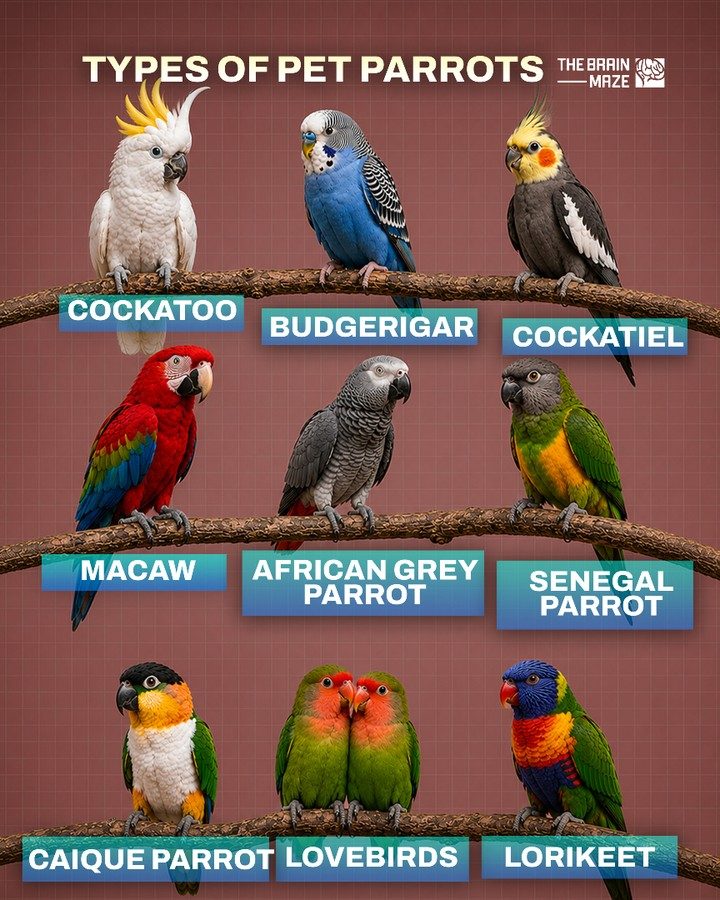
The Fascinating World of Pet Parrots
Pet parrots are a diverse and captivating group of birds, each species offering unique characteristics, behaviors, and care requirements. From the playful budgerigar to the majestic macaw, these birds can form strong bonds with their owners and thrive with the right environment and care.
Why This Matters
Understanding the different types of pet parrots is crucial for anyone considering welcoming one of these intelligent and social birds into their home. Each species has distinct needs, from dietary requirements to social interaction and enrichment activities. Knowing these specifics can help ensure a happy, healthy life for your feathered companion.
Types of Pet Parrots
Budgerigar (Parakeet)
Budgerigars, also known as parakeets, are small, lively birds native to Australia. They are popular for their playful nature, long lifespan, and ability to mimic sounds. Typically, they range from 6.5 to 7.5 inches (16-19 centimeters) in length. Budgerigars are social birds and thrive in pairs or small groups, making them ideal for families.
Cockatiel
Cockatiels are known for their affectionate and gentle nature. Native to Australia, these medium-sized parrots are about 12 to 14 inches (30-35 centimeters) long. They are beloved for their crests, which can be raised or lowered to express different emotions. Cockatiels are also known for their ability to learn tricks and simple words, making them enjoyable pets.
African Grey Parrot
The African grey parrot is renowned for its high intelligence and exceptional talking abilities. These birds, originating from the African rainforests, can live up to 50 years or more with proper care. African greys are typically about 13 inches (33 centimeters) in length and require a lot of mental stimulation to keep them happy and healthy.
Macaw
Macaws are large, vibrant parrots native to Central and South America. Known for their striking colors and remarkable intelligence, macaws can live for 50 to 70 years. These birds need plenty of space, both in their cage and for daily exercise, as well as a variety of toys and activities to keep them stimulated. Commonly kept macaws include the blue and gold macaw and the scarlet macaw.
Senegal Parrot
The Senegal parrot is a small to medium-sized bird from Africa, typically around 8 to 9 inches (20.5-23 centimeters) long. Senegal parrots are known for their friendly and playful demeanor. They are also quite intelligent and can learn tricks and mimic sounds. Keep in mind that these birds can be nippy and may require consistent handling to socialize.
Caique Parrot
Caiques are small, short-tailed parrots from South America, measuring about 7.5 to 9 inches (19-23 centimeters) in length. They are known for their energetic and playful nature, which makes them entertaining pets. Caiques are also known for their ability to form strong bonds with their owners and are quite affectionate.
Lovebirds
Lovebirds are small, colorful parrots from Africa, typically around 5 to 6 inches (13-15 centimeters) long. They are known for their monogamous nature and strong pair bonds. Lovebirds are social birds and do best when kept in pairs or small groups. They are also known for their energetic and playful behavior.
Cockatoo
The cockatoo is a large, social parrot with a distinctive crest on their head. These birds, native to Australia and Indonesia, are known for their loud and repetitive calls. Cockatoos can live for 50 to 80 years, making them a long-term commitment. They require plenty of attention, mental stimulation, and social interaction to stay healthy and happy.
Lorikeet
Lorikeets are small to medium-sized parrots with a distinctive, brush-tipped tongue. These birds are known for their vibrant colors and playful nature. Native to Southeast Asia, Australia, and the South Pacific, lorikeets are highly social and thrive in groups. They also have a unique diet, as they primarily feed on nectar and pollen.
Care and Maintenance
Diet and Nutrition
A balanced diet is crucial for the health and well-being of pet parrots. Most parrots require a diet rich in fruits, vegetables, and high-quality pellets. Avoid seeds and nuts as the primary diet, as they are high in fat and lack essential nutrients. Always consult a vet for specific dietary needs.
Housing
The size and type of cage are essential for your parrot's well-being. Larger birds like macaws and cockatoos need spacious cages with plenty of room for toys and perches. Smaller birds like budgies and lovebirds can thrive in smaller cages, but they still need ample space for movement and play.
Mental Stimulation
Parrots are highly intelligent and need constant mental stimulation to stay healthy and happy. Provide a variety of toys, puzzles, and foraging activities to keep them engaged. Rotate toys regularly to maintain their interest.
Social Interaction
Many parrot species are social animals and require regular interaction with their owners. Spend time playing, talking, and training with your parrot to build a strong bond. Regular handling and positive reinforcement training can also help keep your parrot tame and well-behaved.
Important Takeaways
Choosing the right parrot species for your lifestyle and home environment is crucial. Each type of pet parrot has unique needs and behaviors, and understanding these differences can help ensure a happy and healthy life for your feathered companion.
Conclusion
Pet parrots are fascinating birds with diverse personalities, intelligence, and care needs. From the playful budgies to the majestic macaws, each species offers a unique experience. With the right environment, care, and nutrition, these birds can form strong bonds with their owners and thrive for many years.
Watch the Reel
Questions readers ask
What makes pet parrots unique and interesting as companions?
Pet parrots are unique because of their intelligence and strong social bonds. They have a unique ability to mimic human speech and understand complex concepts, such as solving puzzles or navigating a maze. Each species has distinct behaviors, like the playful antics of a budgerigar or the gentle affection of a cockatiel.
What are the dietary needs of pet parrots?
Pet parrots require a balanced diet that includes pellets, fresh fruits, and vegetables. The specific mix of these foods can vary depending on the species. For instance, African grey parrots need a higher proportion of pellets, while macaw species benefit from plenty of fruits and nuts.
How do the social needs of pet parrots vary among species?
Pet parrots are generally very social creatures. Some, like the budgerigar, can be content with a few hours of interaction per day, while others, like cockatiels, need more extensive social interaction and can become lonely if left alone for too long. Owners should research the specific needs of their chosen parrot type to ensure they can provide the right amount of interaction.
What types of enrichment activities do pet parrots need?
Pet parrots need mental and physical stimulation to stay healthy and happy. This can include toys, puzzles, and foraging activities that mimic their natural behaviors. For example, a parrot maze can provide hours of entertainment and mental exercise.
Why is it important to understand the unique needs of different parrot species?
Understanding the unique needs of different parrot species is crucial for their well-being. Each type has specific requirements for diet, social interaction, and environment. Providing the right care can prevent behavioral issues and health problems, ensuring a happier, healthier pet.
How can I determine which species of parrot is the right fit for me?
Consider your lifestyle and the amount of time you can dedicate to your pet. For instance, if you're a busy individual, a budgerigar might be a good fit due to their lower demands for social interaction. If you have more time, a cockatiel or African grey parrot might be more suitable. Research each species to determine their specific needs and behaviors, and make an informed decision.
What are the differences between budgerigar care (budgie) and cockatiel care as pets?
Budgerigars, or budgies, are smaller and generally require less space than cockatiels. They also need less social interaction, with a few hours of playtime per day being sufficient. Cockatiels, on the other hand, are larger and need more time outside of their cage for exercise and interaction. Both species benefit from a diet of pellets, fruits, and vegetables, but cockatiels may need a higher proportion of pellets.
Recent articles
Fresh deep dives from the latest Reels we unpacked.




Comments
Be the first to comment.