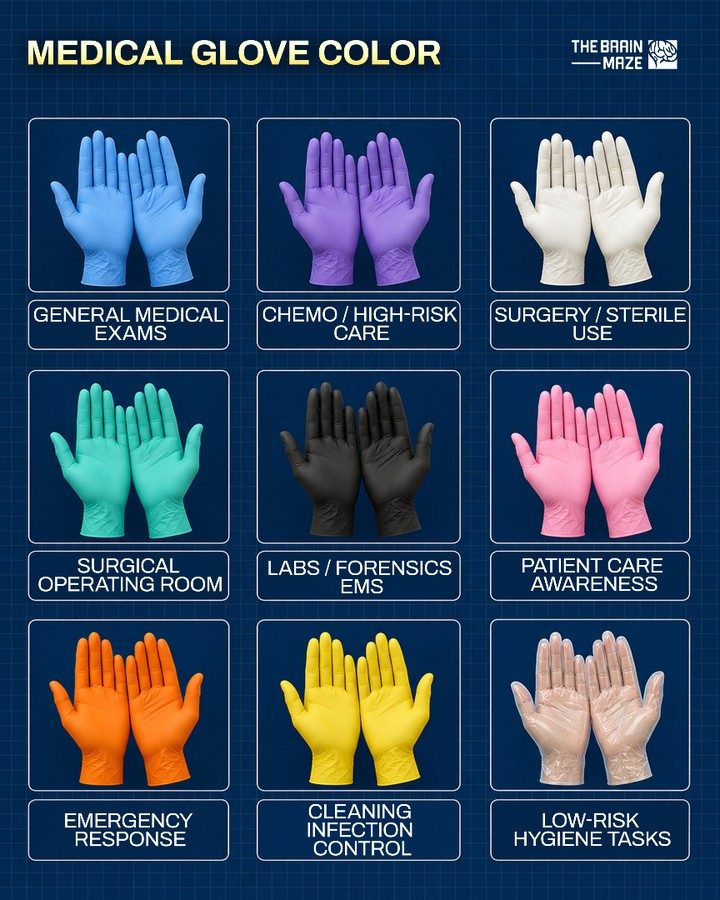
Medical Glove Color Coding
Medical gloves are essential in healthcare settings, serving as a crucial barrier against infection and contamination. Their colors, often standardized, help healthcare professionals quickly identify the appropriate glove for specific tasks. Understanding these color codes can enhance efficiency and safety in medical environments.
Why This Matters
In healthcare, every second counts, and using the correct gloves can prevent mistakes and ensure patient safety. The color-coding system provides a swift visual cue for gloves' intended use, minimizing the risk of cross-contamination and enhancing overall hygiene protocols. This system is particularly critical in environments where multiple tasks are performed, such as in surgical settings or emergency response situations.
Main Discussion
General Medical Exams
Blue gloves are the most commonly used in general medical exams. These gloves are designed for routine patient care, such as taking vital signs, administering medication, or conducting physical examinations. Their widespread use makes them easily recognizable and accessible in most healthcare facilities.
High-Risk Care and Chemotherapy
Purple gloves are often reserved for high-risk care situations, including chemotherapy treatment. These gloves are designed to protect healthcare professionals from exposure to highly hazardous chemicals, ensuring they remain safe while providing care to patients undergoing chemotherapy.
Surgery and Sterile Procedures
White gloves are typically used in surgical settings and for sterile procedures. These gloves are often made from latex or synthetic materials, providing a high level of protection and dexterity needed for precise surgical tasks. White gloves are also a standard in clean operating rooms, where maintaining sterility is paramount.
Surgical Operating Rooms
Green gloves are commonly used in surgical operating rooms. These gloves are designed to offer a range of benefits, including durability, flexibility, and resistance to punctures. These characteristics make them ideal for use in surgical settings where precision and dexterity are crucial, and where the risk of contamination from blood and bodily fluids is high.
Forensics, Labs, and EMS
Brown gloves are often used in forensic investigations and laboratory work. These gloves are designed to provide a high level of protection against potential contaminants and hazards, making them suitable for handling evidence or conducting tests in a controlled environment.
These gloves are also popular among emergency medical services (EMS) personnel, who need robust protection while attending to patients in various emergency situations.
Patient Care Awareness
Pink gloves are used to raise awareness about patient care. These gloves are often worn by healthcare professionals to emphasize the importance of hygiene and patient safety. They serve as a visual reminder of the need for thorough hand hygiene and the proper use of personal protective equipment.
Emergency Response
Orange gloves are used in emergency response situations. These gloves are designed to be highly visible, making them easily identifiable in chaotic environments. They are often used by first responders, who need to act quickly and efficiently while maintaining a high level of protection.
Cleaning and Infection Control
Black gloves are frequently used for cleaning and infection control. These gloves are designed to withstand harsh cleaning chemicals and provide a high level of protection against pathogens. They are commonly used in situations where deep cleaning and disinfection are required, such as in hospital rooms after patient discharge.
Low-Risk Hygiene Tasks
Yellow gloves are typically used for low-risk hygiene tasks, such as handling food or conducting non-invasive procedures. These gloves are often made from lightweight, disposable materials, making them ideal for tasks that do not require a high level of protection but still necessitate basic hygiene measures.
Patient Care Awareness
White and yellow gloves are often used interchangeably in tasks that do not require a high level of protection. These gloves are commonly used for tasks such as handling food or conducting non-invasive procedures. White gloves are commonly used for tasks such as cleaning the hands of patients.
Practical Tips
- Always check the color-coding chart in your healthcare facility to ensure proper use.
- Double-check the glove type before handling any patient to avoid contamination or misuse.
- If unsure, consult with your supervisor or refer to facility protocols.
- Maintain a clean and well-organized supply of gloves in designated areas to ensure ease of access.
Important Takeaways
- Consistency: Use the appropriate gloves consistently to maintain a high standard of hygiene and safety.
- Awareness: Be aware of the color-coding system and its importance in preventing cross-contamination.
- Training: Regular training and updates on color-coding standards can enhance adherence and compliance.
- Accessibility: Ensure that gloves are easily accessible and well-organized in all healthcare settings to facilitate quick and appropriate use.
Conclusion
Medical gloves come in a variety of colors, each serving a distinct purpose in healthcare settings. From general medical exams to high-risk procedures, the color-coding system helps healthcare professionals quickly identify the appropriate gloves for specific tasks. This system enhances efficiency, safety, and overall patient care, making it an essential aspect of modern healthcare practices.
Watch the Reel
Questions readers ask
What do different medical glove colors signify?
Medical glove colors serve as visual indicators for their intended use. For example, blue gloves are typically used for non-sterile procedures, while green gloves might be used for food handling or specific tasks. It is important for healthcare professionals to be familiar with the color codes used in their specific setting.
Why is it important to use the correct glove color in healthcare settings?
Using the correct glove color ensures that healthcare professionals have the appropriate barrier protection for the task at hand. This practice minimizes contamination risks, enhances hygiene, and maintains patient safety. It is especially crucial in settings like surgery or emergency response.
What colors are commonly used for surgical gloves?
Surgical gloves are often sterile and can be color-coded for easy identification. Common colors for surgical gloves include white, blue, and green. Each color may indicate different features, such as powder-free gloves or specific material types, to suit the needs of the surgical procedure.
How can understanding glove colors improve efficiency in medical environments?
Understanding glove colors allows healthcare professionals to quickly select the right gloves for specific tasks. This reduces time spent searching for the correct gloves and helps prevent errors that could compromise patient safety or hygiene standards, especially in fast-paced environments.
Are there standardized colors for gloves used in exams?
While there is no universal standard for exam glove colors, many healthcare facilities use specific colors to distinguish exam gloves from other types. For instance, latex gloves might be blue, while nitrile gloves could be green. It's essential to follow the specific guidelines of the healthcare facility or region.
What should I do if I am unsure about the glove color code in my healthcare facility?
If you are unsure about the glove color codes in your facility, consult your facility's glove use guidelines or ask a supervisor or colleague. It is important to ensure you are using the correct gloves for the task to maintain safety and hygiene standards. Different facilities may have varying color codes.
Do glove colors indicate the material type?
In some cases, glove colors can indicate the material type. For example, latex gloves might be blue, while nitrile gloves could be green. However, this can vary by manufacturer and facility. It is important to check the specific guidelines of your healthcare setting for accurate information.
Recent articles
Fresh deep dives from the latest Reels we unpacked.




Comments
Be the first to comment.