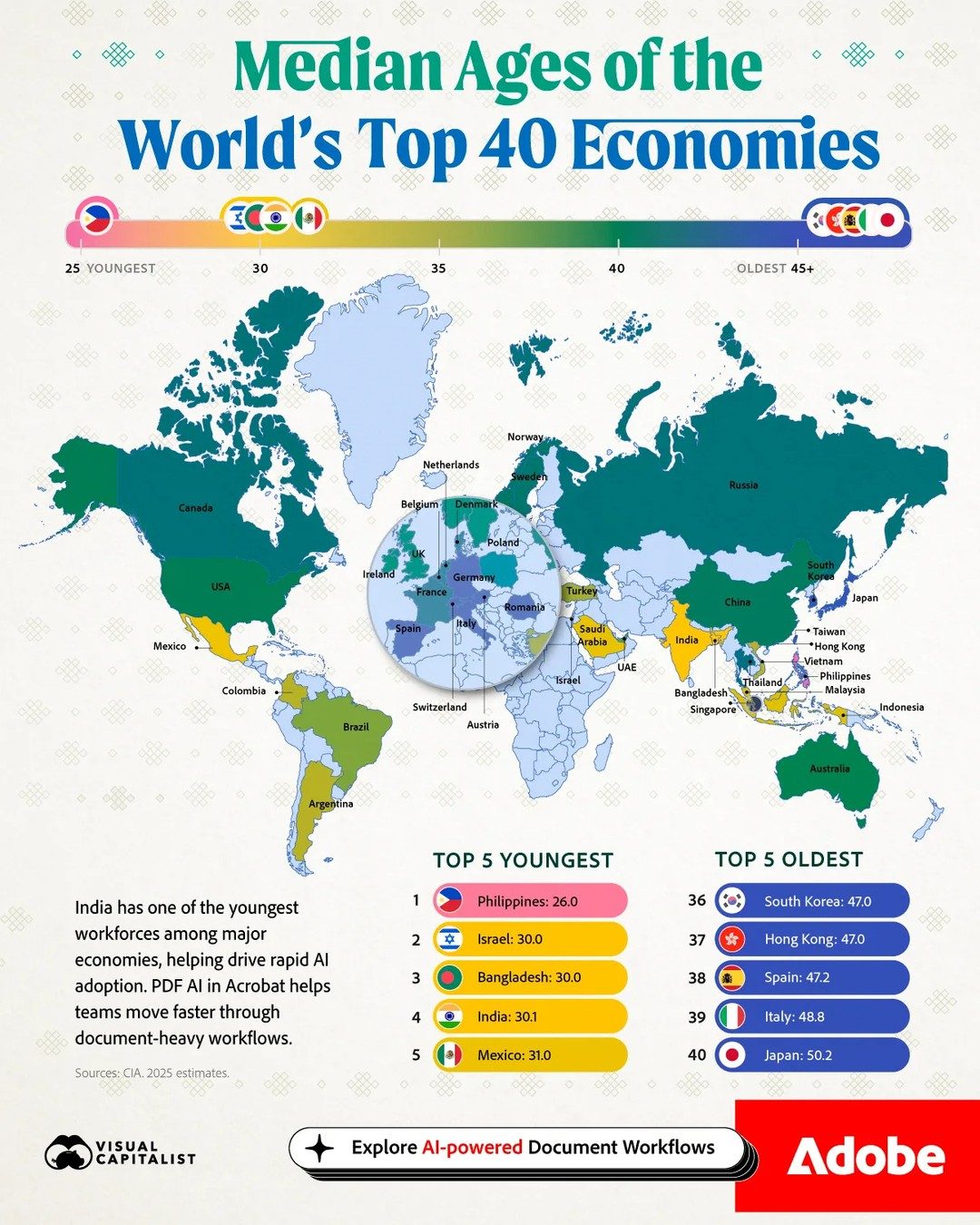
The Median Age of the World's Top 40 Economies
The median age of a country’s population is a critical factor in shaping its economic landscape. Understanding these demographics provides insights into future growth, labor markets, and workforce needs. The Philippines leads with the youngest major economy at a median age of 26.0, while Japan is the oldest at 50.2.
Context / Why This Matters
Demographic trends significantly influence economic performance. Younger populations often drive higher economic growth due to a larger workforce and increased consumer spending. In contrast, aging populations can face challenges such as labor shortages and increased healthcare costs. This visualization, created in partnership with Adobe, highlights how demographic trends could shape the future of the world’s 40 largest economies by GDP.
The Role of Demographics in Economic Growth
Demographics play a pivotal role in economic growth. Younger populations tend to have higher fertility rates, which can lead to a larger workforce in the future. This demographic dividend can boost economic productivity and innovation. Conversely, aging populations can lead to labor shortages, increased dependency ratios, and higher healthcare expenditures, potentially slowing economic growth.
The Impact on Labor Markets
Labor markets are deeply affected by demographic trends. Younger economies often have a surplus of labor, which can drive down wages and increase competition for jobs. In contrast, older economies may face labor shortages, leading to higher wages and increased demand for automation and technology to fill gaps in the workforce. These shifts can influence policy decisions and investment strategies across sectors.
Workforce Needs and Future Prospects
Understanding the median age of economies helps in forecasting future workforce needs. Younger economies may need to invest heavily in education and skills training to prepare their large youth populations for the job market. Older economies, on the other hand, may need to focus on sustainable aging policies, such as healthcare reforms and retirement plans, to support their aging populations and maintain productivity.
Main Discussion
Youngest Economies: Drivers of Future Growth
The top 5 youngest economies, as highlighted in the infographic, are the Philippines, Bangladesh, India, and Mexico. These countries have median ages ranging from 26.0 to 31.0. Such youthful populations present significant opportunities for economic growth. India, for example, has a large and rapidly growing workforce, which could drive future economic expansion. These countries can leverage their demographic advantages by investing in infrastructure, education, and technology to support sustainable economic development.
Oldest Economies: Challenges and Adaptations
The oldest economies, including Japan, Hong Kong, South Korea, Vietnam, and Malaysia, have median ages ranging from 47.0 to 50.2. Japan, with a median age of 50.2, faces unique challenges due to its rapidly aging population. This demographic shift necessitates strategic adaptations, such as increasing immigration, boosting productivity through technology, and implementing policies to encourage older workers to stay in the workforce longer. These measures can help mitigate the economic impacts of an aging population.
Key Takeaways from the Infographic
The infographic provides a clear visual representation of the median ages of the world's top 40 economies, sourced from CIA estimates. It emphasizes the wide range of demographic trends across different regions, from the youngest economies in Southeast Asia to the oldest in East Asia. This visualization underscores the importance of demographic data in understanding the current and future economic landscapes of these nations.
Practical Tips
For Young Economies
- Invest in Education and Skills Training: Young economies should prioritize building a skilled workforce through investment in education and vocational training.
- Infrastructure Development: Developing modern infrastructure can attract investment and support economic growth.
- Technological Adoption: Rapid adoption of technology can enhance productivity and innovation, positioning young economies for global competitiveness.
For Aging Economies
- Promote Lifelong Learning: Encourage continuous education and skill development among the aging workforce to keep them engaged and productive.
- Immigration Policies: Implement policies to attract and integrate immigrants, who can fill labor gaps and contribute to economic growth.
- Healthcare Reforms: Invest in healthcare to support the aging population, ensuring that healthcare costs do not become a significant economic burden.
Important Takeaways
- Demographics Matter: The median age of a population significantly influences economic growth, labor markets, and workforce needs.
- Young Economies Have Opportunities: Countries with younger populations have the potential for rapid economic growth but need strategic investments in education and infrastructure.
- Aging Economies Face Challenges: Older economies must adapt to labor shortages and increased healthcare costs through policies that promote productivity and sustainable aging.
- Global Trends Vary: The median ages of the world's top 40 economies vary widely, reflecting diverse demographic and economic landscapes.
Conclusion
The median age of a country's population provides valuable insights into its economic future. Understanding these demographics is crucial for policymakers, investors, and businesses to make informed decisions. Whether focusing on leveraging a young workforce or adapting to an aging population, countries must tailor their strategies to address the unique challenges and opportunities presented by their demographic profiles. By doing so, they can foster sustainable growth and ensure long-term economic prosperity.
Watch the Reel
Questions readers ask
Which countries have the youngest economies in the world, and how does this impact their economic growth?
Countries like the Philippines, with a median age of 26.0, have some of the youngest economies. This youthful population drives faster economic growth due to a larger workforce and increased consumer spending. Additionally, younger populations often bring innovation and adaptability, further stimulating economic activity.
How does an aging population, such as Japan's, affect the economy?
An aging population, like Japan's with a median age of 50.2, presents several economic challenges. These include labor shortages, as fewer young people enter the workforce, and increased healthcare costs, which can strain public finances. Additionally, an aging population may lead to lower consumer spending, as older individuals typically spend less than younger ones.
Why is understanding the median age of a country's population important for economic forecasting?
The median age of a country's population is crucial for economic forecasting as it provides insights into future workforce trends, consumer spending patterns, and potential labor market constraints. Younger populations may indicate future economic growth, while aging populations may signal potential challenges in sustaining economic activity.
What are the implications of the age structure of global economies on labor markets?
The age structure of global economies significantly impacts labor markets. Younger economies may experience a surplus of labor, driving economic growth but potentially leading to lower wages. In contrast, aging economies may face labor shortages, which can impede economic activity and necessitate increased automation or immigration.
Which are the oldest economies in the world, and what economic challenges do they face?
Countries like Japan are among the oldest economies, with a median age of 50.2. These economies face challenges such as labor shortages, increased healthcare costs, and potential declines in consumer spending. To mitigate these issues, these countries often need to implement policies that promote workforce participation, encourage immigration, or invest in technology to offset labor gaps.
How does the median age of a country impact its economic trends?
The median age of a country influences economic trends by determining the size and productivity of the workforce, as well as consumer spending patterns. Younger populations often drive higher economic growth, while aging populations may experience slower growth due to labor shortages and increased healthcare expenditures. Understanding these trends is essential for policymakers to make informed decisions.
What are the top 40 economies by age, and what insights can be gained from this analysis?
The top 40 economies by age range from the youngest, like the Philippines, to the oldest, such as Japan. Analyzing this data provides insights into future economic growth, workforce dynamics, and potential policy challenges. For instance, younger economies may prioritize job creation and infrastructure development, while older economies may focus on healthcare and pensions. This information is useful for investors, policymakers, and businesses to make strategic decisions.
Recent articles
Fresh deep dives from the latest Reels we unpacked.




Comments
Be the first to comment.