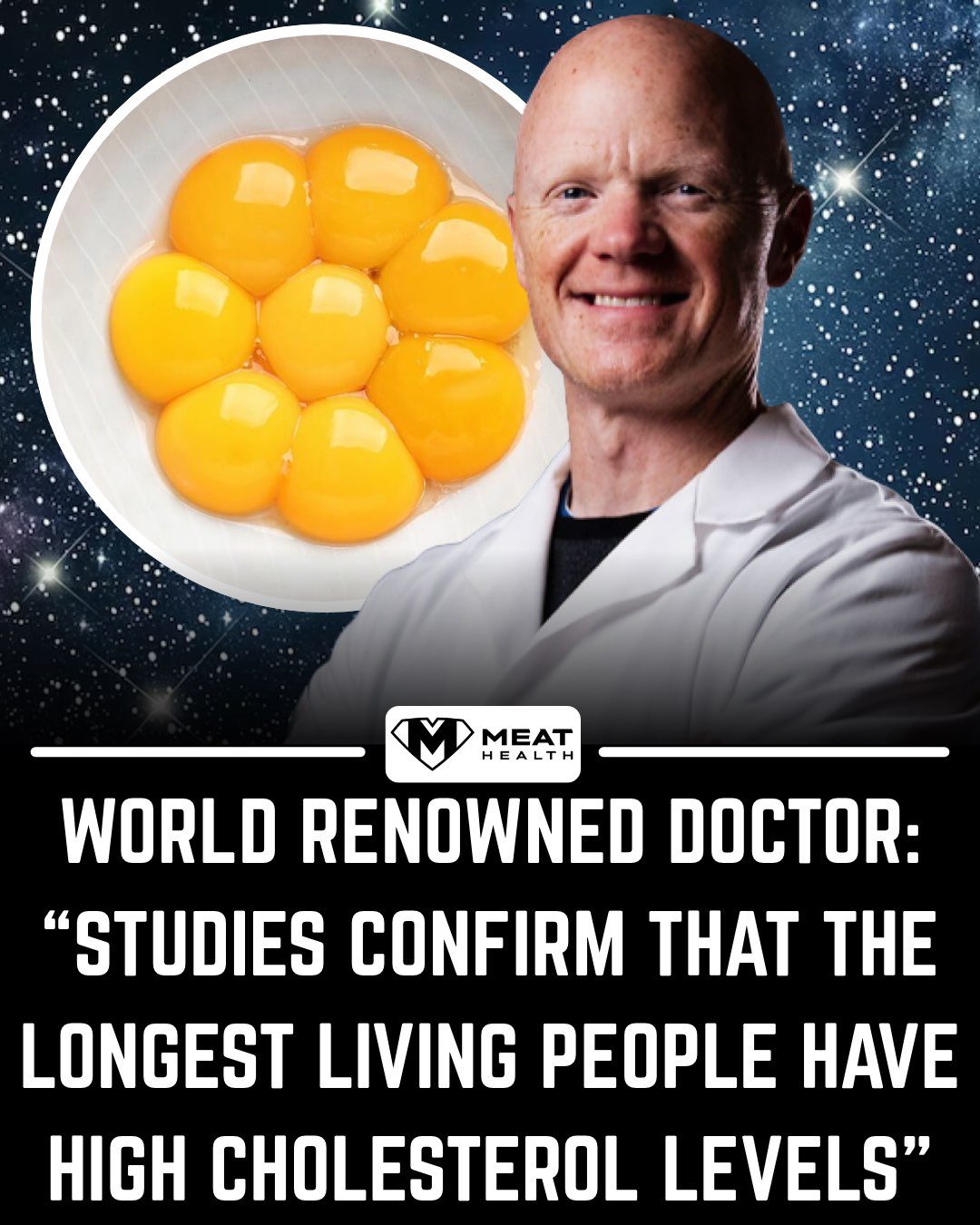
Cholesterol: friend or foe
High cholesterol levels are often considered a cardiovascular villain. Yet, the most confounding fact reveals that the longest-living people around the globe have high cholesterol. 80% of the body's cholesterol is produced by the liver, which begs the question: why create so much of a substance if it were merely detrimental? Understanding this requires a significant shift in perspective — cholesterol isn't intrinsically bad. The person behind Meat Health, advocates a diet rich in eggs, which are often unfairly maligned for their cholesterol content. While on-screen copy claimed that a diet rich in eggs is promoted, but concrete advice, perhaps a recipe or meal plan was not available. This omits specific evidence or lobbying by the brand. The redirection of the narrative towards the liver’s production to serve as a producer of cholesterol is one of the best lines of evidence that cholesterol is not the nightmarish villain everyone assumes. However, Meat Health does not stop at questioning cholesterol’s villainous role. To bolster their argument, they point to the fact that people with diets high in cholesterol-rich foods, such as eggs, are often the ones to have reached a ripe old age. If cholesterol levels were inherently dangerous, wouldn't the longest-living people have relatively lower levels? This reflects the scientific fact that cholesterol levels alone don't determine health outcomes. Its type, function, and interaction with total body health should be considered.
Dietary cholesterol reconsidered
The argument Meat Health raises about how the liver creates 80% of the body's cholesterol is eye-opening. It suggests that our bodies may need high cholesterol levels to function optimally. Challenges the notion that dietary cholesterol is always harmful. The shift in focus towards the liver’s role in producing cholesterol? The liver's cholesterol production is a critical process that shouldn't be understated. But using this the author suggests that cholesterol is not only a building block for cells and cell membranes but is also a vital player in digestion and nutrient absorption. Meat Health posits that the fear surrounding dietary cholesterol and human consumption is largely misinformed. Rooted in oversimplifications of nutritional science and an excessive focus on population-level data. The brand argues for a diet rich in quality animal products including eggs.
The book of possibilities
The visual focus then shifts to a book titled "The Human Diet," authored by Dr. Kevin Stock, DDS. It’s an interesting bridge to this topic. The book's subtitle, "What Your Teeth Say You Should Eat," taps into an evolutionary perspective on nutrition. It suggests that our ancestral diets might hold valuable clues for optimal health. The book promotes a diet based on the premise that our teeth and jaw structure are tailored to specific types of food. Incorporates that our evolutionary predecessors most predominantly consumed meat. This book posits that the human digestive system is biologically designed to handle a diet rich in animal products. Apart from the meat-heavy diet in question, the book also focuses on dental health as a telltale sign of a balanced diet. Kevin teaches what we should eat, based on our natural teeth structure. According to the brand, this diet could be the key to long-term health. The eye-catching skull imagery and dramatic button text adds an impactful visual flair to the call-to-action. This makes the dietary approach Meat Health seems to promote both a scientific proposition and a philosophical stance.
Embracing the forgotten nutrient
The underlying message Meat Health promotes is that we’ve likely been too quick to demonize cholesterol. This shifts our nutrition thinking from restriction to inclusion. The frame showcases a freezer full of packages of ground meat, positioning meat not just as a staple but possibly as a supplement. Meat Health’s stance suggests that rather than eliminating or drastically reducing cholesterol-rich foods, we should focus on the quality of these foods. It suggests that our bodies may have inherent mechanisms to handle cholesterol. This involves steps including specific nutrients and conditions unless risk factors are evident or unless complications with other parts of the human body are posed. This could be a healthier focus for the consumer.
Watch the Reel
Related deep dives
Similar reads based on topic and creator.

Recent articles
Fresh deep dives from the latest Reels we unpacked.


Comments
Be the first to comment.