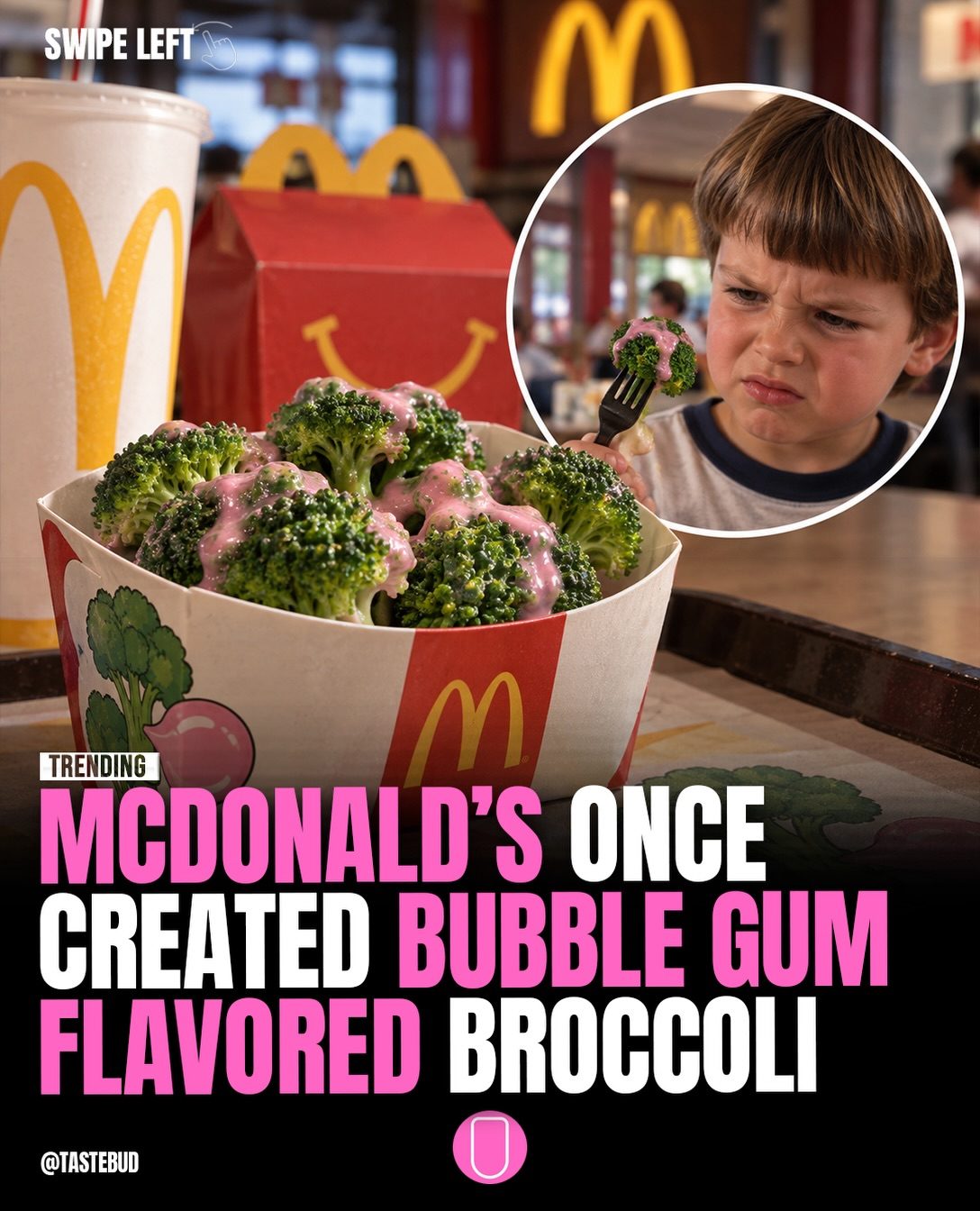
McDonald’s Bubble Gum Broccoli: A Marketing Ploy
For a brief, albeit peculiar, period, McDonald’s experimented with a flavor combination that was as unconventional as it was memorable: bubble gum broccoli. This unusual creation was the result of a marketing endeavor to increase children's consumption of vegetables. But unlike standard fast-food fare, which tends to be sugar-laden, this was a healthy option. Nearly all children are habitual viewers of advertisements. And while children’s taste preferences are still fluid, most have a firm dislike for vegetables. The fast-food giant sought to leverage the appeal of sweet, candy-like flavors to mask the natural bitterness of broccoli. Initially, the flavor was intended as a strategy to promote vegetable consumption. As quoted from the visual summary: "McDonald's once experimented with this unusual vegetable to encourage children to eat healthier". It supports the idea of the broccoli serving as an instrument in a calculated campaign to entice children to eat more healthily.
The Fall of the Bubble Gum Broccoli
The marketing team believed that the playful association would have been a good disguise for the vegetable. However, the bubble gum flavor did not accurately disguise the vegetable taste. This could be attributed to two possibilities — the strength of the vegetable flavor or an inherent lack of success of the masking technique. Though the trial was meant to drive kids to consume healthier, it wasn’t well-received. The key flaw in the marketing strategy was that McDonald’s most junior customers were ill-equipped to deal with the cognitive dissonance of a sweet gum flavor mingled with the tangy taste of the broccoli. While the fast-food chain aimed to make vegetables palatable to children, the combination became an issue. The flavorful intervention failed because children became confused by the unexpected pairing.
Motives and Marketing
As a company, McDonald’s continues to thrive at the top of the fast-food hierarchy. But a brand’s appeal isn't always about the food itself; it’s about the stories it tells and the memories it creates. With the bubble gum broccoli experiment, McDonald’s showed that it was willing to push boundaries to cater to consumers’ palates. Although this particular venture didn’t succeed, it highlighted the brand’s creative approach to solving a very real problem. Perhaps we are only a few taste experiments away from finding the key to convince children to eat healthier. The failure of the initiative likely inspired other plans to achieve the same goal. Struggles such as these lead to other more successful marketing ideas. If nothing else, the bubble gum broccoli did one thing very well: pointing out a potential market segment.
Watch the Reel
Related deep dives
Similar reads based on topic and creator.

Recent articles
Fresh deep dives from the latest Reels we unpacked.

Comments
Be the first to comment.