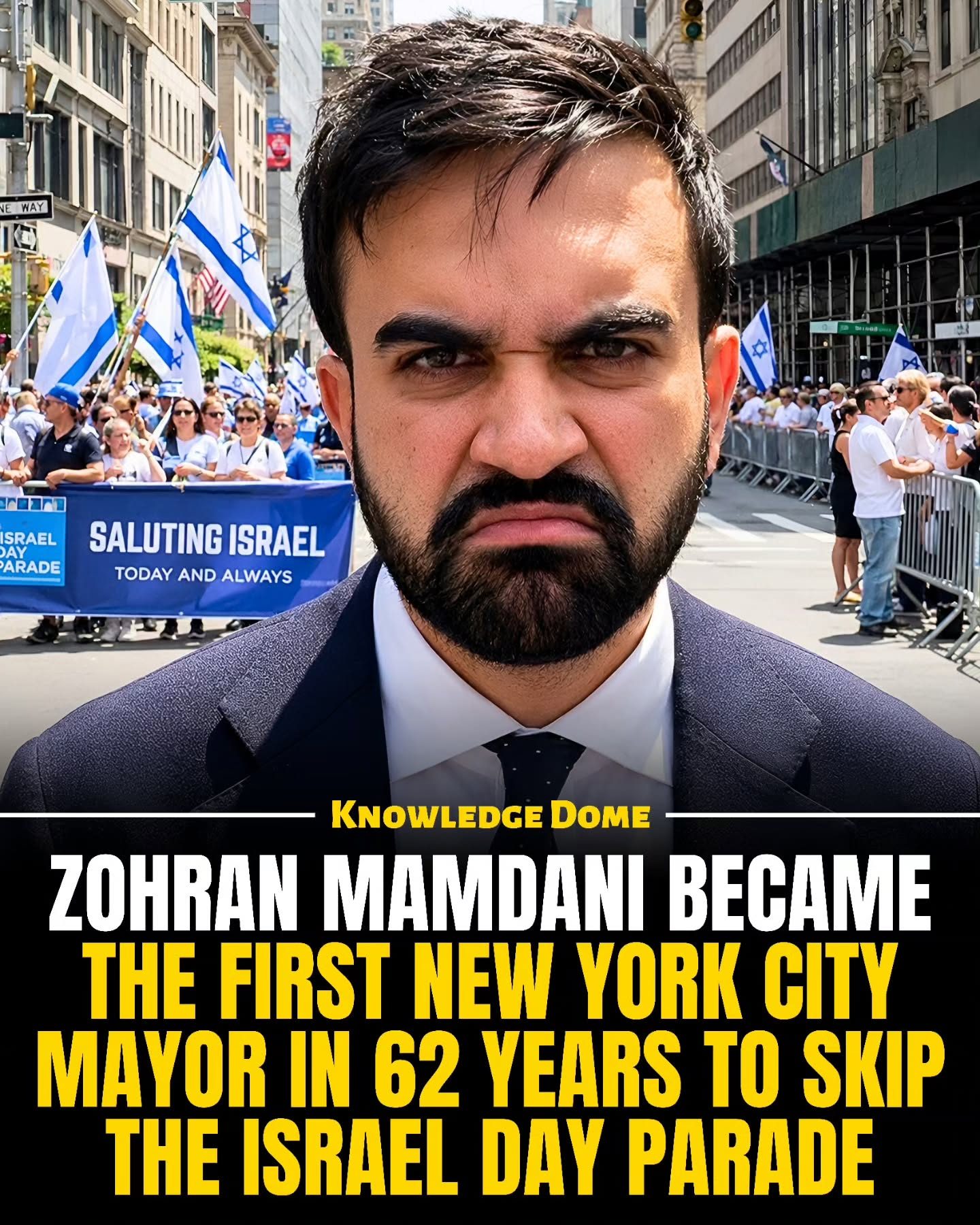
The Israel Day Parade and Zohran Mamdani's Absence
The Israel Day Parade, an annual event held in New York City, celebrated its 63rd edition in 2026. This year's parade, however, made headlines for an unexpected reason: Zohran Mamdani, the current New York City mayor, became the first sitting mayor in 62 years to skip the event. This deviation from tradition sparked heated debates and brought the mayor's political views and campaign promises to the forefront of the public discourse.
Context / Why this matters
Historical Significance
The Israel Day Parade has been a staple in New York City since 1964, celebrating Israel's founding and the city's vibrant Jewish community. Every mayor before Mamdani had participated in the parade, making his absence a stark break from tradition. This event is not just a local celebration; it draws attention from international figures and evokes discussions about politics, human rights, and community relations. Mamdani’s decision to skip the event, as such, carries significant weight.
Political and Human Rights Beliefs
Mamdani's decision was grounded in his campaign promises and political beliefs. He expressed his displeasure with the presence of far-right Israeli officials, including Finance Minister Bezalel Smotrich, at the event. The mayor made it clear that he did not want to march alongside individuals he viewed as holding controversial views that contradicted his beliefs in human rights and political stances.
Main discussion
Mamdani's Political Stance
Mamdani, as an advocate of progressive policies, had a clear stance on human rights issues. His decision to skip the parade was not just a political move but a reflection of his values. By not attending, he demonstrated his opposition to certain far-right Israeli policies and their representatives. This stance resonated with a segment of the public who shared his views on human rights and political beliefs.
Public Reaction
The public response to Mamdani's absence was divided. Many of his supporters applauded his decision, viewing it as a courageous move that stayed true to his campaign promises. However, a significant number of Jewish leaders and advocacy groups criticized his absence. They argued that his decision sent the wrong message at a time when antisemitism is a growing concern. The event organizers, despite Mamdani’s absence, were quick to note that his administration had provided vital support, ensuring the parade received the necessary permits and security measures.
Security and Administrative Support
Despite his absence, Mamdani's administration played an essential role in ensuring the parade's success. City Hall, under his administration, approved the necessary permits, and the city provided substantial security support. NYPD Commissioner Jessica Tisch served as the parade's Grand Marshal, symbolizing the city's commitment to the event. Furthermore, Mamdani proposed a $26 million budget for the city’s Office to Prevent Hate Crimes, emphasizing his stance on combating hate and protecting all communities in New York.
Main discussion
Supporters' Perspective
Mamdani's supporters viewed his decision as a principled stand aligned with his campaign promises. They believed that his absence was a clear message that he would not be a part of an event that included figures he found objectionable. This decision was seen as an endorsement of his commitment to human rights and political principles.
Critics' Perspective
Critics, primarily among Jewish leaders, argued that Mamdani’s absence undermined the parade’s significance. They noted that his absence could be misinterpreted as a lack of support for the Jewish community at a time when antisemitism is a serious issue. The pushback highlighted the delicate balance between political stances and community support.
Practical tips
For individuals navigating political and ethical decisions, here are some practical tips:
Standing by Your Principles
If you find yourself in a situation where your principles may conflict with certain events or individuals, consider the following:
- Reflect on your values: Ensure that your actions align with your core beliefs.
- Communicate clearly: Explain your decision to avoid misunderstandings.
- Seek support: Reach out to allies and supporters who share your values.
Balancing Political Stances with Community Support
If you are in a leadership position, balancing political stances with community support is crucial:
- Show support: Even if you cannot attend an event, demonstrate your support through other means, such as security or administrative assistance.
- Seek dialogue: Engage in open conversations with community leaders to address concerns and misinterpretations.
- Address concerns: Propose initiatives, like the $26 million budget for the Office to Prevent Hate Crimes, to show your commitment to community well-being.
Important takeaways
- Historical Context: The Israel Day Parade is a significant event with historical and cultural importance.
- Political Impact: Political decisions, especially those that diverge from tradition, can have far-reaching implications.
- Public Opinion: Public reaction to political decisions can be polarizing, highlighting the need for clear communication and principled stances.
- Community Support: Balancing political beliefs with community support is essential for maintaining a harmonious and inclusive environment.
Conclusion
The Israel Day Parade of 2026 marked a significant moment in New York City's history, with Mayor Zohran Mamdani's absence creating a stir and sparking debates. This event underscored the complexities of political decisions and the importance of aligning actions with core values. Whether you support Mamdani's decision or criticize it, the event serves as a reminder of the delicate balance between political stances and community support. As we move forward, it is essential to reflect on the significance of such events and the decisions that shape them.
Watch the Reel
Questions readers ask
Why did Mayor Zohran Mamdani skip the Israel Day Parade in 2026?
Mayor Mamdani chose not to attend the Israel Day Parade due to his opposition to the presence of certain Israeli officials. He was the first sitting mayor in 62 years to miss the event, making it a notable departure from tradition.
What is the historical significance of the Israel Day Parade?
The Israel Day Parade has been an annual event in New York City since 1964. It celebrates Israel's founding and the city's vibrant Jewish community. The event has always been a significant part of the city's cultural calendar.
What was the public response to Mayor Mamdani's absence from the parade?
The absence of Mayor Mamdani from the Israel Day Parade sparked intense debate. It challenged his political stance. Some questioned his commitment to the city’s Jewish community, while others supported his decision.
Who participated in the Israel Day Parade before Mayor Mamdani?
Every New York City mayor before Zohran Mamdani participated in the Israel Day Parade. This consecutive attendance spanned 62 years, making Mamdani’s absence particularly notable.
What has been the role of New York City mayors in the Israel Day Parade?
The New York City mayor's participation in the Israel Day Parade has been a long-standing tradition. It has been a symbolic gesture of support for the city’s Jewish community and Israel. Therefore, Mamdani's decision to skip the event has brought significant attention to his political views.
What were the implications of Mayor Mamdani's absence from the Israel Day Parade for his political campaign?
Mamdani’s absence from the Israel Day Parade brought his political stance and campaign promises into the public eye. This event became a focal point for discussions about his policies and their alignment with the city’s diverse communities.
Will Mayor Mamdani attend the Israel Day Parade in the future?
As of now, there is no official statement from Mayor Mamdani regarding his future attendance at the Israel Day Parade. His decision to skip the 2026 parade has been influenced by his opposition to certain Israeli officials, and future attendance may depend on changes in the event’s organization or Mamdani’s political stance.
Recent articles
Fresh deep dives from the latest Reels we unpacked.




Comments
Be the first to comment.