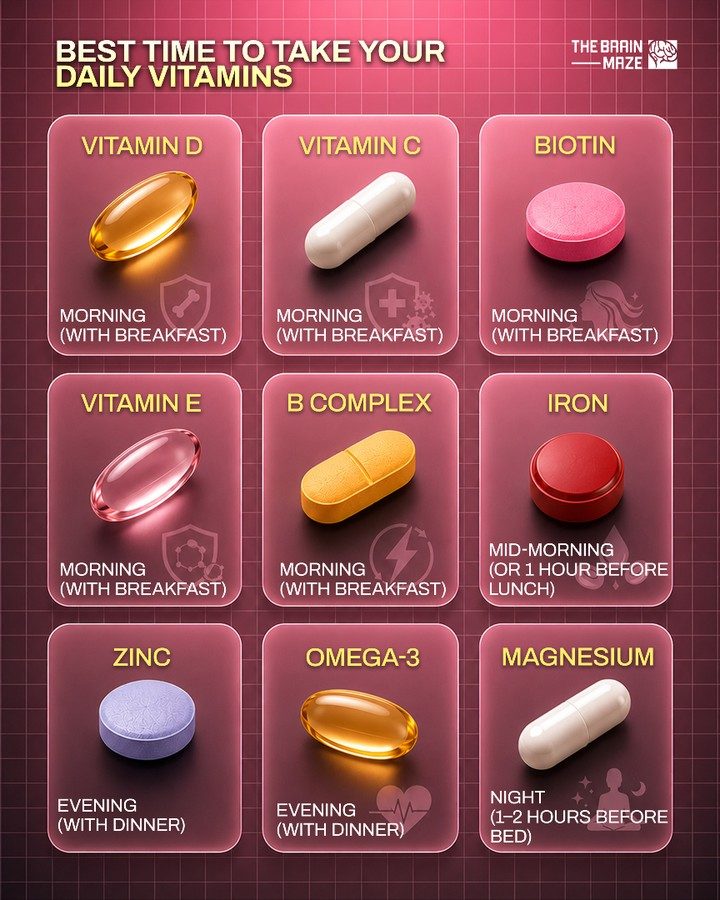
Vitamin supplements can play an essential role in supporting overall health. However, maximizing their benefits requires taking them at the right time of day. Each type of vitamin serves different functions, and taking them at optimal times can enhance their absorption and efficacy.
Why This Matters
Taking vitamins at the right time can make a significant difference in how well they work. For example, some vitamins are best absorbed with food, while others may interfere with the absorption of other nutrients if taken at the wrong time. Understanding the best timing for each type of vitamin can help ensure that you get the most out of your supplements.
Main Discussion
Morning Vitamins
Vitamins best taken in the morning include Vitamin D, Vitamin C, Biotin, Vitamin E, and B Complex. These vitamins are generally well-absorbed with a meal, and taking them with breakfast can help kickstart your day with a nutritional boost.
Vitamin D
Vitamin D is crucial for bone health and immune function. It is best taken in the morning with breakfast. If you opt to take Vitamin D, make sure to include a source of healthy fats, like avocado or nuts, to enhance its absorption.
Vitamin C
Vitamin C is a powerful antioxidant that supports the immune system and collagen production. Taking it in the morning can help you start your day with a strong immune defense.
Biotin
Biotin, also known as Vitamin B7, plays a key role in metabolism and energy production. Morning intake can help maintain steady energy levels throughout the day.
Vitamin E
Vitamin E is an antioxidant that protects cells from damage. Taking it in the morning can help your body defend against free radicals accumulated from daily activities.
B Complex
The B Complex vitamins, including B1, B2, B3, B5, B6, B7 (Biotin), B9, and B12, are essential for various bodily functions, such as energy production and nervous system health. Taking them in the morning can provide an energy boost and support cognitive function throughout the day.
Mid-Morning or Pre-Lunch Vitamins
Iron is best taken mid-morning or before lunch, ideally with Vitamin C. This pairing enhances iron absorption, which is crucial for maintaining healthy blood and oxygen transport in the body.
Evening Vitamins
Zinc and Omega-3 are best taken in the evening with dinner. Zinc supports immune function and wound healing, while Omega-3 fatty acids are vital for heart health and brain function. Taking these supplements with a meal can enhance their absorption and utilization.
Nighttime Vitamins
Magnesium is commonly taken 1–2 hours before bed to support relaxation and normal muscle function. Magnesium can help calm the mind and muscles, promoting better sleep quality. Taking it in the evening can prepare your body for a restful night.
Practical Tips
General Tips for Taking Vitamins
- Consult a Healthcare Professional: Before starting any new supplement regimen, it's essential to consult with a healthcare provider to ensure it's suitable for your individual needs.
- Consistency is Key: Take your vitamins at the same time each day to build a consistent routine.
- Stay Hydrated: Drink plenty of water to aid in the absorption of water-soluble vitamins like Vitamin C and B Complex.
- Store Properly: Keep your vitamins in a cool, dry place away from direct sunlight to maintain their potency.
Specific Tips for Common Vitamins
- Iron: Pairing iron with Vitamin C can enhance absorption. Good sources of Vitamin C include citrus fruits, bell peppers, and strawberries.
- Vitamin D: Taking Vitamin D with a meal that contains healthy fats can improve absorption. Consider adding a source of fat, like nuts, seeds, or avocado, to your meal.
- Magnesium: Magnesium can interfere with the absorption of certain medications, so it's best to take it at least 2 hours before or after taking other supplements or medications.
Important Takeaways
- Timing Matters: The time of day you take your vitamins can significantly impact their absorption and effectiveness.
- Pair with Food: Many vitamins are best absorbed with food, so plan your meals accordingly.
- Consult a Professional: Always consult with a healthcare provider before starting any new supplement regimen.
Conclusion
Taking vitamins at the right time can maximize their benefits and support overall health. Whether you're looking to boost your immune system, improve energy levels, or support muscle function, understanding the best times to take specific vitamins can make a significant difference. By following the guidelines outlined above, you can ensure that you're getting the most out of your vitamin supplements and supporting your health effectively.
Watch the Reel
Questions readers ask
Why is it important to consider the timing of vitamin intake?
The timing of vitamin intake can significantly impact their absorption and effectiveness. Some vitamins are best absorbed with food, while others may interfere with the absorption of other nutrients if taken at the wrong time. Proper timing ensures you maximize the benefits of your supplements.
Which vitamins should I take in the morning?
Vitamins best taken in the morning, ideally with breakfast, include Vitamin D, Vitamin C, Biotin, Vitamin E, and the B complex. These vitamins are known for their energy-boosting and immune-supporting properties, making them ideal for daytime consumption.
Should I take all my vitamins at once?
No, it's not recommended to take all your vitamins at once. Different vitamins have different absorption rates and mechanisms. For instance, fat-soluble vitamins like Vitamin D and E are better absorbed with meals containing healthy fats, while water-soluble vitamins like B and C can be taken with or without food.
Can I take vitamins with lunch or dinner instead of breakfast?
Yes, you can take certain vitamins with lunch or dinner. For example, iron and omega-3 fatty acids are best taken with meals to enhance absorption. However, timing is crucial, and it's best to consult a healthcare provider for personalized advice.
Is it okay to take vitamins before bed?
Some vitamins can be taken before bed, but others are not recommended. For example, calcium, magnesium, and potassium can aid in relaxation and sleep. However, energizing vitamins like B complex should be avoided before bed as they might interfere with sleep.
What happens if I take my vitamins at the wrong time?
Taking vitamins at the wrong time can lead to reduced absorption and efficacy. For instance, taking iron and calcium together can inhibit absorption, as can taking fat-soluble vitamins without sufficient fat in your diet. It's essential to understand the best timing for each vitamin to maximize their benefits.
Can I take vitamins on an empty stomach?
It depends on the type of vitamin. Water-soluble vitamins like B complex and C can be taken on an empty stomach or with food. However, fat-soluble vitamins like A, D, E, and K require fat for absorption, so it's best to take them with a meal containing healthy fats. Always check the label or consult a healthcare provider for specific instructions.
Related deep dives
Similar reads based on topic and creator.

Recent articles
Fresh deep dives from the latest Reels we unpacked.




Comments
Be the first to comment.