Different Movements, Different Muscles: Mastering Exercise Selection and Form
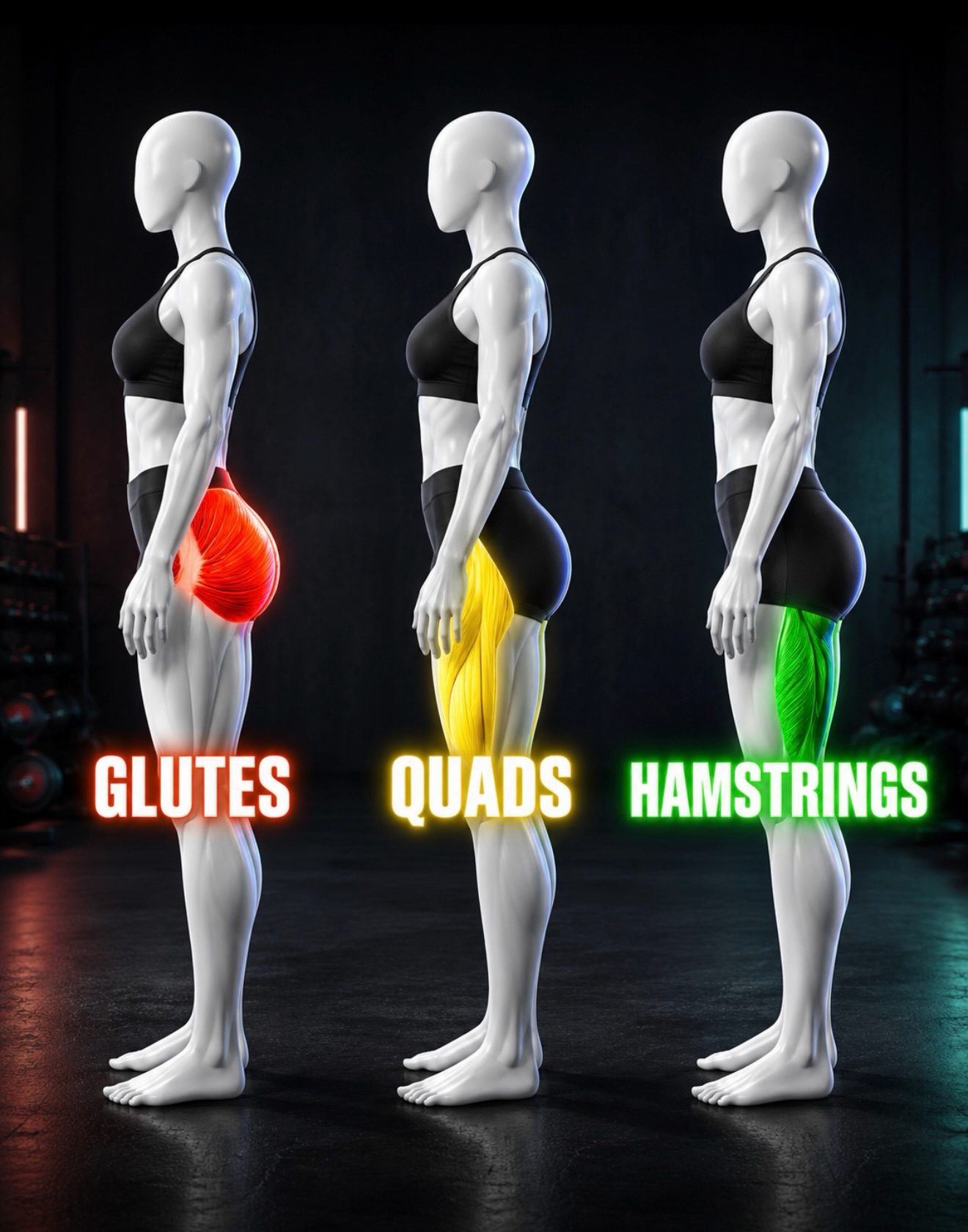
Different exercises target different muscle groups, and understanding this is crucial for effective workouts. This principle applies to various exercises, but let's focus on the lower body, specifically the glutes, quads, and hamstrings. By selecting the right exercises and maintaining proper form, you can maximize your results and avoid common pitfalls.
Why Exercise Selection and Form Matter
Exercise selection and form are fundamental to achieving fitness goals. Different movements bias different muscles, and understanding these biases can help you tailor your workouts for better results. For example, hip extension and pushing the hips back primarily target the glutes, while knee-dominant movements focus on the quads. Hamstrings, on the other hand, are engaged through hinge patterns and posterior chain work. This understanding is essential for creating an effective workout routine.
Key Exercises and Muscle Groups
Glutes
The glutes are a powerhouse muscle group crucial for various movements, including running, jumping, and lifting. To effectively target the glutes, focus on exercises that involve hip extension and pushing the hips back. Some excellent exercises for the glutes include:
- Barbell Squats: This compound movement engages multiple muscle groups, including the glutes and quads. Keeping the chest up, pushing the hips back, and maintaining proper form are key to effectively loading the glutes.
- Romanian Deadlifts: This exercise targets the glutes and hamstrings through a deep stretch. Proper form, including a tall torso and controlled movement, is essential for maximizing glute engagement.
- Walking Lunges: This unilateral exercise is fantastic for glute development, balance, coordination, and overall lower body strength. Keeping the torso tall, ensuring the front knee is over the ankle, and lowering the back knee towards the ground are crucial for proper form.
Quads
The quads are the primary muscle group for knee-dominant movements. To target the quads effectively, focus on exercises that involve knee extension and flexion. Some key exercises for the quads include:
- Barbell Squats: As mentioned, barbell squats are a great compound movement for overall lower body development, with a strong emphasis on the quads.
- Leg Press: This exercise isolates the quads and allows for progressive overloading.
- Bulgarian Split Squats: This unilateral exercise targets the quads and glutes, improving balance and coordination.
Hamstrings
The hamstrings are integral to posterior chain strength and are engaged through hinge patterns and knee flexion. Some effective exercises for the hamstrings include:
- Romanian Deadlifts: As mentioned, this exercise targets the glutes and hamstrings through a deep stretch.
- Hamstring Curls: This exercise isolates the hamstrings and allows for focused development.
- Good Mornings: This exercise targets the hamstrings and glutes through a hinge pattern.
Common Mistakes and How to Avoid Them
Many people make the mistake of performing exercises without properly loading the target muscle. This can lead to stagnant results, regardless of the number of reps or the intensity of the workout. To avoid this, focus on the following tips:
Progressive Overloading
Progressive overloading involves gradually increasing the stress placed on the muscles over time. This can be achieved by increasing the weight, reps, or sets. Progressive overloading is essential for muscle growth and strength gains.
Full Range of Motion
Performing exercises through a full range of motion ensures that the target muscle is fully engaged. This means completing the entire movement, from start to finish, with proper form.
Controlling the Eccentric
The eccentric phase of an exercise is the lowering or lengthening phase. Controlling this phase helps to build muscle and strength. For example, when performing a squat, lowering the weight slowly and with control can help to maximize muscle engagement.
Consistency
Consistency is key to seeing results. Training for months, rather than days, allows for progressive overloading and muscle adaptation. Aim for regular workouts, with a focus on quality over quantity.
Proper Nutrition and Recovery
Nutrition and recovery are integral to muscle growth and overall fitness. Eating enough protein and recovering properly will allow your muscles to repair and grow, leading to better results over time. Proper recovery includes adequate sleep, rest days, and stretching.
Practical Tips for Effective Workouts
Slowing Down the Eccentric
Slowing down the eccentric phase of an exercise can help to build muscle and strength. For example, when performing a squat, lower the weight slowly and with control, focusing on the glutes and quads.
Keeping Tension on the Muscle
Keeping tension on the muscle throughout the exercise can help to maximize muscle engagement. This can be achieved by squeezing the muscle at the peak of the exercise and maintaining control throughout the movement.
Important Takeaways
Exercise selection and form are crucial for effective workouts. Different movements bias different muscles, and understanding these biases can help you tailor your workouts for better results. Progressive overloading, full range of motion, controlling the eccentric, and consistency are key to seeing results. Proper nutrition and recovery are also integral to muscle growth and overall fitness.
Conclusion
Mastering exercise selection and form is essential for effective workouts. By understanding the muscles targeted by different movements and focusing on proper form, you can maximize your results. Progressive overloading, full range of motion, controlling the eccentric, and consistency are key to seeing results. Proper nutrition and recovery are also integral to muscle growth and overall fitness.
So, train with intention, recover properly, and stay patient. The results will come.
Watch the Reel
Questions readers ask
Which exercises are best for targeting the glute muscles?
To effectively target the glutes, focus on exercises that emphasize hip extension. Romanian deadlifts are excellent for this, as are hip thrusts and glute bridges. These exercises help isolate and engage the glute muscles, promoting growth and strength.
How can I ensure proper form during barbell squats?
To maintain proper form during barbell squats, keep your feet shoulder-width apart, and ensure your knees do not extend past your toes. Keep your back straight, and push through your heels as you stand up. This form helps target your quads, glutes, and hamstrings effectively while minimizing the risk of injury.
What is the difference between quad and hamstring exercises?
Quad exercises typically involve knee-dominant movements, such as barbell squats and leg presses, which target the front of your thighs. Hamstring exercises, on the other hand, focus on movements like Romanian deadlifts and good mornings, which emphasize hip extension and target the back of your thighs.
Why are walking lunges beneficial for lower body workouts?
Walking lunges are beneficial because they engage multiple muscle groups, including the glutes, quads, and hamstrings. They also improve balance and stability, as well as promote unilaterally strength development. To perform them correctly, keep your torso upright and ensure your front knee doesn’t extend past your toes.
How do I know which lower body exercises to include in my routine?
To determine which lower body exercises to include, consider your fitness goals and any muscle imbalances. For overall development, include a mix of compound movements like squats and deadlifts, along with isolation exercises like leg extensions and hamstring curls. Vary your exercises to keep your workouts engaging and effective.
What are some tips for selecting effective lower body exercises?
When selecting lower body exercises, choose movements that align with your goals and target specific muscle groups. For example, use Romanian deadlifts for hamstrings and glutes, and barbell squats for quads and glutes. Always prioritize proper form to maximize benefits and reduce injury risk.
Is it possible to target both quads and hamstrings with the same exercise?
While some exercises like squats and lunges engage both quads and hamstrings, they often emphasize one muscle group over the other. To fully target both muscle groups, it's beneficial to include exercises that specifically isolate each, such as leg extensions for quads and leg curls for hamstrings.
Recent articles
Fresh deep dives from the latest Reels we unpacked.




Comments
Be the first to comment.