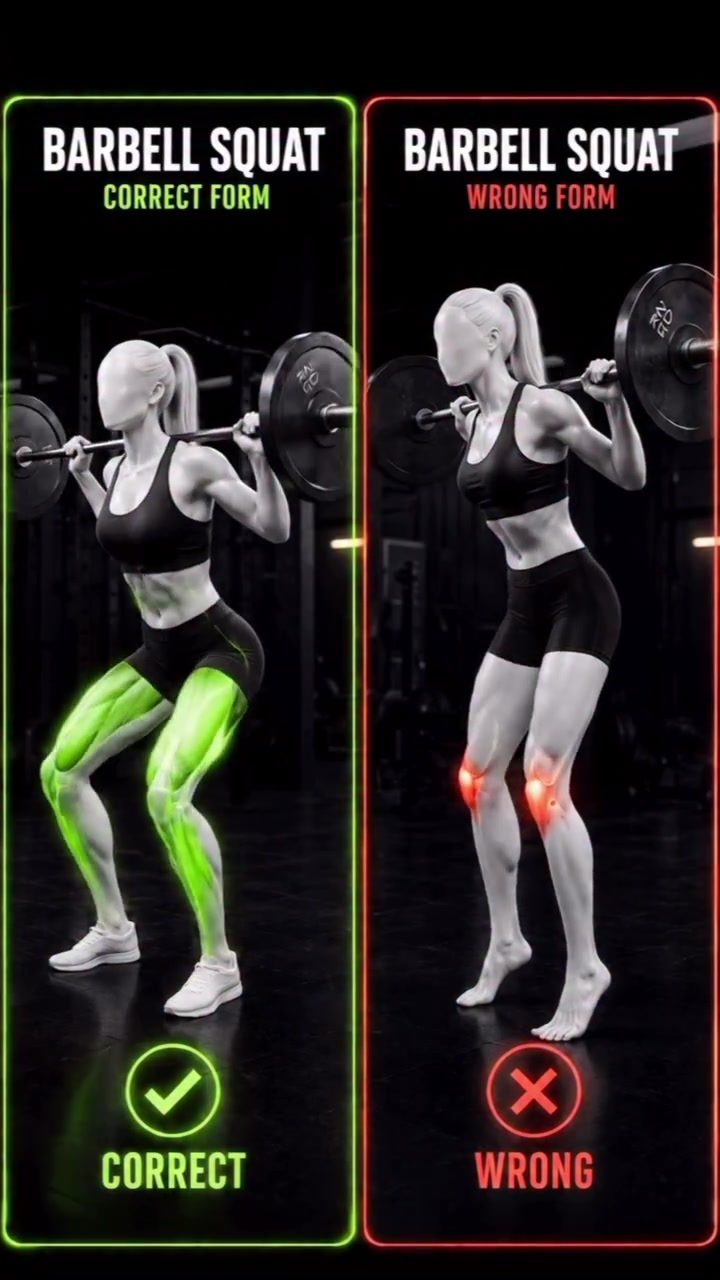
Mastering the Barbell Squat: Correct Form and Common Mistakes
Barbell squats are a staple in fitness routines. They're effective for building lower body strength and power. Additionally, they engage multiple muscle groups, making them efficient for overall development. However, performing them correctly is crucial to avoid injuries and maximize benefits. This involves focusing on several key aspects, from stance to posture, and from bar position to tempo.
Why Proper Form Matters
Proper form in a barbell squat ensures that you target the right muscles and avoid unnecessary stress on your joints. It helps to build the muscles you want, such as the quads, glutes, and hamstrings. Conversely, incorrect form can lead to muscle imbalances, joint strain, and even injuries. Many people mistakenly believe that squats are simply about going down and standing up. However, the devil is in the details, such as stance, depth, knee tracking, core stability, heel pressure, and bar position. Small details can make a significant difference in the effectiveness and safety of your squats.
Correct Form: Key Points
Stance
Your stance is the foundation of a good squat. Feet should be shoulder-width apart, toes slightly pointed outward. This position provides stability and allows for a deeper squat. It also helps to engage the right muscles more effectively.
Depth
Aim for full-depth squats, where your hips go below the knees. This ensures that you engage the glutes and hamstrings fully. Partial squats can lead to muscle imbalances and reduce the effectiveness of the exercise.
Knee Tracking
Knees should track over the toes, not inward or outward. This helps to maintain proper alignment and reduces the risk of knee injuries. Proper knee tracking also ensures that you engage the right muscles for a more effective workout.
Core Stability
A stable core is crucial for maintaining proper form throughout the squat. Engage your core muscles by keeping your belly button drawn in and your back straight. This helps to support your spine and prevents rounding of the back.
Heel Pressure
Push through your heels as you stand up from the squat. This helps to engage the glutes and hamstrings more effectively. Avoid pushing through your toes, as this can shift the focus to the quads and lead to muscle imbalances.
Bar Position
The bar should be positioned across your upper back, not on your neck. This helps to maintain proper posture and reduces the risk of injury. It also allows for a more natural range of motion.
Tempo
Controlled movements are key to a good squat. Avoid rushing through the reps. Instead, focus on a slow, controlled descent and ascent. This helps to build strength and muscle more effectively.
Posture
Maintain a neutral spine throughout the squat. Keep your chest up, shoulders back, and hips back. This helps to engage the right muscles and reduces the risk of injury.
Muscle Engagement
Focus on feeling the target muscles working. This helps to ensure that you are performing the exercise correctly and effectively. It also helps to build a stronger mind-muscle connection.
Common Mistakes to Avoid
Knees In
Inwardly rotating knees can lead to instability and reduced effectiveness of the exercise. It also puts unnecessary stress on the joints. To avoid this, ensure that your knees track over your toes.
Rounded Back
A rounded back can lead to injuries, particularly in the lower back. It also shifts the focus away from the target muscles. Keep your chest up and your spine neutral to maintain proper posture.
Heels Up
Lifting your heels can shift the focus to the quads and lead to muscle imbalances. Additionally, it can reduce stability and increase the risk of injury. Ensure that your feet remain flat on the ground throughout the squat.
Poor Positioning
Poor positioning of the bar, stance, or feet can all lead to reduced effectiveness and increased risk of injury. Pay close attention to these details to ensure that you are performing the exercise correctly.
Less Control
Rushed reps and uncontrolled movements can lead to muscle imbalances and reduce the effectiveness of the exercise. Focus on controlled movements and a slow tempo to maximize the benefits of your squats.
Practical Tips for Improving Your Squat
Lower the Weight
If your form breaks down, lower the weight. It's better to perform the exercise correctly with lighter weight than to risk injury with heavier weight. As you improve, gradually increase the weight to continue challenging your muscles.
Push Through Your Full Foot
Ensure that you push through your full foot, not just your toes. This helps to engage the right muscles and reduce the risk of injury. It also helps to build a stronger, more stable base.
Focus on Progressive Overload
Gradually increase the weight or resistance over time to continue challenging your muscles. This is crucial for long-term progress and muscle growth.
Slow Controlled Reps
Focus on slow, controlled reps rather than rushing through them. This helps to build strength and muscle more effectively.
Learn to Feel the Target Muscles
Pay attention to how your muscles feel during the exercise. This helps to build a stronger mind-muscle connection and ensures that you are performing the exercise correctly.
Record Yourself
Recording yourself can help you identify any form issues that you may not be aware of. It can also help you track your progress over time.
Important Takeaways
Good form in a barbell squat is about much more than just looking right in the gym. It's about targeting the right muscles, avoiding injuries, and making consistent progress over time. Key points to remember include maintaining a neutral spine, tracking the knees over the toes, and pushing through the heels. Avoid common mistakes such as knee instability, rounded back, and poor positioning. Remember to lower the weight if your form breaks down, push through your full foot, and focus on controlled movements.
Conclusion
Mastering the barbell squat involves paying close attention to details, from stance to posture, and from bar position to tempo. By focusing on these key aspects and avoiding common mistakes, you can perform the exercise more effectively and safely. This will help you build the muscles you want and avoid unnecessary stress on your joints. Remember that progress takes time, patience, and consistency.
Watch the Reel
Questions readers ask
What is the correct stance for performing a barbell squat?
A proper stance for barbell squats involves placing your feet shoulder-width apart and pointing your toes slightly outward. This position helps to engage your glutes and hamstrings effectively and provides a stable base for the movement.
How deep should I squat to maximize muscle development?
To maximize muscle development, you should squat to at least parallel depth, where your hips are lower than your knees. This ensures that you engage the target muscles, such as the quads, glutes, and hamstrings, fully. However, avoid squatting too deep if it causes discomfort or improper form.
What does knee tracking mean and why is it important?
Knee tracking refers to the path your knees take during the squat movement. Ideally, your knees should track directly over your toes without collapsing inward or pushing outward excessively. Proper knee tracking helps distribute weight evenly and reduces the risk of knee injuries.
How can I improve my core stability during barbell squats?
To improve core stability, focus on maintaining a neutral spine and engaging your core muscles throughout the squat. This helps to support your lower back and maintain proper posture. Also, avoid rounding your back or letting your hips rise before your shoulders during the ascent.
What are some common barbell squat mistakes to avoid?
Some common mistakes include rounding your back, shifting your weight onto your toes, and letting your knees cave inward. Additionally, bouncing out of the bottom position and using momentum instead of controlled movement can lead to injuries and reduce the effectiveness of the exercise.
How can I progress in my barbell squat technique safely?
To progress safely, start with a manageable weight and focus on perfecting your form. Gradually increase the weight as you become more comfortable with the movement. Incorporate variations like pause squats or tempo squats to enhance your control and strength.
Which muscles are primarily worked during a barbell squat?
Barbell squats primarily work the quads, glutes, and hamstrings. They also engage supporting muscles like the calves, lower back, and core. This makes barbell squats an effective exercise for building lower body strength and power.
Recent articles
Fresh deep dives from the latest Reels we unpacked.




Comments
Be the first to comment.