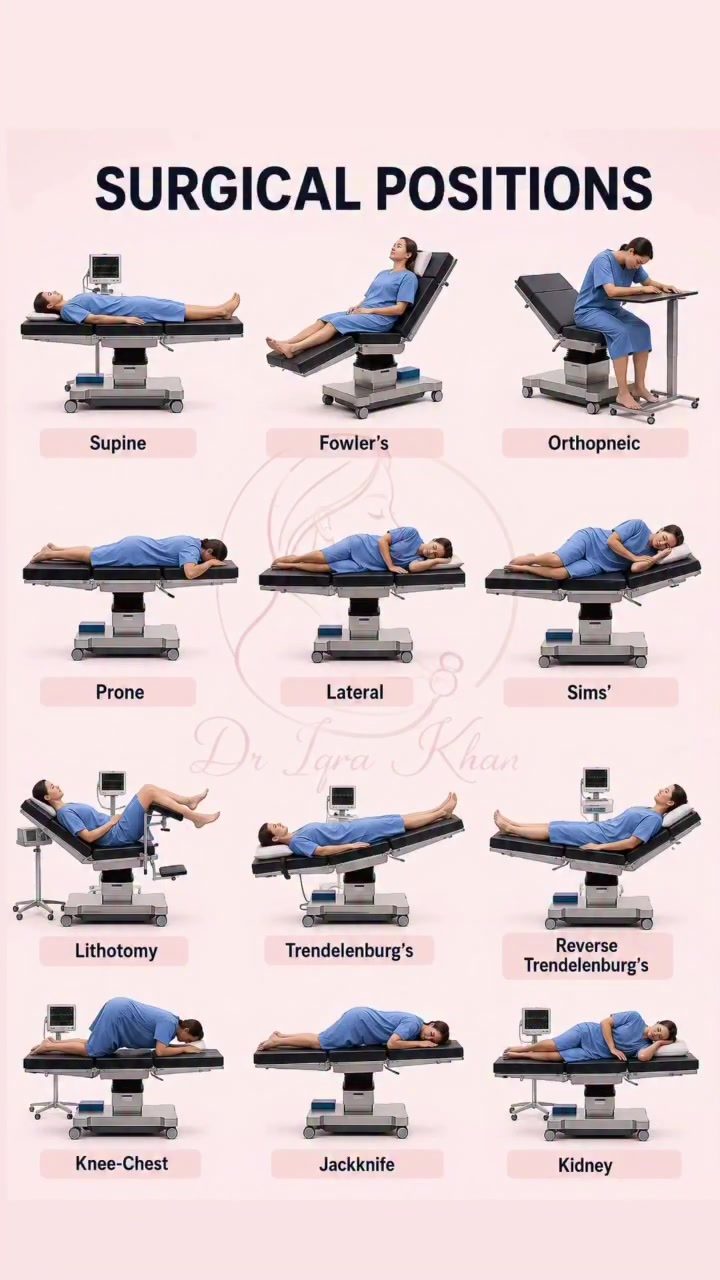
Surgical Positions: A Comprehensive Guide
Surgical positions are crucial for patient safety, surgical access, and preventing complications. Each position serves a specific purpose depending on the type of surgery being performed. Understanding these positions is essential for medical students, nurses, physiotherapists, and healthcare professionals.
Why This Matters
Correct patient positioning during surgery is vital for several reasons. It ensures better surgical access, reduces the risk of complications, and enhances patient safety. The right position can make a significant difference in the outcome of a surgical procedure. Additionally, proper positioning can help prevent issues such as nerve damage, pressure injuries, and respiratory problems.
Main Discussion
Common Surgical Positions
Supine Position
The supine position, where the patient lies on their back, is one of the most commonly used positions in surgery. It provides excellent access to the anterior (front) part of the body, making it ideal for procedures involving the abdomen, chest, and extremities. This position is also useful for monitoring vital signs and ensuring patient comfort.
Fowler’s Position
The Fowler’s position involves elevating the head and torso of the patient, typically at a 45- to 90-degree angle. This position is beneficial for surgeries on the head, neck, and upper chest. It also helps in reducing pressure on the lower back and improving breathing.
Orthopneic Position
The orthopneic position is similar to the Fowler’s position but with the patient sitting more upright, often at a 60- to 90-degree angle. It is particularly useful for patients with respiratory difficulties, as it allows for easier breathing. This position is commonly used during endoscopic procedures and surgeries on the chest and upper abdomen.
Prone Position
In the prone position, the patient lies face down. This position provides excellent access to the posterior (back) of the body, making it ideal for surgeries on the spine, brain, and buttocks. It is also useful for procedures involving the back, such as spinal surgery and certain orthopedic procedures.
Lateral Position
The lateral position, where the patient lies on their side, is useful for surgeries on the hips, kidneys, and shoulders. It provides good access to the lateral aspects of the body and can be modified to provide additional support and stability.
Sims’ Position
The Sims’ position involves the patient lying on their left side with the right knee bent and the left arm behind the back. This position is commonly used for rectal and vaginal examinations, as well as for certain surgical procedures involving the pelvis and lower abdomen.
Specialized Surgical Positions
Lithotomy Position
The lithotomy position involves the patient lying on their back with the legs elevated and supported in stirrups. This position is commonly used for gynecological and urological procedures, as it provides excellent access to the perineum and genital area. It is also useful for surgeries on the lower abdomen and pelvis.
Trendelenburg’s Position
The Trendelenburg’s position involves tilting the operating table so that the patient’s head is lower than their feet. This position is useful for surgeries on the lower abdomen and pelvis, as it helps to shift the patient’s internal organs away from the surgical site. It is also commonly used for procedures involving the lower extremities.
Reverse Trendelenburg’s Position
The reverse Trendelenburg’s position involves tilting the operating table so that the patient’s head is higher than their feet. This position is useful for surgeries on the upper abdomen and chest, as it helps to shift the patient’s internal organs away from the surgical site. It is also commonly used for procedures involving the head and neck.
Knee-Chest Position
The knee-chest position involves the patient kneeling with their chest supported on the operating table. This position is useful for surgeries on the rectum and perineum, as it provides excellent access to these areas. It is also commonly used for certain orthopedic procedures involving the spine and hips.
Jackknife Position
The jackknife position involves the patient lying on their abdomen with their hips flexed and their knees bent at a 90-degree angle. This position is commonly used for surgeries on the rectum, anus, and perineum, as it provides excellent access to these areas. It is also useful for certain orthopedic procedures involving the spine and hips.
Kidney Position
The kidney position, also known as the semilateral position, involves the patient lying on their side with the top leg flexed at the hip and knee. This position is commonly used for surgeries on the kidney, as it provides excellent access to the renal area. It is also useful for certain orthopedic procedures involving the hips and pelvis.
Importance of Positioning
Correct positioning is not just about access; it also plays a crucial role in preventing complications. Improper positioning can lead to pressure injuries, nerve damage, and respiratory problems. For example, the prone position can cause pressure on the face and eyes, while the lithotomy position can lead to nerve damage in the legs.
Patient Comfort and Safety
Patient comfort and safety are paramount during surgery. The right position can help reduce anxiety and discomfort, making the surgical experience less traumatic for the patient. Additionally, proper positioning can help prevent complications such as deep vein thrombosis (DVT) and pressure sores.
Practical Tips
For Healthcare Professionals
- Assess the Patient: Before positioning the patient, assess their overall health and any pre-existing conditions that may affect their ability to be positioned comfortably.
- Use Appropriate Equipment: Ensure that you have the right equipment, such as positioning pads, straps, and supports, to help maintain the patient’s position during surgery.
- Communicate with the Team: Work closely with the surgical team to ensure that everyone is on the same page regarding the patient’s position and any necessary adjustments.
- Monitor the Patient: Continuously monitor the patient for signs of discomfort, pressure injuries, or other complications.
For Patients
- Inform Your Surgeon: If you have any concerns about your position during surgery, discuss them with your surgeon beforehand.
- Communicate Clearly: During the procedure, if you experience any discomfort or pain, try to communicate this to the surgical team.
- Follow Pre- and Post-Operative Instructions: Adhere to any pre- and post-operative instructions provided by your healthcare team, as these can help ensure a smooth recovery.
Important Takeaways
Understanding and correctly implementing surgical positions is essential for patient safety, surgical access, and preventing complications. Each position has a specific purpose and is chosen based on the type of surgery being performed. Proper positioning can help reduce the risk of complications such as pressure injuries, nerve damage, and respiratory problems. Healthcare professionals should be well-versed in various surgical positions and the equipment needed to maintain them. Patients should also be aware of the importance of positioning and communicate any concerns to their surgical team.
Conclusion
Surgical positions are a critical aspect of surgical procedures, impacting patient safety, surgical access, and the outcome of the surgery. Proper positioning requires a thorough understanding of various positions and the ability to adapt to the specific needs of each patient. By mastering these positions, healthcare professionals can ensure better patient outcomes and reduce the risk of complications. Whether you are a medical student, nurse, or healthcare professional, knowing and applying the correct surgical positions is vital for successful surgical procedures.
Watch the Reel
Questions readers ask
What is the Trendelenburg position and when is it commonly used?
The Trendelenburg position involves placing the patient supine with the head tilted down and the feet tilted up. This position is often used for surgeries in the pelvic and abdominal regions, such as gynecological procedures, to enhance access to the surgical site and improve venous return. It is also used to manage shock and hypotension by increasing blood flow to the heart and brain.
Why is correct patient positioning important for surgical outcomes?
Correct patient positioning is crucial for several reasons. It ensures that the surgical site is easily accessible, reduces the risk of nerve damage, pressure injuries, and respiratory problems. Proper positioning also minimizes complications and enhances overall patient safety, leading to better surgical outcomes.
What are the key considerations when positioning a patient for surgery?
Key considerations include the type of surgery, the patient's overall health, and any pre-existing conditions. It is essential to ensure that the surgical site is easily accessible, that the patient is stable and comfortable, and that there is minimal risk of complications. Proper alignment and support of the body are also crucial to prevent injuries during the procedure.
How can medical professionals ensure optimal surgical access to the surgical site?
Medical professionals can ensure optimal surgical access by understanding and correctly applying surgical positions. This involves knowing the specific requirements of different surgeries and positioning the patient accordingly. Communication with the surgical team and anticipating the surgeon's needs during the procedure are also essential for achieving the best access to the surgical site.
What are some common complications that can arise from improper patient positioning?
Improper patient positioning can lead to several complications, including nerve damage, pressure injuries, and respiratory problems. These issues can cause patient discomfort, prolonged recovery times, and even permanent damage in severe cases. Ensuring correct positioning is vital for preventing these complications and achieving optimal surgical outcomes.
What are some essential surgical techniques for preventing complications during surgery?
Essential surgical techniques include proper patient positioning, adequate padding and support, and regular monitoring. This involves using the correct surgical positions, ensuring that the patient is stable and comfortable, and checking for signs of discomfort or complications during the procedure. Effective communication and teamwork among healthcare professionals are also crucial for preventing complications.
Recent articles
Fresh deep dives from the latest Reels we unpacked.




Comments
Be the first to comment.