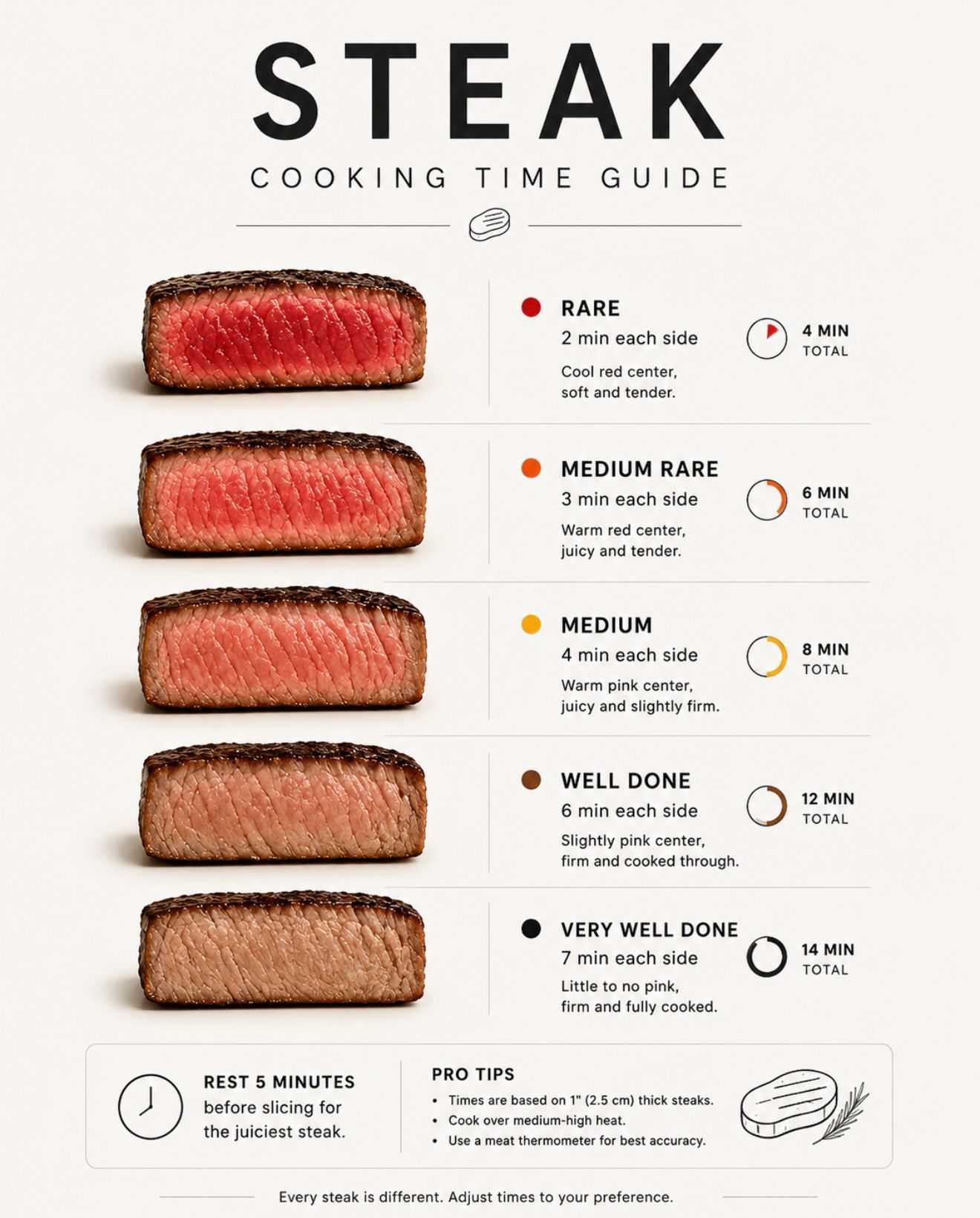
Steak Cooking Times
Cooking steak is an art that, when mastered, can transform your meals into a culinary delight. Understanding steak cooking times is crucial for achieving the perfect level of doneness. Whether you prefer a rare, medium-rare, medium, well-done, or very well-done steak, each level requires specific cooking times to ensure the best results.
Why This Matters
Eating healthy often gets a bad reputation for being bland, strict, and monotonous. However, learning a few basic cooking techniques can revolutionize your nutrition and make healthy eating more enjoyable. Simple guides, such as steak cooking times, can transform your meals from mundane to mouthwatering. When food tastes good, you're more likely to stay consistent with your diet, enjoy your meals, and reduce cravings for unhealthy food. Small details, like letting steak rest before slicing, can make a massive difference in texture and flavor.
Main Discussion
Understanding Steak Cooking Times
Steak cooking times vary based on the desired level of doneness. Here are some guidelines to help you cook your steak to perfection:
- Rare: A rare steak is usually cooked for 2-3 minutes per side for a 1-inch thick steak. Look for an internal temperature of 125°F (52°C).
- Medium-rare: For a medium-rare steak, cook it for 3-4 minutes per side for a 1-inch thick steak. The internal temperature should be around 135°F (57°C).
- Medium: A medium steak requires cooking for 4-5 minutes per side for a 1-inch thick steak. The internal temperature should be around 145°F (63°C).
- Well-done: For a well-done steak, cook it for 5-7 minutes per side for a 1-inch thick steak. The internal temperature should reach 160°F (71°C).
- Very well-done: A very well-done steak requires even longer cooking times, usually 10 minutes per side. The internal temperature should be around 197°F (92°C).
Resting the Meat
Resting the meat after cooking is a crucial step that often gets overlooked. Allowing the steak to rest for about 5 minutes before slicing helps retain the juices, ensuring a more flavorful and tender steak. During this time, the juices redistribute throughout the meat, enhancing the overall taste and texture.
Important Tips
Using a Thermometer
Using a meat thermometer is the most accurate way to determine the doneness of your steak. Insert the thermometer into the thickest part of the steak to get a precise reading. This method removes the guesswork and ensures that your steak is cooked to your desired level of doneness.
Cooking Techniques
Different cooking techniques can affect the outcome of your steak. Pan-searing, grilling, and broiling are popular methods. Each technique has its unique advantages:
- Pan-searing: This method involves cooking the steak in a hot pan with a small amount of oil. It creates a flavorful crust and is great for achieving a nice sear.
- Grilling: Grilling adds a smoky flavor and creates attractive grill marks. It's ideal for summer cookouts and adds a rustic touch to your steak.
- Broiling: Broiling uses high heat from above, similar to grilling, but indoors. It's a quick and convenient method, especially during colder months.
Practical Tips
Preparing the Steak
Before cooking, bring your steak to room temperature. This helps it cook more evenly. Pat the steak dry with a paper towel to remove excess moisture, which can interfere with the searing process. Season the steak generously with salt and pepper on both sides.
Choosing the Right Cut
Different cuts of steak have varying levels of fat and tenderness, which can affect cooking times. Popular cuts include:
- Ribeye: Known for its marbling and rich flavor, ribeye steaks are often cooked to medium-rare or medium to enjoy the tenderness and juiciness.
- New York strip: This cut has a good balance of flavor and tenderness. It's versatile and can be cooked to various levels of doneness.
- Filet mignon: A leaner cut, filet mignon is delicate and tender. It's best cooked to medium-rare to avoid overcooking.
- Sirloin: A leaner and more economical option, sirloin can be a bit tougher. It benefits from marinating or cooking to medium-rare to maintain tenderness.
Important Takeaways
Cooking times play a vital role in achieving your desired level of doneness. Resting the meat, using a thermometer, and choosing the right cooking technique are all essential for a perfect steak. Additionally, understanding the different cuts of steak and how they cook can enhance your culinary skills.
Conclusion
Mastering steak cooking times can elevate your meals from ordinary to extraordinary. By following these guidelines and techniques, you'll be well on your way to creating delicious, perfectly cooked steaks. Enjoy the process and savor the results!
Watch the Reel
Questions readers ask
How do steak cooking times vary for different levels of doneness?
Steak cooking times depend significantly on the desired level of doneness. For a rare steak, you'll want to cook it for about 2-3 minutes per side for a 1-inch thick steak. For medium-rare, aim for 4-5 minutes per side, while a medium steak typically requires 5-6 minutes per side. Well-done steaks need about 6-7 minutes per side. However, cooking times can vary based on the thickness of the steak and the heat of your pan or grill, so it's a good idea to use a meat thermometer to ensure you reach the desired internal temperature.
What are the recommended internal temperatures for different levels of steak doneness?
The internal temperatures for different levels of steak doneness are as follows: rare is 125°F (52°C), medium-rare is 135°F (57°C), medium is 145°F (63°C), well-done is 160°F (71°C), and very well-done is 170°F (77°C). Using a meat thermometer to check the internal temperature is the most accurate way to determine doneness. Insert the thermometer into the thickest part of the steak for an accurate reading.
Why is it important to let a steak rest after cooking?
Resting a steak after cooking allows the juices to redistribute throughout the meat, ensuring a juicier and more flavorful steak. If you cut into a steak immediately after cooking, the juices will spill out, leaving the steak dry. Aim to let your steak rest for about 5-10 minutes before slicing, tented loosely with aluminum foil to keep it warm.
What is the best way to cook a steak for beginners?
For beginners, using a cast-iron skillet on the stovetop is a simple and effective method. Preheat the skillet over high heat until smoking hot. Pat the steak dry with paper towels, season both sides with salt and pepper, and add a small amount of oil with a high smoke point to the skillet. Place the steak in the skillet and cook undisturbed until a crust forms, usually 2-3 minutes per side, depending on the thickness and desired doneness.
How can I achieve a perfectly cooked steak every time?
To achieve a perfectly cooked steak consistently, start by choosing a steak with good marbling, which enhances flavor and tenderness. Use a meat thermometer to monitor the internal temperature and avoid overcooking. Let the steak come to room temperature before cooking, and preheat your pan or grill to ensure even cooking. Finally, allow the steak to rest before serving to retain its juices and flavor.
What are some easy steak recipes for weeknight meals?
Steak fajitas, stir-fried steak, and steak and vegetable skewers are great options for weeknight meals. Steak fajitas involve cooking thinly sliced steak with peppers and onions, while a stir-fried steak can be made with a variety of vegetables and a flavorful sauce. Steak and vegetable skewers are a fun and easy grilling option, perfect for outdoor meals or quick weeknight dinners. You can also try classic steak salads or steak and potato dinners.
What is the best way to cook a steak in the oven?
Cooking a steak in the oven is an excellent method for achieving even cooking, especially for thicker cuts. After searing the steak in a hot cast-iron skillet on the stovetop to develop a flavorful crust, transfer the skillet to a preheated oven at 400°F (200°C). Finish cooking the steak in the oven until it reaches the desired internal temperature, then let it rest before serving. This method ensures a juicy, evenly cooked steak without the risk of overcooking.
Recent articles
Fresh deep dives from the latest Reels we unpacked.




Comments
Be the first to comment.