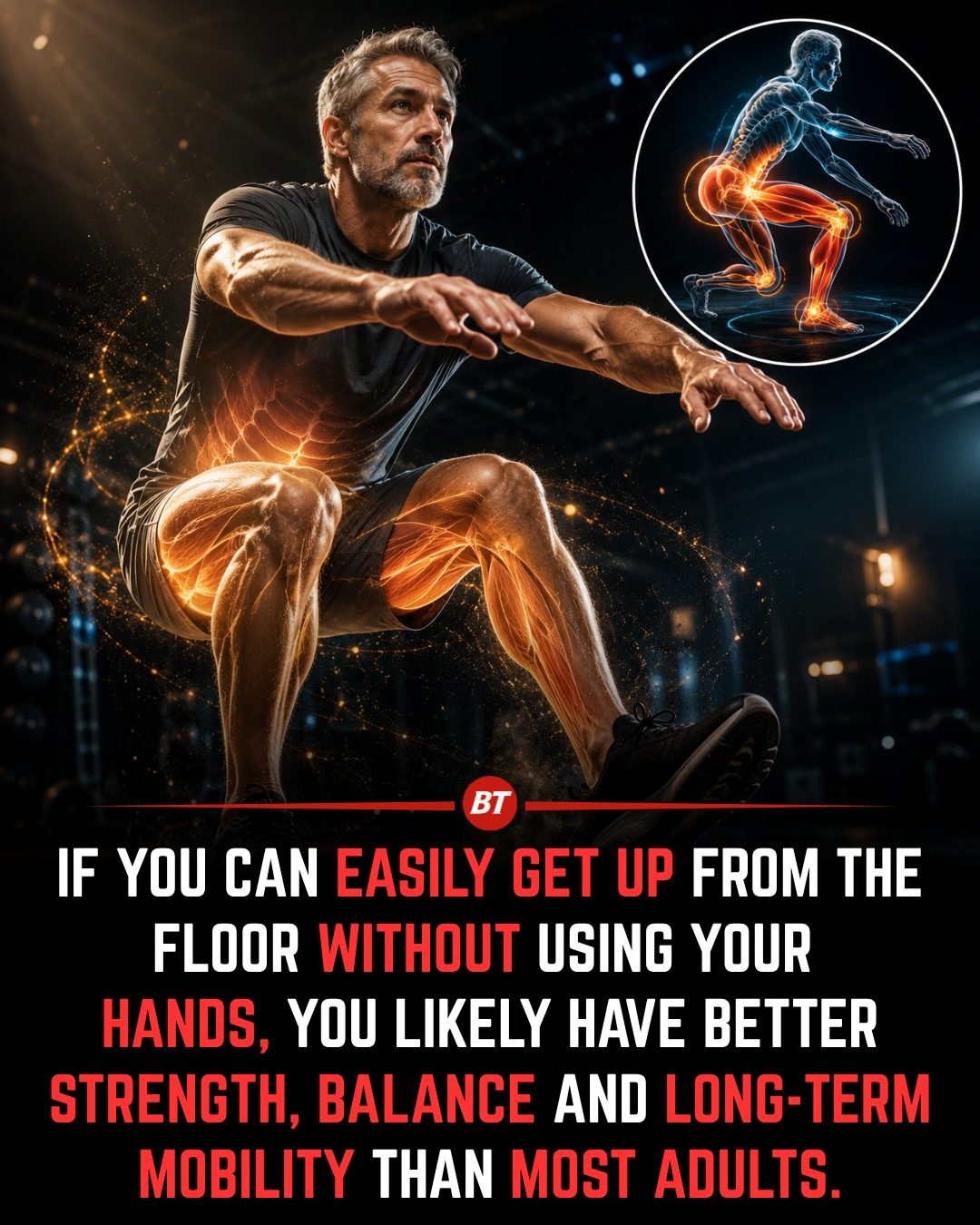
The Sitting-Rising Test: A Simple Measure of Functional Fitness and Mobility
Getting up from the floor without using your hands might seem like a basic task, but it's actually a great indicator of your overall strength, balance, and mobility. This simple movement requires coordination among various parts of your body, including your legs, core, joints, and brain. If one of these areas is lacking, the movement can become quite challenging. This is why health professionals often use the Sitting-Rising Test (SRT) to assess functional fitness quickly.
Why This Matters
The ability to stand up from the floor without assistance is not just about convenience; it's about maintaining independence and overall health. As we age, maintaining good mobility and strength becomes crucial for performing daily activities and reducing the risk of falls and injuries. The SRT provides valuable insights into how well your muscles and joints work together, making it a useful tool for assessing functional fitness.
The Science Behind the Sitting-Rising Test
The Sitting-Rising Test, or SRT, is a straightforward assessment that evaluates a person's ability to move from a sitting position on the floor to a standing position without using their hands for support. The test is scored based on the number of supports—such as hands, knees, or forearms—used during the movement. The fewer supports needed, the better the overall movement quality and functional fitness.
Research has shown that adults who score higher on the SRT have a significantly lower risk of premature death. A study published in the European Journal of Preventive Cardiology found that individuals who could get up from the floor with minimal support had better long-term health outcomes. This suggests that the test reflects a combination of muscle strength, balance, flexibility, and coordination—all of which are essential for healthy aging.
Key Components of the Sitting-Rising Test
To perform the Sitting-Rising Test, you need to engage several key components of your body:
- Leg Strength: Your legs need enough strength to lift your body from the floor.
- Core Stability: Your core must keep you stable and balanced throughout the movement.
- Joint Mobility: Your joints, particularly your hips, knees, and ankles, need good mobility to allow for smooth and controlled movement.
- Balance and Coordination: Your brain relies on balance and coordination to keep you upright and prevent falls.
Practical Tips for Improving Your SRT Score
If you find it challenging to stand up from the floor without using your hands, there are several exercises and practices you can incorporate into your routine to improve your strength, balance, and mobility:
- Squats and Lunges: These exercises help strengthen your leg muscles and improve joint mobility.
- Core Exercises: Incorporate planks, bridges, and other core-strengthening exercises to improve stability and balance.
- Balance Training: Activities like yoga and tai chi can enhance your balance and coordination.
- Practice the Movement: Regularly practice getting up from the floor without using your hands. Start with a stable surface and gradually progress to more challenging positions.
Important Takeaways
- Indicator of Functional Fitness: The ability to stand up from the floor without using your hands is a good indicator of overall strength, balance, and mobility.
- Health Benefits: Higher SRT scores are associated with a lower risk of premature death and better long-term health outcomes.
- Practical Assessment: The SRT provides a quick and practical way to assess how well your muscles and joints work together during everyday activities.
- Improvement Strategies: Incorporating exercises like squats, lunges, balance training, and core exercises can help improve your SRT score and overall mobility.
Conclusion
The Sitting-Rising Test is a simple yet powerful tool for assessing functional fitness and mobility. By incorporating exercises that target leg strength, core stability, joint mobility, and balance, you can improve your SRT score and enhance your overall physical condition. Whether you're looking to maintain independence as you age or simply want to stay active and healthy, focusing on these key areas can make a significant difference in your daily life.
Watch the Reel
Questions readers ask
What exactly is the Sitting-Rising Test (SRT)?
The Sitting-Rising Test is a simple assessment that measures your ability to stand up from the floor without using your hands. This test is a quick way to evaluate your strength, mobility, and overall body coordination.
How can the Sitting-Rising Test help prevent falls?
The SRT is a useful indicator of your overall strength and balance. By mastering this test, you can improve your body's coordination, which in turn helps reduce the risk of falls and enhances your ability to perform daily activities independently.
What parts of the body does the Sitting-Rising Test evaluate?
This test assesses the coordination and strength of various body parts, including your legs, core, joints, and even your brain. It requires a full-body effort to stand up from the floor, making it a comprehensive mobility assessment.
Who can benefit from trying the Sitting-Rising Test?
The SRT is beneficial for adults of all ages, but it is particularly useful for seniors. It provides a clear picture of your functional fitness and can help identify areas where you might need to improve your strength and balance.
Can the Sitting-Rising Test be done at home?
Yes, the Sitting-Rising Test can easily be done at home. All you need is a clear floor space. It's a simple yet effective way to test your mobility and strength without any special equipment.
What if I struggle with the Sitting-Rising Test?
If you find the SRT challenging, it might indicate areas where your strength, balance, or mobility needs improvement. Consider incorporating exercises that focus on these aspects, such as sit-to-stand movements.
Related deep dives
Similar reads based on topic and creator.




Recent articles
Fresh deep dives from the latest Reels we unpacked.




Comments
Be the first to comment.