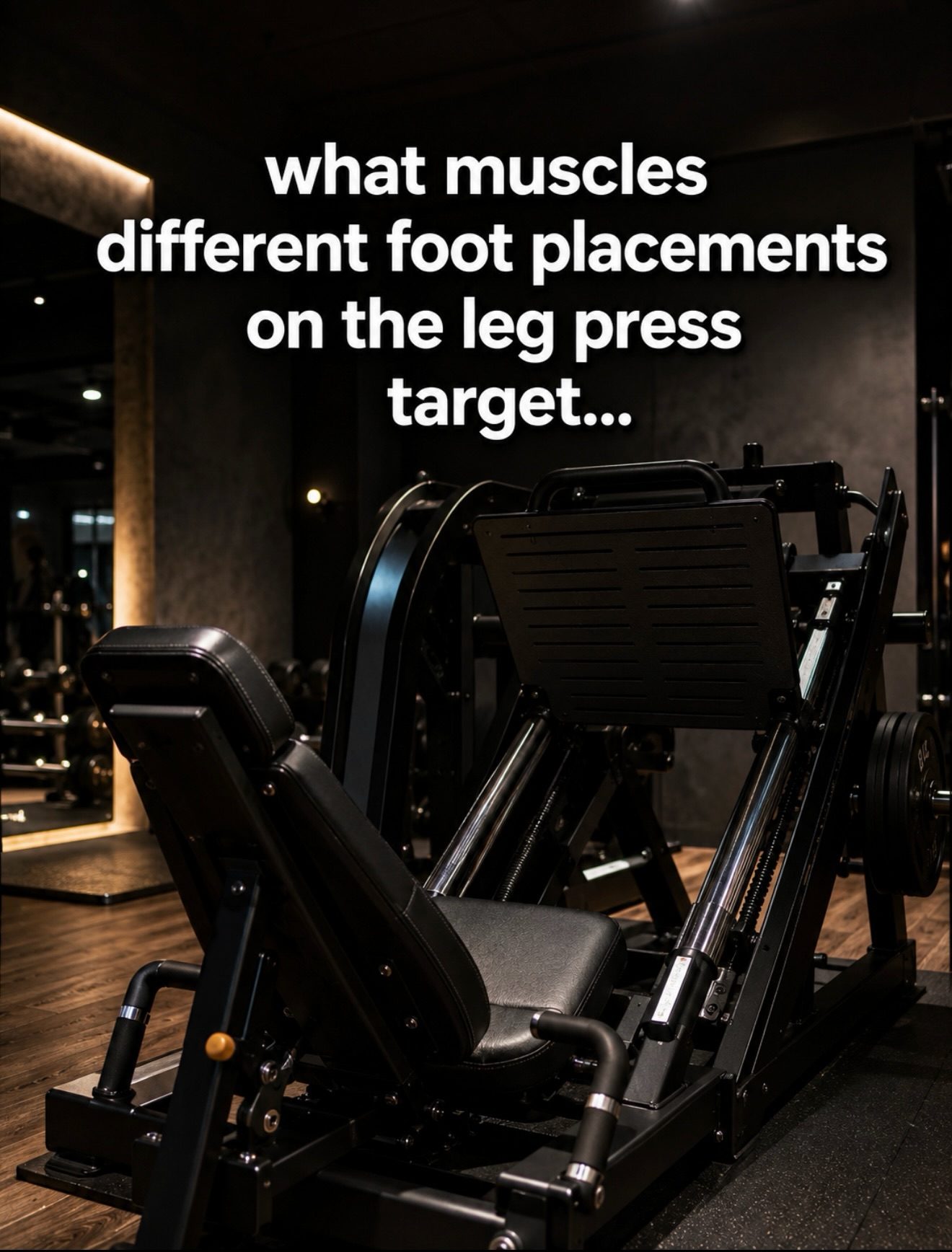
Avoiding Mistakes with Leg Press Foot Placement
The leg press machine is the ideal fitness equipment for targeting specific muscles. However, it's often overlooked in workout routines. Experts agree that subtle shifts in foot placement can dramatically alter the muscles engaged during the exercise. To make the most out of your workouts, learn how to adjust your stance.
Why This Matters
Leg press machines are versatile and effective for building muscle and strength in your lower body. However, many people don't realize how much of a difference the positioning of your feet makes. By understanding how to target different muscles, you can avoid stagnation in your fitness journey and achieve your goals more efficiently. The right foot placement can help you focus on specific muscle groups, making your workouts more effective and meaningful.
The Impact of Foot Placement on Muscle Targeting
High Stance
A high stance on the leg press machine, where your feet are positioned higher on the platform, shifts the focus to your glutes and hamstrings. This placement is ideal for those looking to build strength and definition in the back of their legs and buttocks. By adjusting your foot position, you can easily incorporate exercises that target these muscle groups.
Narrow Stance
A narrow stance, where your feet are closer together and positioned near the center of the platform, emphasizes the vastus lateralis, which is the outer part of your quadriceps. This stance is beneficial for those aiming to develop the outer sweep of their quads, creating a more toned and defined look.
Low Stance
A low stance, with your feet placed lower on the platform, targets the quadriceps more dominantly. This position is great for focusing on the front of your thighs and building muscle mass in that area.
Wide Turned-Out Stance
A wide, turned-out stance, where your feet are positioned wider than shoulder-width and turned out at an angle, emphasizes the inner thighs and adductors. This stance is excellent for toning and strengthening the muscles on the inside of your thighs.
Practical Tips for Effective Leg Press Workouts
Mastering the Negative
Controlling the negative portion of the leg press movement—the part where you're lowering the weight—can significantly enhance your workout's effectiveness. By lowering the weight slowly and with control, you maximize muscle engagement and improve overall strength.
Avoiding Ego Lifting
Ego lifting involves using more weight than you can handle safely and effectively. This can lead to improper form and potential injury. Instead, focus on using a weight that allows you to complete your reps with good form and full range of motion.
Maintaining Proper Form
Ensure that you are going through the full range of motion when performing leg presses. This means that you should be able to achieve a deep squat position without rounding your lower back. Proper form not only helps you target the right muscles but also reduces the risk of injury.
Important Takeaways
The leg press machine is a powerful tool for muscle development, but only if used correctly. By adjusting your foot placement, you can target different muscle groups and achieve a more balanced and effective workout. Understanding the impact of different stances can help you avoid the mistake of using the same setup every time, thus preventing muscle stagnation. Remember, it's not always about adding more exercises; sometimes, it's about better positioning and intention.
Conclusion
The leg press machine offers a range of possibilities for targeting specific muscles. Whether you're aiming to build your glutes, quads, or inner thighs, adjusting your foot placement can make a significant difference. By controlling the negative, avoiding ego lifting, and maintaining proper form, you can maximize your workouts and achieve your fitness goals more efficiently. Embrace the versatility of the leg press machine and watch your muscle development improve.
Watch the Reel
Questions readers ask
How does leg press foot placement affect muscle targeting?
Leg press foot placement alters the emphasis on specific muscles. Placing your feet higher on the platform targets your glutes and hamstrings more, while a lower foot placement emphasizes your quads. The width of your stance can also shift the focus; a narrower stance works the outer quads more.
What is the best leg press stance to target the glutes?
To target your glutes effectively, place your feet higher on the leg press platform, above your hip level, and use a stance that is about shoulder-width apart. This position engages your glutes and hamstrings more intensely.
Can leg press foot placement help prevent workout plateaus?
Yes, adjusting your foot placement can help prevent workout plateaus by changing the muscles you emphasize. This variety can challenge your muscles in new ways, promoting growth and strength gains. Try different stances and foot positions to keep your workouts dynamic.
How does a narrow stance on the leg press benefit muscle growth?
A narrow stance on the leg press shifts the focus to your outer quads. This targeted approach can help stimulate muscle growth in that specific area, contributing to overall quad development and definition.
What leg press foot placement is ideal for targeting the hamstrings?
To emphasize your hamstrings, place your feet higher on the leg press platform, similar to the glute-focused stance. Keep your stance at or slightly above hip level and ensure your feet are firmly placed with a moderate width.
Why is it important to adjust leg press placements regularly?
Regularly adjusting your leg press placements ensures that you are not overworking one muscle group while neglecting others. This balanced approach promotes overall muscle development and reduces the risk of imbalances and injuries.
What is the correct way to position my feet on the leg press for overall quad development?
For overall quad development, place your feet at a medium height on the leg press platform, about hip level, and use a shoulder-width stance. This position allows for a balanced activation of the quadriceps, contributing to well-rounded muscle growth.
Recent articles
Fresh deep dives from the latest Reels we unpacked.




Comments
Be the first to comment.