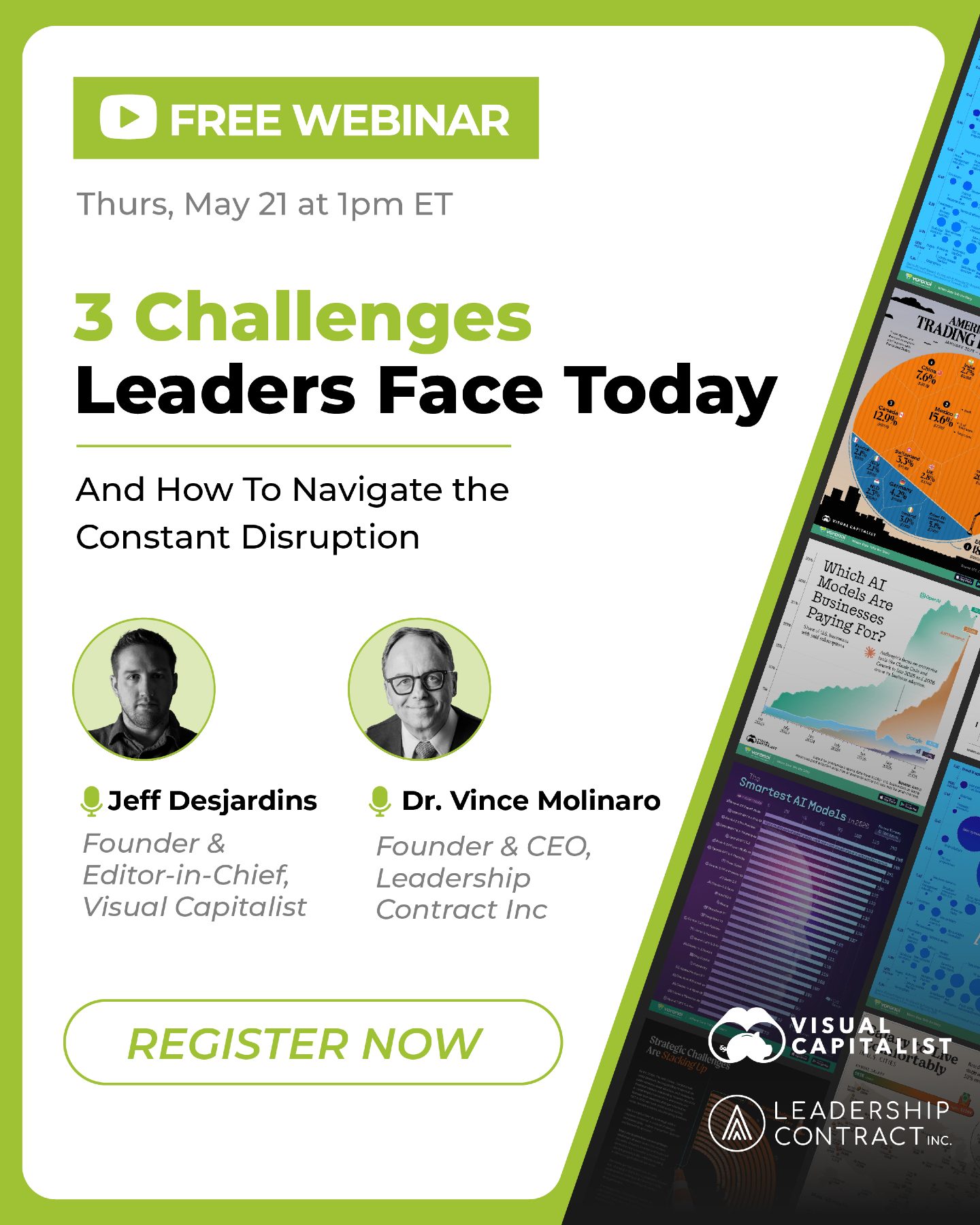
Leadership in Uncertain Times: Navigating AI, Talent Shortages, and Geopolitical Risks
Today's business leaders face an unprecedented level of uncertainty. From the rapid advancement of artificial intelligence (AI) to persistent talent shortages and geopolitical tensions, the landscape is constantly shifting. To thrive in this environment, leaders must adapt and innovate continuously. A recent webinar, hosted by Visual Capitalist's Editor-in-Chief, Jeff Desjardins, and Dr. Vince Molinaro from Leadership Contract Inc., dives into the challenges leaders face and how to navigate these disruptions effectively.
Why This Matters
Understanding the key challenges and developing strategies to address them is crucial for organizational success. This webinar provides valuable insights into how leaders can navigate these challenges.
The Three Major Challenges
AI Disruption
Artificial Intelligence (AI) is transforming industries at an accelerated pace. While AI offers immense potential, it also presents significant challenges. Leaders must stay informed about the latest AI trends and understand how to integrate these technologies into their operations.
Talent Shortages
The competition for top talent is fierce, and many organizations struggle to find and retain skilled employees. This talent gap can impede growth and innovation. Leaders need to develop strategies for attracting, retaining, and developing talent to stay competitive.
Geopolitical Uncertainty
Geopolitical risks can disrupt supply chains, affect market access, and influence regulatory environments. Leaders must be agile and resilient, ready to pivot strategies in response to global events. Understanding how to navigate these uncertainties is vital for long-term success.
Data-Driven Leadership
The webinar emphasizes the importance of data-driven decision-making. By leveraging data, leaders can gain insights into market trends, customer behavior, and operational efficiencies. This approach allows for more informed and strategic decisions, helping organizations navigate the challenges more effectively.
The Role of Data Analytics
Data analytics provides valuable insights that can drive strategic decisions. By analyzing data on market trends, customer behavior, and operational efficiencies, leaders can make informed choices that enhance organizational performance. For instance, data-driven insights can help in identifying potential talent gaps, optimizing supply chains, and mitigating geopolitical risks.
Strategic Planning with Data
Strategic planning involves setting long-term goals and developing a roadmap to achieve them. Data-driven strategic planning ensures that these goals are aligned with market realities and organizational strengths. By incorporating data into the planning process, leaders can anticipate future challenges and develop proactive strategies to address them.
Practical Tips for Leaders
Embrace Change
Change is constant, and leaders must be adaptable. Embrace new technologies, processes, and market trends. Stay informed about industry developments and be ready to pivot strategies as needed.
Foster a Culture of Innovation
Encourage a culture of innovation within the organization. This involves promoting creativity, experimenting with new ideas, and rewarding innovative thinking. A culture of innovation helps in staying ahead of the competition and navigating disruptions.
Develop a Talent Strategy
Attracting and retaining top talent is crucial for organizational success. Develop a comprehensive talent strategy that includes recruiting, training, and retaining employees. Invest in employee development programs to enhance skills and foster growth.
Build Resilience
Geopolitical uncertainties and market disruptions can impact business operations. Build resilience by diversifying supply chains, maintaining financial flexibility, and creating contingency plans. Resilience ensures that the organization can withstand and recover from disruptions.
Important Takeaways
Stay Informed
Continuously learn and stay updated on industry trends, new technologies, and market developments. Knowledge is power, and staying informed helps in making strategic decisions.
Be Adaptable
The business environment is dynamic, and leaders must be adaptable. Be ready to pivot strategies and embrace change. Flexibility and adaptability are key to navigating uncertainties.
Prioritize Talent
In a competitive talent market, prioritizing talent acquisition and retention is crucial. Develop a robust talent strategy that includes recruiting, training, and retaining top talent.
Leverage Data
Data-driven decision-making enhances strategic planning and execution. Utilize data analytics to gain insights into market trends, customer behavior, and operational efficiencies.
Build a Resilient Culture
Create a culture that fosters innovation, adaptability, and resilience. Encourage creativity, experimentation, and proactive problem-solving.
Conclusion
Navigating the challenges of AI disruption, talent shortages, and geopolitical uncertainties requires a proactive and strategic approach. By embracing data-driven decision-making, fostering innovation, and building resilience, leaders can successfully navigate these disruptions and drive organizational success. The insights from this webinar provide valuable guidance for leaders aiming to thrive in an ever-changing business landscape.
Watch the Reel
Questions readers ask
What specific AI advancements were discussed in the webinar and how can leaders adapt to them?
The webinar covered AI advancements such as automation, machine learning, and data analytics. To adapt, leaders should focus on upskilling their workforce, fostering a culture of innovation, and leveraging AI to enhance decision-making processes. Additionally, understanding the ethical implications of AI is crucial for responsible leadership.
How did the speakers address the persistent issue of talent shortages?
Jeff Desjardins and Dr. Vince Molinaro discussed strategies like investing in employee development, creating flexible work arrangements, and promoting diversity and inclusion. They also emphasized the importance of employer branding and effective recruitment strategies to attract top talent.
What geopolitical risks were highlighted, and what steps can leaders take to mitigate them?
The webinar touched on risks such as trade disputes, regulatory changes, and political instability. To mitigate these risks, leaders should implement robust risk management strategies, maintain open lines of communication with stakeholders, and stay informed about global trends and their potential impact on the business.
What was the main takeaway from the webinar on navigating business uncertainty?
The main takeaway was the importance of agility and continuous adaptation. Leaders should foster a culture of flexibility, encourage open communication, and be prepared to pivot strategies quickly in response to changing circumstances. Emphasizing resilience and innovation can help organizations thrive in uncertain times.
How can leaders apply the strategies discussed in the webinar to their own organizations?
Leaders can start by assessing their current leadership practices and identifying areas for improvement. Implementing the discussed strategies involves creating a roadmap for change, engaging employees in the process, and continuously evaluating the effectiveness of new initiatives. Regularly seeking feedback and being open to adjustments are key to successful adaptation.
Related deep dives
Similar reads based on topic and creator.

Recent articles
Fresh deep dives from the latest Reels we unpacked.




Comments
Be the first to comment.