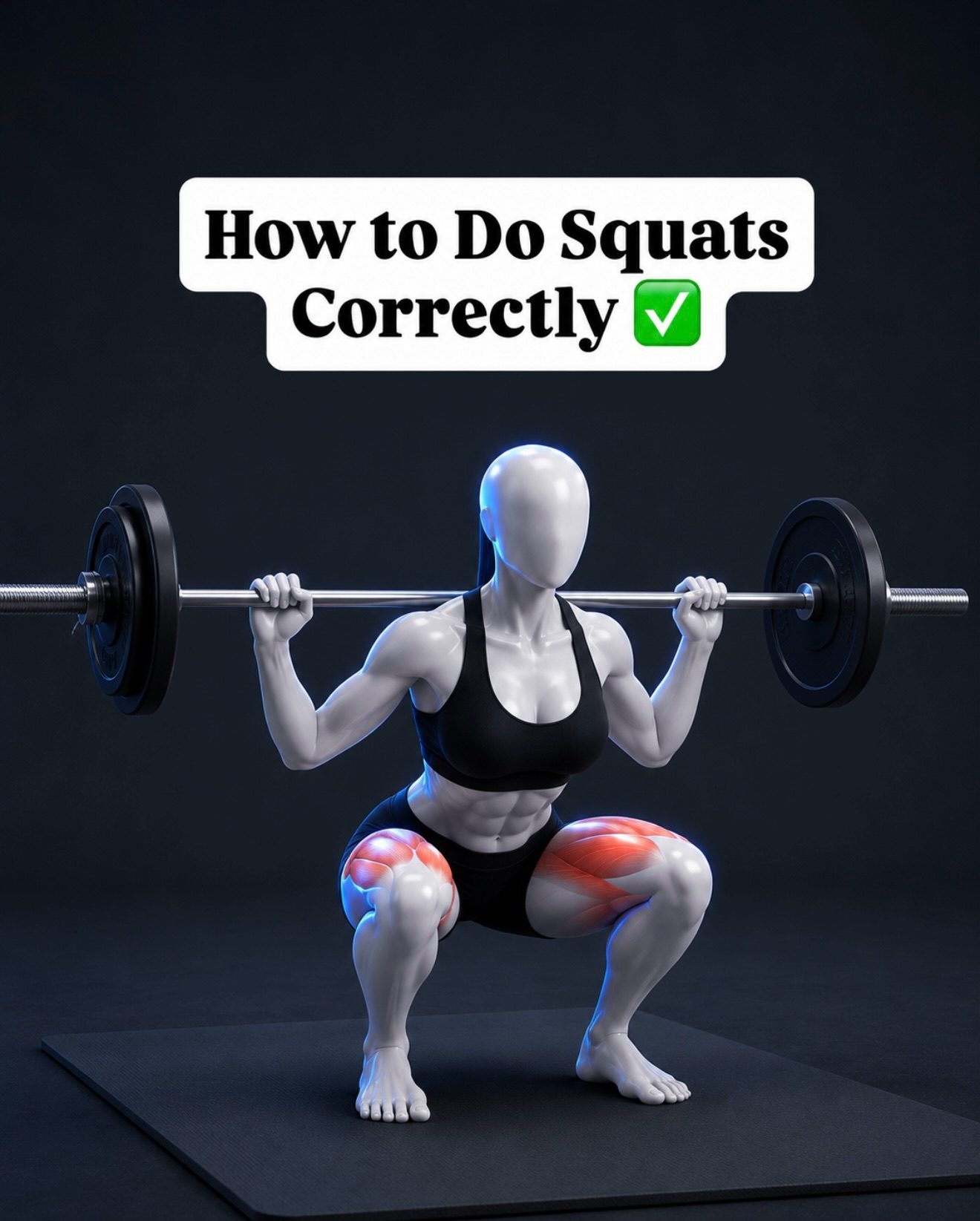
Squat Form Correction for Optimal Results
Mastering the squat is crucial for building stronger quads, glutes, hamstrings, and core. However, even small form mistakes can significantly reduce results and increase stress on your knees, hips, and lower back. Understanding and correcting these mistakes can enhance your workout efficiency and reduce the risk of injury.
Why This Matters
Proper squat form is essential for maximizing the benefits of this compound exercise. Squats are a foundational movement in many workout routines, but executing them incorrectly can lead to ineffectiveness and potential harm. By focusing on correct technique, you can ensure that you are targeting the right muscle groups and avoiding unnecessary strain on your joints.
Main Discussion
Key Squat Cues for Correct Form
Correct squat form involves several key cues that help maintain proper alignment and muscle engagement. These cues are designed to keep your body stable and controlled throughout the movement:
- Keep Your Spine Neutral: Maintaining a neutral spine ensures that your back is not rounded or arched excessively, which can put unnecessary pressure on your lower back.
- Keep Your Chest Proud and Core Braced: This helps to stabilize your torso and prevent rounding of the lower back. It also helps in maintaining a strong core, which is crucial for overall stability.
- Let Your Knees Track in the Same Direction as Your Toes: This prevents your knees from caving in and ensures that your knees and toes are aligned, distributing weight evenly across your feet.
- Keep Your Heels Firmly Planted on the Floor: This helps maintain balance and ensures that your weight is distributed properly. It also helps in activating your glutes and hamstrings more effectively.
- Maintain Balance Over Your Midfoot: This helps in keeping your body centered and balanced, preventing you from shifting your weight too far forward or backward.
- Control the Descent and Drive Up with Intent: Controlling the movement ensures that you are engaging the correct muscles and reducing the risk of injury.
Common Squat Mistakes to Avoid
Despite knowing the correct form, many people still make common mistakes that can hinder their progress and increase the risk of injury. Here are some mistakes to avoid:
- Rounding Your Lower Back: This can put excessive pressure on your spine and lead to lower back pain.
- Letting Your Knees Collapse Inward: This can cause knee pain and reduce the effectiveness of the exercise.
- Lifting Your Heels Off the Floor: This can shift your weight forward and put unnecessary strain on your knees.
- Shifting the Bar Too Far Forward: If you are squatting with a barbell, shifting it too far forward can cause you to lean too far forward and lose balance, which is risky when using heavy weight.
- Losing Tension in Your Core: This can lead to rounding of the lower back and reduce overall stability and control.
Individual Variations in Squat Form
It’s important to note that everyone’s squat will look slightly different based on factors such as mobility, limb length, and anatomy. Instead of forcing a specific squat style, focus on stability, control, and pain-free movement. This approach ensures that you are working within your body’s natural limitations and reducing the risk of injury.
Practical Tips
Incorporating Proper Squat Form into Your Workout
To incorporate proper squat form into your workout, consider the following practical tips:
- Warm-Up Properly: Before starting your squats, ensure you have a thorough warm-up to prepare your muscles and joints. This can include dynamic stretches and light cardio.
- Start Light: Begin with a lighter weight to focus on form. As you become more comfortable with the movement, gradually increase the weight while maintaining proper technique.
- Use a Mirror or Video Feedback: Using a mirror or recording yourself can help you identify any form issues and make necessary adjustments.
- Consult a Fitness Professional: If you are unsure about your form, consider working with a fitness professional who can provide personalised guidance and corrections.
Utilizing Fitness Apps for Guidance
Fitness apps, like Workit, can be invaluable tools for improving your squat form. These apps offer guided workout programs, exercise demonstrations, progress tracking, and personalized fitness plans. Additionally, they provide nutrition tools, calorie and macro calculators, healthy recipes, and reminders to help you build sustainable results.
Important Takeaways
- Proper Squat Form: Mastering the key squat cues is essential for optimal results and injury prevention.
- Avoid Common Mistakes: Be aware of common mistakes and work to correct them in your technique.
- Individual Variations: Recognize that everyone’s squat form will be slightly different, and focus on stability and control.
- Consistent Practice: Regular practice and mindfulness of your form will lead to better strength gains and overall fitness.
Conclusion
Mastering the squat is a fundamental aspect of strength training that can greatly enhance your overall fitness. By focusing on proper form, avoiding common mistakes, and utilizing resources like fitness apps, you can achieve optimal results and reduce the risk of injury. Consistency and mindfulness in your technique will lead to long-term gains and a stronger, more functional body.
Watch the Reel
Questions readers ask
What are the most common mistakes people make when squatting?
People often make mistakes like letting their knees cave in, rounding their back, or not keeping their heels flat. These errors can reduce the effectiveness of the exercise and lead to potential injuries in the knees, hips, and lower back.
How does proper squat form affect muscle engagement?
Proper squat form ensures that the right muscles, such as the quads, glutes, and hamstrings, are targeted effectively. Maintaining a neutral spine, keeping the knees aligned, and preventing the knees from extending past the toes are crucial for maximizing muscle engagement and achieving the best results.
What is the importance of keeping heels on the floor during a squat?
Keeping your heels on the floor while squatting helps maintain balance and stability, allowing for a deeper squat and better glute and hamstring activation. It also helps prevent excessive forward lean, which can put unnecessary strain on your lower back.
How does core engagement impact squat performance?
Engaging your core during squats helps stabilize your spine and maintain proper form, especially during the descent and ascent. A strong core supports the weight and ensures that your lower back remains neutral, reducing the risk of injury and enhancing the overall effectiveness of your squat.
Why is it important to keep the knees aligned during a squat?
Proper knee alignment, such as keeping them in line with the toes, ensures that the weight is distributed evenly across the feet and legs. This helps prevent knee injuries and ensures that the muscles in the legs and glutes are working optimally. Correct knee alignment promotes overall stability and balance during the squat.
What are the benefits of squatting with a neutral spine?
Maintaining a neutral spine during a squat helps distribute the weight evenly and protects the lower back from excessive strain. It also allows for better engagement of the core muscles, which are essential for supporting the body during the movement. A neutral spine ensures that the squat is performed safely and effectively, targeting the intended muscle groups.
What happens if I arch my lower back while squatting?
Arching your lower back during a squat can put excessive pressure on the spine, potentially leading to discomfort, injury, or strain. This position can also cause the hips to shift forward, making it harder to maintain balance and control. To avoid this, focus on keeping your core engaged and your spine neutral throughout the entire squat movement.
Recent articles
Fresh deep dives from the latest Reels we unpacked.




Comments
Be the first to comment.