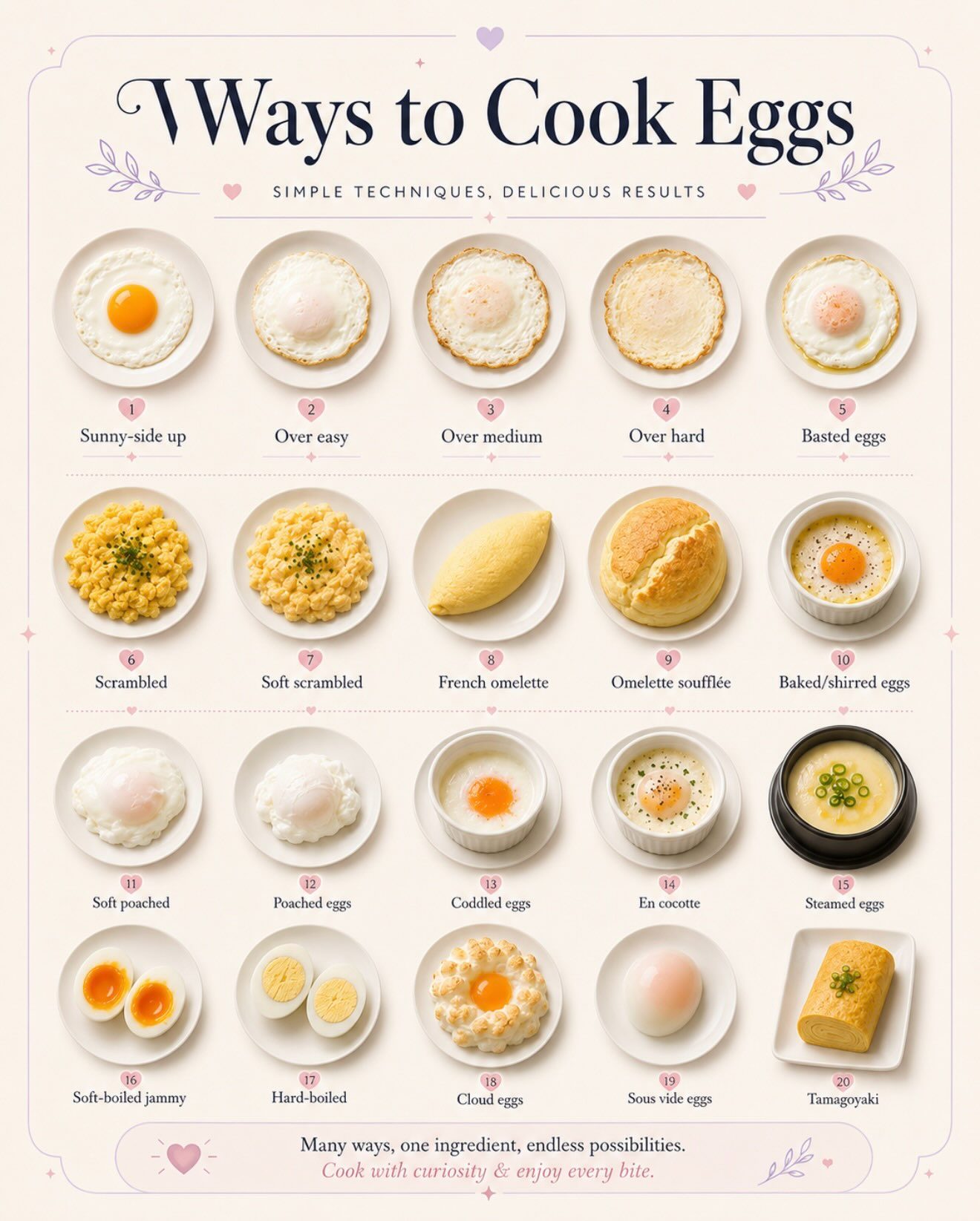
Ways to Cook Eggs
Eggs are a staple in many kitchens around the world, and for good reason. They are nutritious, affordable, and incredibly versatile. Whether you're preparing breakfast, meal prepping for the week, or adding protein to lunch or dinner, there's an egg cooking method suited for every recipe. Each method brings a unique texture and flavor, making eggs a delightful ingredient to experiment with.
Context / Why this matters
Eggs are more than just a breakfast food; they are a powerhouse of nutrition. Packed with high-quality complete protein, they support muscle health and provide essential vitamins and minerals. Choline in eggs is crucial for brain health, while lutein and zeaxanthin support eye health. Additionally, eggs contain healthy fats, vitamins B12 and D, and selenium, making them a comprehensive addition to any meal.
Understanding the different ways to cook eggs can elevate your culinary skills and expand your recipe repertoire. Whether you prefer a softly cooked yolk or a perfectly folded omelette, mastering a few techniques can transform your cooking experience.
The Many Ways to Cook Eggs
Fried Eggs
Fried eggs are a classic and can be prepared in various styles:
- Sunny-side up: Cooked undisturbed until the whites are set, leaving the yolk intact.
- Over easy: Fried and then flipped briefly to lightly cook the top, keeping the yolk runny.
- Over medium: Similar to over easy, but the yolk is slightly more cooked.
- Over hard: Cooked until the yolk is fully set.
- Soft-side up: Similar to sunny-side up, but the yolk is slightly cooked.
- Basted eggs: Fried eggs that are repeatedly spooned with hot butter or oil to create a smooth, even cook.
Boiled Eggs
Boiled eggs can be prepared in different ways to achieve the desired texture:
- Soft-boiled eggs: Boiled for a shorter duration, resulting in a runny yolk and a firm white.
- Hard-boiled eggs: Boiled until both the yolk and the white are fully cooked.
Poached, Baked, and Steamed Eggs
- Poached eggs: Cooked by poaching in simmering water, resulting in a delicate texture.
- Baked/shirred eggs: Cooked in a ramekin in the oven, often with added ingredients like cheese or vegetables.
- Coddled eggs: Gently cooked in a water bath at a low temperature, resulting in a soft, delicate texture.
- Steamed eggs: Cooked over simmering water, often in a double boiler, resulting in a light and fluffy texture.
Omelettes and Scrambled Eggs
- French omelette: A thin and delicate omelette, often folded in half and served with various fillings.
- Omelette soufflée: A light and airy omelette, similar to a soufflé, usually baked in the oven.
- Tamagoyaki: A rolled Japanese omelette, typically sweetened and cooked in a rectangular pan.
- Scrambled eggs: Beaten eggs cooked slowly and gently, resulting in a soft, creamy texture.
- Soft scrambled: Scrambled eggs cooked for a shorter duration, resulting in a softer texture.
Creative Cooking Methods
- Cloud eggs: Separated egg whites whipped to stiff peaks and baked until fluffy, with the yolks added on top.
- Sous vide eggs: Eggs cooked in a temperature-controlled water bath, resulting in precise and consistent cooking.
- Soft scrambled eggs: Prepared similarly to scrambled but cooked for a shorter time, yielding a softer and creamier texture.
Practical Tips
When cooking eggs, attention to detail can make a significant difference. Here are some practical tips to help you master various egg-cooking techniques:
- Temperature Control: Use low to medium heat for gently cooking eggs to avoid overcooking.
- Pan Preparation: Ensure your pan is well-seasoned or non-stick to prevent eggs from sticking.
- Ingredients: Butter or oil can add flavor, but be mindful of how much you use to avoid sogginess.
- Timing: Pay close attention to cooking times, especially for techniques like boiling and steaming.
- Experimentation: Don’t be afraid to try different methods and ingredients to find what you like best.
Important Takeaways
Eggs are a versatile ingredient that can be prepared in countless ways, each offering a unique texture and flavor. Whether you prefer a simple fried egg or a more elaborate dish like a soufflé omelette, mastering various cooking methods can greatly enhance your culinary skills. Remember that the biggest difference between these styles isn't nutrition but texture. The key to enjoying eggs is to cook with curiosity and savor every bite.
Conclusion
Eggs are a nutritional powerhouse and a versatile ingredient that can be prepared in numerous ways. From classic fried eggs to creative methods like sous vide and cloud eggs, there's always something new to explore. By understanding and experimenting with different cooking techniques, you can elevate your meals and enjoy the endless possibilities that eggs offer. Whether you're a seasoned chef or a home cook, mastering egg-cooking methods can bring a whole new level of enjoyment to your culinary adventures.
Watch the Reel
Questions readers ask
What are the key differences between sunny-side up and over easy eggs?
Sunny-side up eggs are cooked undisturbed until the whites are set, leaving the yolk intact. Over easy eggs are flipped and cooked briefly on the other side, making the yolk slightly cooked but still runny. This distinction allows you to choose based on your preference for a runny or barely set yolk.
How can I master the art of poaching eggs?
Poaching eggs involves simmering them in water with a bit of vinegar. Start by bringing water to a gentle simmer, add a splash of vinegar, and crack your egg into a small bowl before gently sliding it into the water. Cook for 3-4 minutes, then carefully remove with a slotted spoon to preserve the delicate shape, and prepare to use in your favorite dish.
What is the best method for boiling eggs so they peel easily?
To make hard-boiled eggs that peel easily, start by boiling water, then carefully lower eggs into the water. Bring to a boil, then reduce heat and let them simmer for 9-12 minutes. Immediately transfer the eggs to an ice bath to stop the cooking process, which helps the shell separate from the egg. This method ensures a perfectly cooked and easy-to-peel egg.
How do I make fluffy scrambled eggs?
For fluffy scrambled eggs, use a non-stick pan over low heat and whisk the eggs vigorously before pouring into the pan. Slowly cook the eggs, stirring gently and continuously, until they're set but still soft. Remove immediately and avoid overcooking, which can make the eggs dry. Adding a bit of milk or cream can also enhance the fluffiness.
What are some easy egg recipes for breakfast?
Some easy egg recipes for breakfast include sunny-side up eggs served on toast, classic over easy eggs with avocado, or a quick and hearty omelette filled with your favorite veggies and cheeses. Other options include egg muffins for meal prepping and a simple baked eggs dish, where eggs are cracked into a ramekin with cream, cheese, and seasonings, then baked until set.
Can I use different egg cooking techniques for meals other than breakfast?
Absolutely. Egg cooking techniques are versatile for any meal. For example, poached eggs can top a lunch salad or be part of a dinner dish, while hard-boiled eggs make an excellent snack or can be added to salads. Omelettes and frittatas are perfect for brunch or dinner, and baked eggs can be a fancy dinner option or a cozy lunch.
Recent articles
Fresh deep dives from the latest Reels we unpacked.




Comments
Be the first to comment.