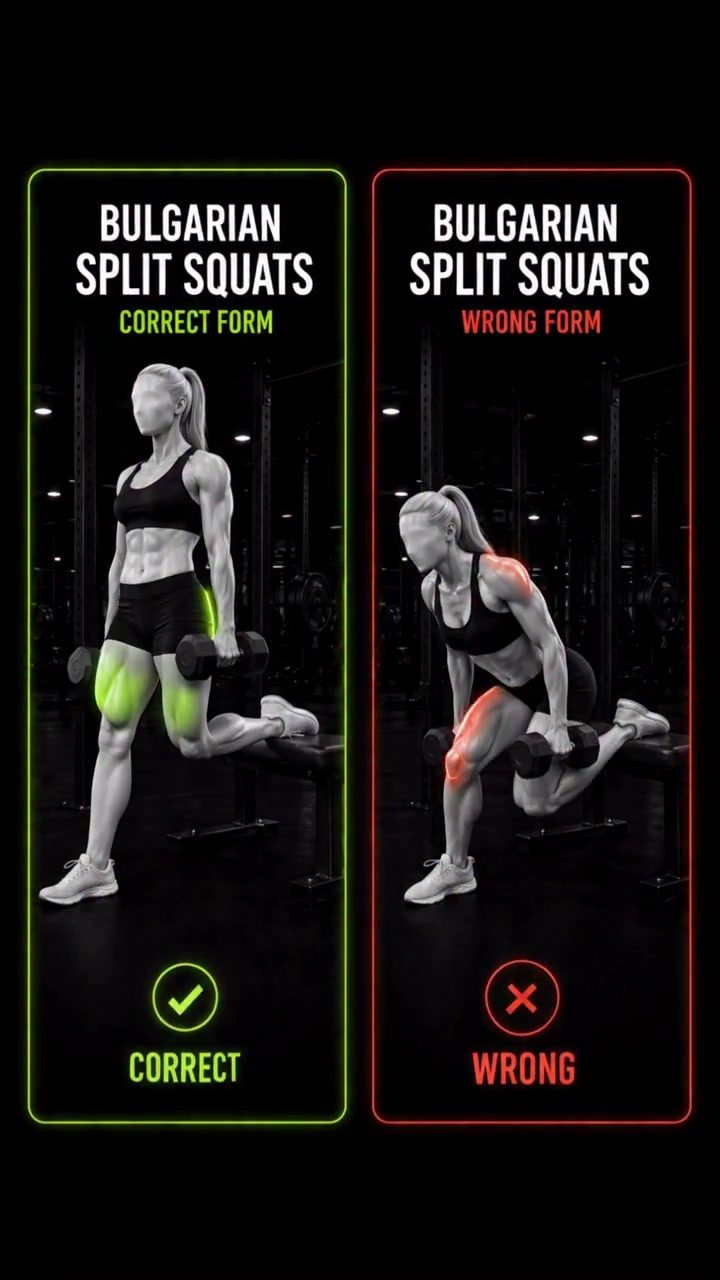
Bulgarian Split Squats: Mastering the Technique for Stronger Glutes and Legs
The Bulgarian split squat is a powerhouse exercise for developing stronger glutes and legs. However, proper form is crucial to avoid discomfort and maximize results. This exercise can quickly become ineffective or even harmful if not performed correctly.
Why Mastering the Bulgarian Split Squat Matters
The Bulgarian split squat is renowned for its ability to target and strengthen the glutes, hamstrings, and quadriceps. Its unilateral nature also helps to identify and address muscle imbalances. Whether you're an athlete, fitness enthusiast, or someone looking to improve lower-body strength, mastering this exercise can significantly enhance your workout routine.
The Correct Technique
Proper Form
To perform the Bulgarian split squat correctly, follow these steps:
-
Setup: Stand a few feet in front of a bench or elevated platform. Place the top of your left foot on the bench, keeping your right foot flat on the floor. Your feet should be roughly hip-width apart.
-
Stance and Alignment: Ensure your chest is tall and your core is braced. Keep your front knee (right knee) tracking in line with your toes.
-
Descend: Lean slightly forward from the hips and lower your body until your right knee nearly touches the ground. Maintain control throughout the movement, avoiding a sudden drop.
-
Push Through: Drive through your entire front foot, with emphasis on the heel, to return to the starting position. This ensures that your glutes and hamstrings are engaged.
-
Repeat: Complete the desired number of repetitions on one leg before switching to the other side.
Common Mistakes
1. Front Knee Caving Inward
Allowing the front knee to collapse inward puts unnecessary stress on the knee joint and reduces the effectiveness of the exercise. Focus on maintaining a neutral knee position, keeping it in line with the toes.
2. Excessive Forward Leaning
Leaning too far forward rounds the back, shifting the focus away from the glutes and onto the lower back. Keep a slight forward lean from the hips to target the glutes effectively.
3. Too Short of a Stance
A short stance can place excessive stress on the knee, potentially leading to discomfort or injury. Ensure a comfortable stance that allows for a full range of motion without compromising stability.
4. Toe-Dominant Push-Off
Pushing primarily through the toes rather than the heel can result in an uneven distribution of weight and reduced glute activation. Make sure to drive through the heel for optimal results.
5. Rushing Reps
Using momentum to complete reps can lead to sloppy form and decreased muscle activation. Control the lowering phase and push through the heel to maximize the exercise’s benefits.
Practical Tips for Bulgarian Split Squats
Incorporate Progressive Overload
Bulgarian split squats are effective even without heavy weights. Focus on progressive overload by gradually increasing the number of reps, sets, or using added resistance (like dumbbells) over time.
Use Visual Cues
A simple cue to remember is “sit down and back, then drive through your heel.” This helps maintain proper form and ensures that you are engaging the correct muscles.
Monitor and Adjust
Pay close attention to your form in a mirror or use a camera to record your workouts. Look for any deviations from correct technique and make necessary adjustments.
Incorporate Variations
Try different variations to keep your workouts engaging and to target different muscle groups. For example, you can perform the exercise with a pause at the bottom or by adding extra weight.
Listen to Your Body
If you experience any discomfort or pain, stop immediately. Consult a fitness professional to assess your form and make adjustments as needed.
Important Takeaways
Technique Over Load
Perfect form and a full range of motion are more effective than sloppy reps with heavy weights. Focus on mastering the correct technique to maximize the exercise’s benefits.
Address Muscle Imbalances
The unilateral nature of the Bulgarian split squat helps identify and address muscle imbalances. Regularly performing this exercise can contribute to better overall balance and stability.
Versatility
Bulgarian split squats can be adapted to various fitness levels and goals. Whether you’re a beginner or an advanced athlete, this exercise can be tailored to suit your needs.
Conclusion
Mastering the Bulgarian split squat is essential for building stronger glutes and legs. By following the correct technique and avoiding common mistakes, you can enhance your workouts and achieve better results. Incorporate progressive overload, use visual cues, and listen to your body to maximize the benefits of this powerful exercise. With dedication and proper form, the Bulgarian split squat can be a game-changer in your fitness journey.
Watch the Reel
Questions readers ask
What are the key muscles targeted by the Bulgarian split squat?
The Bulgarian split squat primarily targets the glutes, hamstrings, and quadriceps. Additionally, it engages the calves, core, and stabilizing muscles, making it a comprehensive lower-body exercise.
What is the proper front foot positioning for the Bulgarian split squat?
To perform the Bulgarian split squat with correct form, place the front foot flat on the ground, about two to three feet in front of a bench or step. The front knee should be directly above the ankle, and the back foot should be elevated on the bench, with the top of the foot resting on it.
How can the Bulgarian split squat help identify muscle imbalances?
Because the Bulgarian split squat is a unilateral exercise, it allows you to work one leg at a time. This can help reveal any strength or mobility differences between your left and right sides, enabling you to address these imbalances through targeted training.
What are some common mistakes to avoid when performing Bulgarian split squats?
Common mistakes include allowing the front knee to cave inwards, letting the front knee extend beyond the toes, or leaning too far forward. Maintain proper alignment, keep your core engaged, and ensure your front knee stays behind your toes throughout the movement.
Can Bulgarian split squats be modified for beginners?
Yes, beginners can start by performing the exercise with body weight only and focusing on proper form. As strength and confidence improve, they can gradually add weight using dumbbells or a barbell. Additionally, reducing the range of motion can help build familiarity with the movement.
What benefits does the Bulgarian split squat offer over traditional squats?
The Bulgarian split squat provides a more intense glute and leg workout by isolating one leg at a time. This unilateral focus helps improve balance, stability, and muscle activation. It also places less stress on the lower back compared to traditional squats.
How can I incorporate Bulgarian split squats into my workout routine?
Incorporate Bulgarian split squats into your lower-body or full-body workouts, performing them 1-2 times per week. Aim for 3-4 sets of 8-12 repetitions per leg, ensuring proper form and adequate rest between sets. Combine them with other compound movements like deadlifts and lunges for a well-rounded leg workout.
Recent articles
Fresh deep dives from the latest Reels we unpacked.




Comments
Be the first to comment.