Intermittent Fasting: The 16:8 Schedule Simplified
Intermittent fasting (IF) is a popular approach to meal timing that focuses on cycling between periods of eating and fasting. One of the most well-known methods is the 16:8 schedule, which involves fasting for 16 hours and eating within an 8-hour window. This eating plan can help improve metabolic health, support weight loss, and promote overall well-being.
Why This Matters
The 16:8 intermittent fasting schedule is favored for its simplicity and flexibility. Unlike many diets that require meticulous calorie counting or strict food restrictions, the 16:8 schedule focuses on when you eat rather than what you eat. This makes it an attractive option for those looking to improve their health without feeling overwhelmed by complicated dietary rules.
Main Discussion
Understanding the 16:8 Schedule
The 16:8 schedule is based on a simple ratio: 16 hours of fasting and 8 hours of eating. During the 16-hour fasting period, you consume only non-caloric beverages like water, herbal tea, or black coffee. The 8-hour eating window allows for a variety of foods and beverages, as long as they fit within your overall nutritional goals.
The Daily Routine
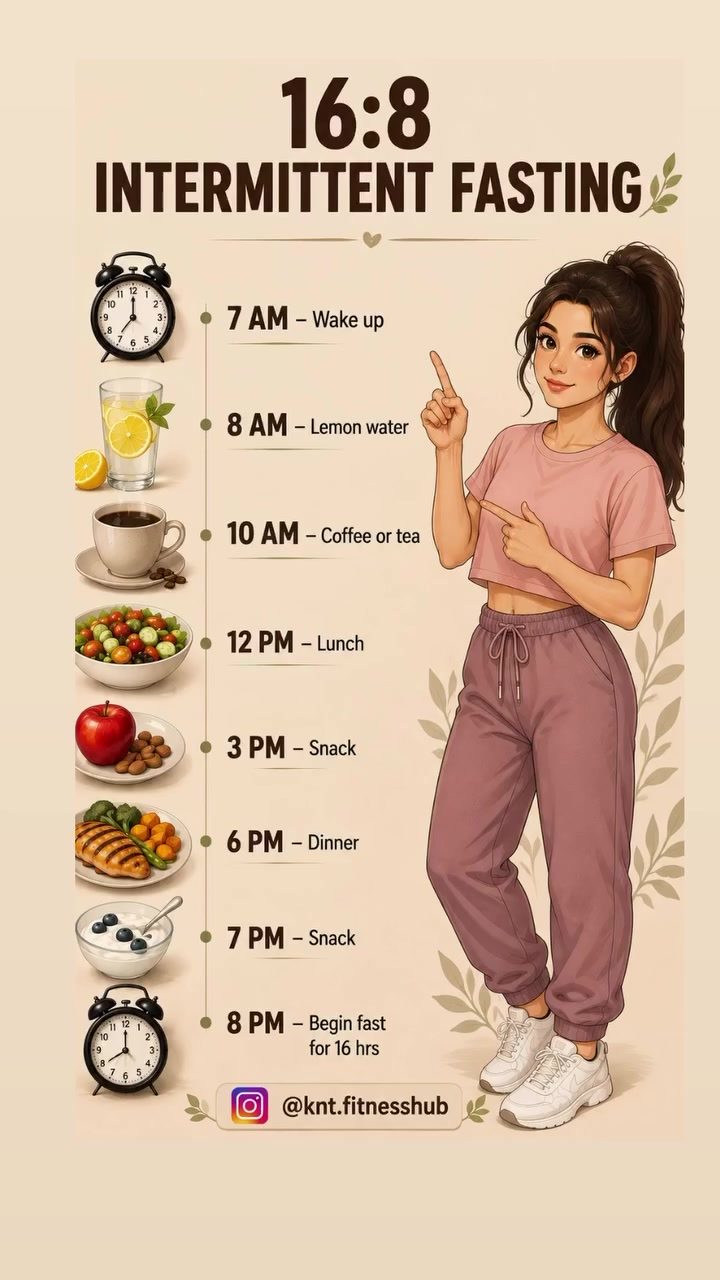
A typical 16:8 fasting schedule, as outlined by knt.fitnesshub, looks like this:
- 7 AM – Wake Up: Start your day with a clear mind and hydrated body.
- 8 AM – Lemon Water: Kickstart your metabolism with a glass of lemon water. This can help with digestion and provide a gentle detox.
- 10 AM – Coffee or Tea: Enjoy a cup of black coffee or herbal tea to keep you energized throughout the morning.
- 12 PM – Lunch: Have a well-balanced meal that includes protein, healthy fats, and plenty of vegetables. This will fuel your body for the rest of the day.
- 3 PM – Snack: A mid-afternoon snack can help keep your energy levels up and prevent overeating during dinner.
- 6 PM – Dinner: Enjoy a hearty dinner that includes a variety of nutrient-dense foods.
- 7 PM – Snack: A light snack before your fast begins can help you feel satisfied and avoid late-night cravings.
- 8 PM – Begin Fast for 16 Hours: End your eating window and begin your 16-hour fast. This is when your body focuses on repairing and rebuilding.
Benefits of the 16:8 Schedule
The 16:8 schedule offers several benefits, including:
- Improved Metabolic Health: Fasting can help regulate blood sugar levels and improve insulin sensitivity, which is crucial for maintaining overall metabolic health.
- Weight Loss: By limiting your eating window, you naturally consume fewer calories, which can lead to weight loss over time.
- Enhanced Focus and Energy: Many people report feeling more alert and energized during their fasting periods, thanks to the body's increased production of ketones.
- Better Digestion: Giving your digestive system a break can improve gut health and overall digestion.
Challenges and Solutions
While the 16:8 schedule is straightforward, it can present challenges, especially for those new to intermittent fasting. Some common issues include:
- Hunger and Cravings: Initially, your body may resist the change in eating patterns, leading to feelings of hunger and cravings. To combat this, stay hydrated and keep busy to distract yourself.
- Timing: Adjusting to a new eating schedule can take time. Be patient and gradually shift your meals to fit within the 8-hour window.
- Social Events: Social gatherings and celebrations can pose a challenge to maintaining your fasting schedule. Plan ahead by choosing healthier options or adjusting your fasting window on special occasions.
Practical Tips
How to Start
- Choose Your Window: Decide on an 8-hour window that best fits your lifestyle. For example, if you start eating at 12 PM, your eating window would end at 8 PM.
- Gradual Adjustment: If jumping straight into a 16-hour fast is too challenging, try gradually increasing your fasting period by 1-2 hours each week.
- Stay Hydrated: Drink plenty of water throughout the day to help manage hunger and maintain overall health.
What to Eat
During your eating window, focus on nutrient-dense foods that provide sustained energy and promote overall health. Here are some meal ideas:
- Breakfast (if you choose to eat earlier): Oatmeal with fresh fruits, eggs, or a smoothie with spinach and berries.
- Lunch: Grilled chicken with a side of quinoa and steamed vegetables, or a hearty salad with mixed greens, avocado, and roasted chickpeas.
- Dinner: Baked salmon with a side of roasted Brussels sprouts and sweet potatoes, or a stir-fry with tofu, mixed vegetables, and brown rice.
- Snacks: Fresh fruits, nuts, hummus with veggie sticks, or Greek yogurt with a sprinkle of chia seeds.
When to Adjust
If you find the 16:8 schedule isn't working for you, consider adjusting your fasting and eating windows. Some people prefer a 14:10 or 18:6 schedule, which allows for a longer or shorter eating window, respectively. The key is to find a routine that fits your lifestyle and helps you achieve your health goals.
Important Takeaways
- The 16:8 intermittent fasting schedule involves fasting for 16 hours and eating within an 8-hour window.
- A typical 16:8 schedule includes waking up, hydrating with lemon water, enjoying coffee or tea, having a balanced lunch, snacking, eating a hearty dinner, and beginning the fast at 8 PM.
- Benefits of the 16:8 schedule include improved metabolic health, weight loss, enhanced focus, and better digestion.
- Challenges can be managed by staying hydrated, gradually adjusting to the new routine, and planning ahead for social events.
Conclusion
The 16:8 intermittent fasting schedule is a practical and effective way to improve your health and well-being. By following a simple eating and fasting routine, you can experience a range of benefits, from better metabolic health to enhanced energy levels. Whether you're new to intermittent fasting or looking to optimize your current routine, the 16:8 schedule offers a flexible and sustainable approach to achieving your health goals.
Watch the Reel
Questions readers ask
What are the basic guidelines for starting a 16:8 intermittent fasting schedule?
To begin 16:8 intermittent fasting, choose an 8-hour eating window that fits your daily routine. For example, you might eat between 12 pm and 8 pm. Outside of this window, you will fast for 16 hours. It's recommended to start with a later eating window to make the transition easier, as you'll likely be sleeping for a portion of the 16-hour fast.
Can I consume beverages during the 16-hour fast of the 16:8 intermittent fasting schedule?
Yes, you can consume non-caloric beverages like water, black coffee, and herbal tea during the 16-hour fast. These beverages can help keep you hydrated and may even assist in reducing hunger pangs. However, it's best to avoid beverages with added sugars or calories during the fast.
What are the benefits of fasting in the 16:8 intermittent fasting schedule?
The 16:8 intermittent fasting schedule offers several benefits, including improved metabolic health, weight loss, and enhanced well-being. It can help regulate hormones, reduce insulin resistance, and boost metabolism, all of which contribute to better overall health and fitness.
Is the 16:8 intermittent fasting schedule suitable for everyone?
While the 16:8 intermittent fasting schedule can be beneficial for many, it's not suitable for everyone. Individuals with certain medical conditions, such as diabetes, or those with a history of eating disorders, should consult a healthcare professional before starting. Additionally, pregnant or breastfeeding women should avoid intermittent fasting.
Can I exercise while following a 16:8 intermittent fasting schedule?
Yes, you can exercise while following a 16:8 intermittent fasting schedule. It's often recommended to exercise during the eating window, as this provides your body with the necessary fuel. However, some people may find that exercising in a fasted state helps improve fat burning and endurance. It's important to listen to your body and adjust as needed.
What should I do if I feel excessively hungry during the 16-hour fast of the 16:8 intermittent fasting schedule?
If you feel excessively hungry during the 16-hour fast, try to distract yourself with activities, stay hydrated, or consume a cup of herbal tea or black coffee. If the hunger persists, it may be helpful to adjust your eating window to better suit your hunger cues and daily routine. Remember, it's important to listen to your body and make adjustments as needed.
Can I adjust the 8-hour eating window in the 16:8 intermittent fasting schedule?
Yes, you can adjust the 8-hour eating window in the 16:8 intermittent fasting schedule to better fit your lifestyle and preferences. For example, if you prefer to eat breakfast, you might choose an eating window from 8 am to 4 pm. The key is to find a consistent eating window that works best for you and stick to it.
Related deep dives
Similar reads based on topic and creator.




Recent articles
Fresh deep dives from the latest Reels we unpacked.




Comments
Be the first to comment.