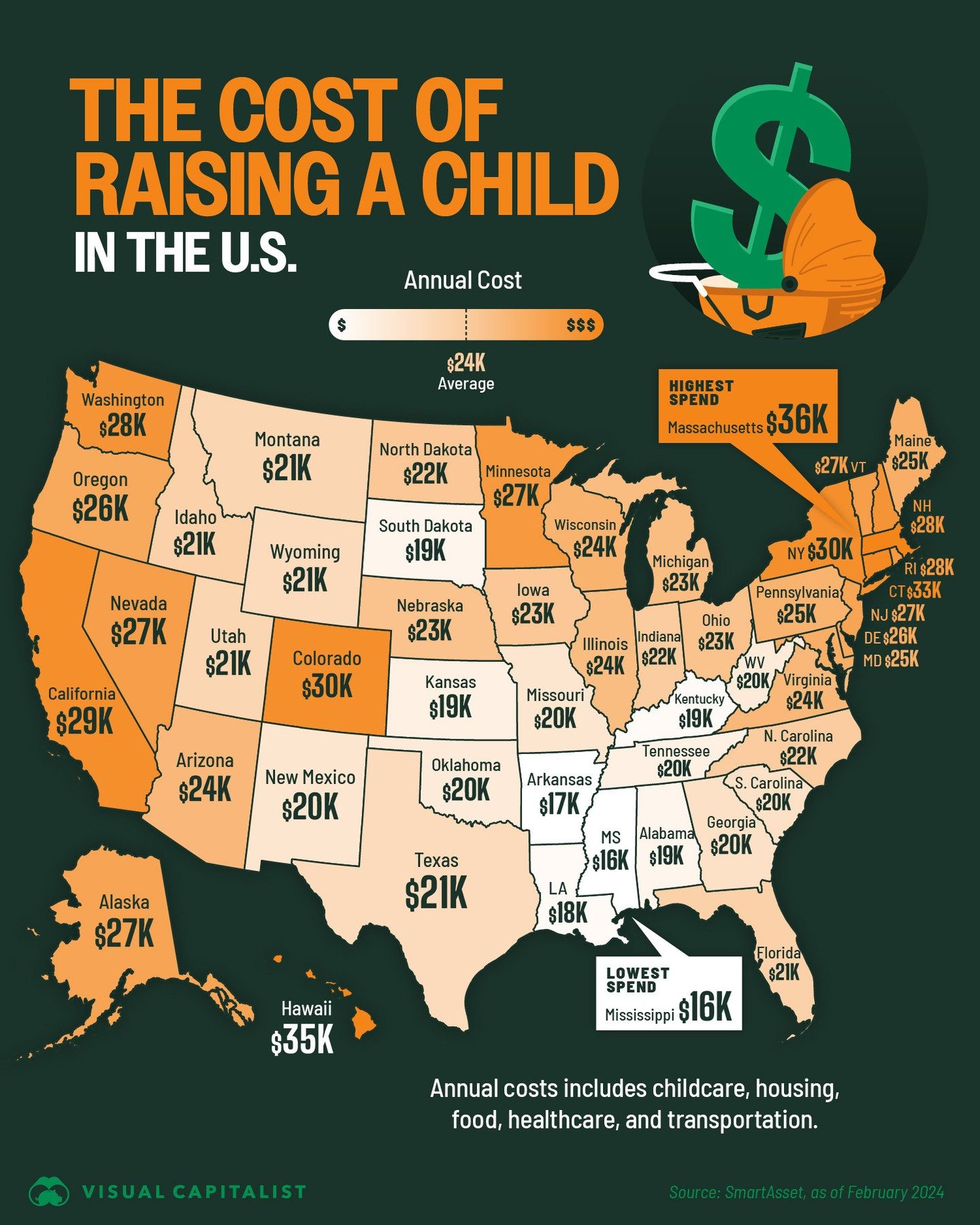
The Cost of Raising a Child in the United States
Raising a child is a significant financial undertaking, with costs varying widely across the United States. On average, the annual cost of raising a child for two working parents is substantial, and the biggest expense is childcare, followed by housing and food. However, other costs such as healthcare, transportation, and various necessities also add up.
Why This Matters
Understanding the financial implications of raising a child is crucial for families. Whether you're planning to start a family or already have children, knowing the average costs can help in financial planning and budgeting. The breakdown of expenses provides insight into where the most significant spending occurs, allowing parents to make informed decisions.
Key Cost Components
Several key components contribute to the overall cost of raising a child. These include:
- Childcare: This is often the most significant expense, especially for working parents. The cost of childcare can vary significantly depending on the type of care (daycare, nanny, etc.) and the location.
- Housing: The cost of housing, whether renting or owning, is a substantial part of the budget. This includes mortgage or rent payments, utilities, and maintenance.
- Food: Feeding a growing child adds up quickly. Groceries, dining out, and other food-related expenses are part of this category.
- Healthcare: Medical expenses, including doctor visits, vaccinations, and insurance, are necessary for a child's well-being.
- Transportation: This includes car payments, insurance, gas, and maintenance, as well as public transportation costs.
- Other Necessities: Clothing, education, extracurricular activities, and personal care items are also essential expenses.
State-by-State Breakdown
The cost of raising a child varies significantly from state to state. According to data from SmartAsset, as of February 2024, the annual cost ranges from $16,000 to $36,000. Here are some key points:
- Mississippi: Mississippi has the lowest average annual cost at $16,000.
- Massachusetts: Massachusetts has the highest average annual cost at $36,000.
- Mid-Range States: States like California, New York, and Washington, D.C., fall in the higher range, while states like Texas and Florida are in the mid-range.
Factors Affecting Costs
Several factors influence the cost of raising a child. These include:
- Location: Costs are generally higher in urban areas and coastal states compared to rural areas and inland states.
- Family Size: Larger families may have economies of scale, but they also have more children to support.
- Income Level: Higher-income families may spend more on luxuries and extracurricular activities, while lower-income families may face more financial strain.
Practical Tips
Budgeting for Childcare
Childcare is often the most significant expense. Consider the following tips:
- Research Options: Look into different childcare options, such as daycare centers, nannies, or family members who can help.
- Negotiate Rates: Some childcare providers may offer discounts for long-term commitments.
- Tax Credits: Take advantage of tax credits and deductions for childcare expenses.
Managing Housing Costs
Housing is another major expense. Here are some tips:
- Location: Consider living in areas with lower costs of living, especially if commuting is an option.
- Shared Housing: Living with family or friends can help reduce housing costs.
- Government Assistance: Look into programs that offer financial assistance for housing.
Saving on Food and Healthcare
Food and healthcare are also significant expenses. Consider these tips:
- Meal Planning: Plan meals in advance to avoid impulse buys and reduce food waste.
- Health Insurance: Ensure you have comprehensive health insurance to cover medical expenses.
- Preventive Care: Regular check-ups and preventive care can help avoid costly medical issues.
Transportation and Other Necessities
Transportation and other necessities can add up. Here are some strategies:
- Public Transportation: Use public transportation if feasible to save on fuel and maintenance costs.
- Buy in Bulk: Purchase clothing, personal care items, and other necessities in bulk to save money.
- DIY Projects: Engage in do-it-yourself projects for home maintenance and repairs.
Important Takeaways
Raising a child is a significant financial responsibility. Here are the key takeaways:
- Plan Ahead: Start saving and planning as early as possible.
- Budget Wisely: Create a detailed budget that includes all necessary expenses.
- Seek Assistance: Look into government programs and tax credits that can help offset costs.
- Prioritize Needs: Focus on essential expenses and avoid luxuries that can strain your budget.
Conclusion
The annual cost of raising a child in the United States varies significantly by state, with childcare, housing, and food being the biggest expenses. Understanding these costs and planning accordingly can help families manage their finances effectively. By budgeting wisely, seeking assistance, and prioritizing needs, parents can ensure a stable financial future for their children.
Watch the Reel
Questions readers ask
Why is raising a child more expensive in Massachusetts than other states?
Massachusetts has higher childcare costs, housing expenses, and food prices compared to other states. The combination of these factors contributes to the higher annual cost of raising a child in Massachusetts.
What are the biggest expenses when raising a child?
The most significant expenses when raising a child are childcare, housing, and food. These categories often consume the largest portion of a family's budget, making them crucial to consider when planning financially.
How can families in Massachusetts plan for the high cost of raising a child?
Families can start by understanding the specific costs in Massachusetts, creating a detailed budget, and exploring available resources such as tax credits, subsidies, or employer-provided benefits. Setting financial goals and regularly reviewing expenses can also help families manage costs effectively.
What other costs should families consider beyond the basics like food and housing?
Beyond food and housing, families should consider healthcare, transportation, clothing, and other necessities. These expenses can add up quickly and should be factored into a family's financial planning. Health insurance and medical costs can be particularly significant, depending on the child's needs.
How do childcare costs in Massachusetts compare to the rest of the U.S.?
Massachusetts has some of the highest childcare costs in the U.S., significantly impacting the overall cost of raising a child. These high costs are driven by factors such as demand, limited availability, and the need for quality care, making childcare a substantial expense for families in the state.
Why is it important for families to know the cost of raising a child by state?
Knowing the cost of raising a child by state helps families make informed decisions about where to live and how to budget. It allows them to anticipate expenses, plan financially, and ensure they can provide for their children's needs, whether they are considering moving to a different state or already living in one.
What resources are available to help families manage the cost of raising a child in Massachusetts?
Families in Massachusetts can take advantage of various resources, including state-funded programs, tax credits, and employer-provided benefits. For example, the Massachusetts Department of Early Childhood offers resources for childcare, while the state also provides tax credits for dependent care and other child-related expenses.
Related deep dives
Similar reads based on topic and creator.

Recent articles
Fresh deep dives from the latest Reels we unpacked.




Comments
Be the first to comment.