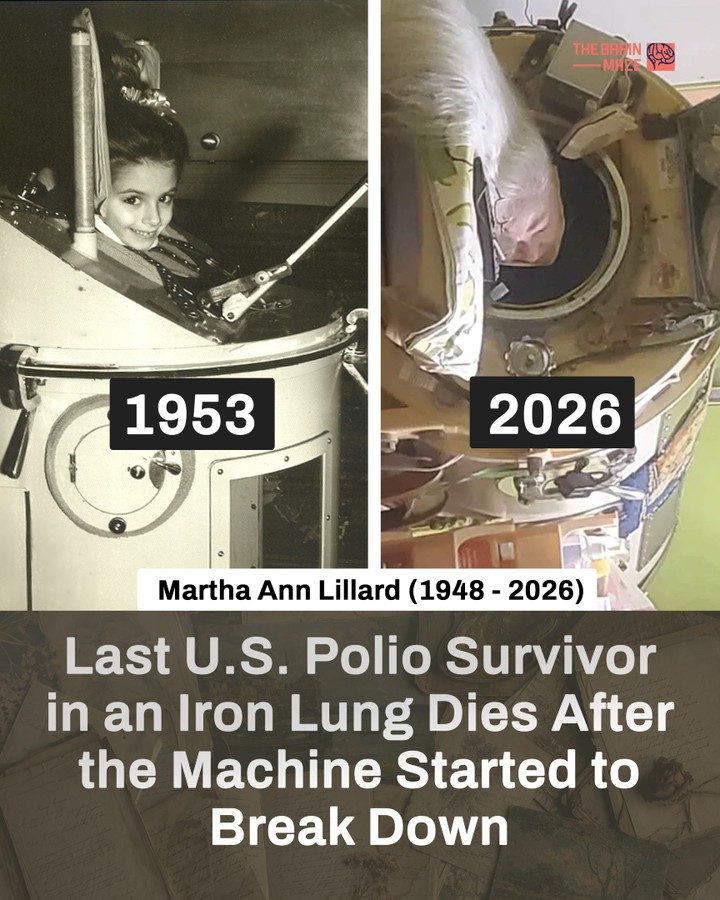
Historical Photo Comparison: Martha Ann Lillard and the Iron Lung
Martha Ann Lillard's story is a testament to resilience and creativity, spent over seven decades with an iron lung to breathe. Polio struck her at the tender age of five, but it never extinguished her creative spirit or purpose. From within the confines of the machine, she painted, wrote poetry, and composed music for the left-hand piano, and even devoted years to helping animals and people in crisis. Her life stands as a poignant reminder of the human spirit's endurance, even in the face of the most challenging circumstances.
Context: The Impact of Polio and Iron Lung Use
Polio, or poliomyelitis, is a viral infectious disease that can cause paralysis. Before the development of effective vaccines, it was a significant public health concern, particularly in the mid-20th century. The iron lung, also known as a negative pressure ventilator, became a lifeline for many polio survivors. It is a large, enclosed chamber that creates negative pressure around the patient's body, allowing the lungs to expand and contract, facilitating breathing.
The Life and Legacy of Martha Ann Lillard
Early Life and Polio Diagnosis
Martha Ann Lillard was born in 1948, and by the age of five, her life took a dramatic turn when she contracted polio. The disease left her paralyzed, requiring her to rely on an iron lung to breathe. Despite this monumental challenge, Lillard's spirit remained unbroken. She spent her formative years inside the iron lung, where she developed a profound appreciation for art, poetry, and music.
Creative Pursuits
Lillard's creativity flourished within the constraints of her iron lung. She painted vibrant and emotive artworks, penned poignant poetry, and composed beautiful music tailored for a left-hand piano. Her artistic endeavors were not mere hobbies; they were expressions of her inner world and a means of connecting with others. Her creativity served as a beacon of hope and inspiration for those around her.
Advocacy and Philanthropy
Beyond her creative pursuits, Lillard dedicated significant time to helping others. She was deeply committed to supporting animals and people in crisis. Her advocacy work highlighted her compassion and empathy, demonstrating that one's circumstances need not define their ability to make a positive impact on the world. Her philanthropic efforts showcased her resilience and dedication to causes beyond her immediate needs.
Final Years and the Struggle with the Iron Lung
In her later years, maintaining her aging iron lung became a daily struggle. The machine, with parts dating back to the 1940s, faced increasing challenges as replacement components became nearly impossible to find. Lillard's life became a race against time, as the iron lung began to fail, eventually leading to her passing in 2026. The irony of her death was that the machine that had kept her alive for so long became the ultimate barrier to her continued survival.
The Significance of the Iron Lung
Historical Context
The iron lung played a crucial role in the history of polio treatment. It was one of the earliest forms of mechanical ventilation, providing a lifeline for polio survivors who suffered from respiratory paralysis. The device worked by creating negative pressure around the patient's body, allowing the lungs to expand and contract naturally. This method was particularly effective in the mid-20th century when the polio epidemic was at its peak.
Technical Aspects
The iron lung is a large, cylindrical container that encases the patient from the neck down. The patient's head remains outside the chamber, while the rest of the body is enclosed. The device operates by creating a vacuum that pulls the chest wall out, allowing the lungs to expand and fill with air. When the vacuum is released, the chest wall returns to its normal position, expelling the air from the lungs. This process mimics the natural breathing mechanism, providing artificial ventilation for patients with respiratory paralysis.
Modern Replacements
While the iron lung was revolutionary for its time, modern medicine has developed more advanced and less cumbersome ventilation techniques. Today, patients with respiratory paralysis can benefit from positive pressure ventilators, which are more portable and easier to maintain. These modern devices deliver air directly into the lungs through a tube, eliminating the need for the patient to be enclosed in a large chamber.
Challenges and Limitations
Despite its historical significance, the iron lung had several limitations. The device was bulky, cumbersome, and required constant maintenance. It also limited the patient's mobility and social interactions, confining them to a largely sedentary lifestyle. Additionally, the iron lung was not a cure for respiratory paralysis; it merely provided a means of artificial ventilation. Patients still required constant medical supervision and care.
Practical Tips for Iron Lung Maintenance
For those who still rely on iron lungs or similar historical medical devices, maintenance is crucial. Here are some practical tips for keeping these machines functional:
Regular Inspections
Regular inspections are essential for ensuring the iron lung remains in good working condition. This includes checking for any signs of wear and tear, such as cracks, leaks, or loose fittings. It is important to address any issues promptly to prevent further damage.
Cleaning and Sterilization
The iron lung should be cleaned and sterilized regularly to prevent the buildup of dust and bacteria. This can be done using a mild disinfectant or soap and water. It is important to follow the manufacturer's instructions for cleaning and sterilization to avoid damaging the device.
Replacement Parts
Finding replacement parts for an iron lung can be challenging, especially for older models. It is advisable to keep a supply of essential components on hand, such as seals, valves, and hoses. Additionally, reaching out to medical supply companies or online communities for assistance can be helpful.
Proper Use
Proper use of the iron lung is crucial for its longevity. This includes ensuring the patient is correctly positioned within the machine and that the seals are properly fitted. Following the manufacturer's guidelines for operation and maintenance can help extend the device's lifespan.
Important Takeaways
- Resilience and Creativity: Martha Ann Lillard's life is a powerful reminder that circumstances do not define a person's ability to create and inspire.
- Historical Significance: The iron lung played a pivotal role in the treatment of polio, providing a lifeline for many survivors.
- Maintenance and Care: Proper maintenance and care are essential for the longevity and effectiveness of medical devices, especially historical ones.
- Modern Advances: While the iron lung was revolutionary, modern ventilation techniques offer more advanced and less cumbersome solutions.
Conclusion
The story of Martha Ann Lillard and her iron lung is a poignant reflection on the human spirit's resilience and the importance of medical innovations. Lillard's creative pursuits and advocacy work highlight the indomitable nature of the human spirit, even in the face of significant challenges. The iron lung, while a historic medical device, serves as a reminder of the advancements made in medical science and the ongoing need for innovative solutions. As we continue to develop new technologies, it is essential to remember the legacy of those who came before us and the impact of their stories.
Watch the Reel
Questions readers ask
How did Martha Ann Lillard communicate and create art while living in an iron lung?
Martha Ann Lillard adapted to life in an iron lung by using a pointer attached to a headband to manipulate objects, including paintbrushes and writing utensils. By holding a pencil with her mouth, she was also able to write poetry and compose music. She even learned to play the piano with her left hand, showcasing her unwavering creativity.
What types of art did Martha Ann Lillard create during her time in the iron lung?
Martha Ann Lillard expressed her creativity through various art forms. She painted vivid artwork, wrote inspiring poetry, and composed beautiful music. Additionally, she dedicated her time to helping animals and people in crisis, demonstrating her compassion and commitment to making a positive impact.
How did Martha Ann Lillard's experiences with polio shape her artistic journey?
Martha Ann Lillard's battle with polio began at the age of five, and she spent over seven decades living with an iron lung. Despite these challenges, she found solace and purpose in her artistic pursuits, using her experiences to inspire others and find hope in difficult circumstances.
What can we learn from Martha Ann Lillard's story about overcoming adversity?
Martha Ann Lillard's story teaches us about the power of resilience and creativity in the face of adversity. Her ability to create art, write poetry, and compose music while living in an iron lung serves as a poignant reminder of the human spirit's endurance, even in the most challenging circumstances.
What impact did Martha Ann Lillard's art have on others?
Martha Ann Lillard's art, poetry, and music served as a source of inspiration for many. By sharing her experiences and creative works, she helped others find hope in their own struggles and reminded them of the importance of perseverance and creativity, even in the face of significant challenges.
How did Martha Ann Lillard contribute to society despite her health challenges?
Despite her health challenges, Martha Ann Lillard made significant contributions to society. She devoted years to helping animals and people in crisis, showcasing her compassion and dedication. Additionally, her art, poetry, and music continue to inspire others, leaving a lasting impact on those who encounter her story and creative works.
What is the historical significance of the iron lung in the context of Martha Ann Lillard's story?
The iron lung was a vital medical device that allowed Martha Ann Lillard to breathe and survive polio. Despite its confinement, she transformed this necessity into a tool for creativity and inspiration. Her story highlights the historical impact of the iron lung in enabling individuals to live and create despite severe health challenges.
Related deep dives
Similar reads based on topic and creator.

Recent articles
Fresh deep dives from the latest Reels we unpacked.




Comments
Be the first to comment.