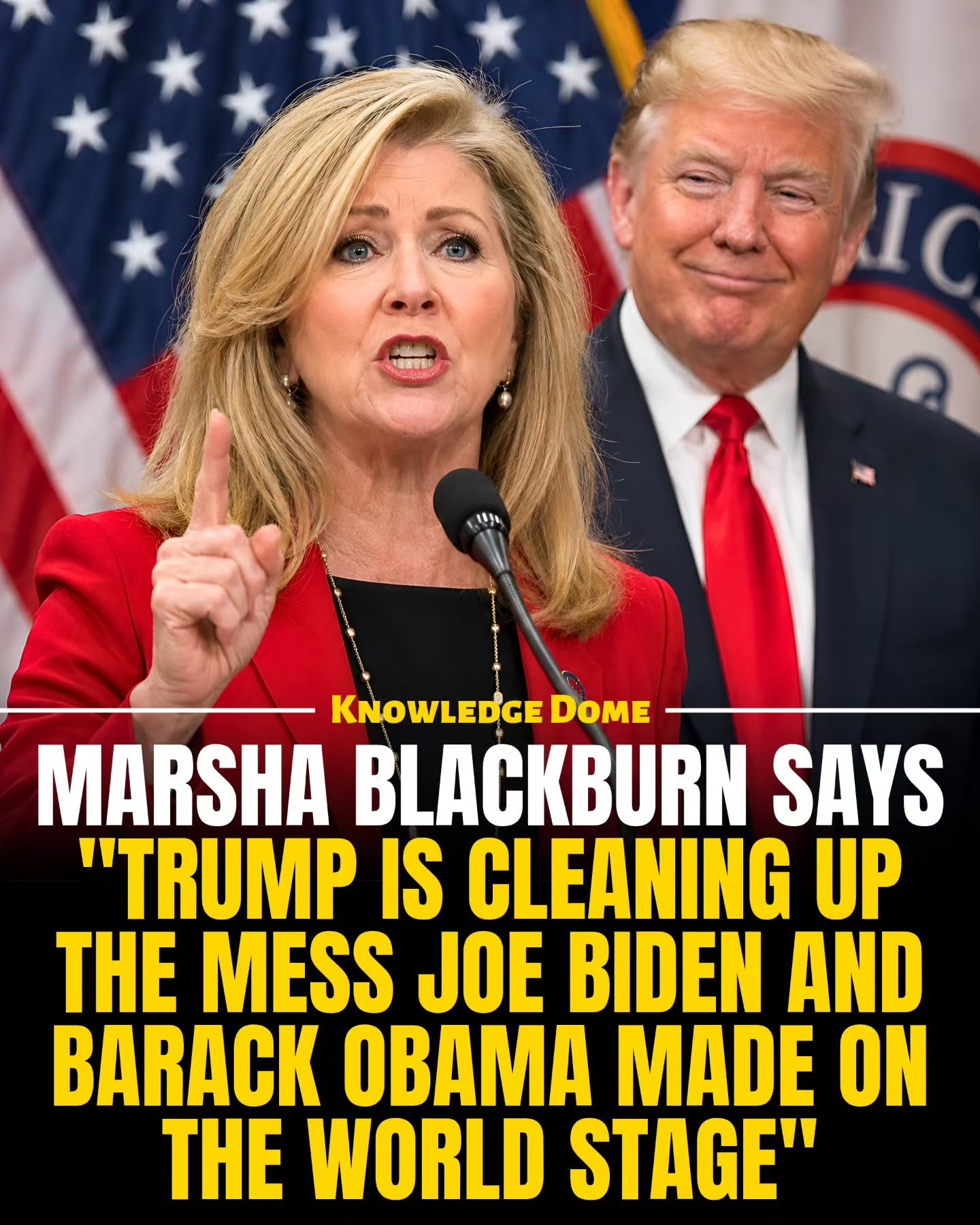
U.S. Senator Marsha Blackburn and the "America First" Foreign Policy
U.S. Senator Marsha Blackburn's praise for Donald Trump's "America First" foreign policy underscores a significant debate in American politics. This debate centers on how the United States should wield its global influence, manage trade, and interact with other nations. The divide is stark, with proponents of the "America First" approach believing that previous administrations have weakened the country, while critics argue that this policy has strained international relations and undermined global cooperation.
Why This Matters
The "America First" policy isn't just a political talking point; it has real-world implications for how the U.S. interacts with the rest of the world. It affects everything from trade agreements to military alliances and diplomatic negotiations. Understanding the nuances of this debate is crucial for grasping the current and future direction of U.S. foreign policy.
The Debate: Two Sides of a Complex Issue
The debate surrounding the "America First" foreign policy can be broken down into two main perspectives.
The "America First" Perspective
Supporters of the "America First" approach argue that the Obama and Biden administrations made the U.S. appear weaker on the world stage. They contend that these administrations relied too heavily on diplomacy and careful negotiations, which they view as signs of weakness. Instead, they believe that Trump's direct approach, which often involves surprising moves and robust trade deals, made the U.S. stronger.
This side of the debate emphasizes several key points:
- Direct Confrontation: Trump's policy of directly confronting enemies, rather than engaging in lengthy diplomatic negotiations, is seen as a more effective strategy.
- Trade Deals: Trump's emphasis on trade deals that protect American workers and industries is praised for prioritizing domestic interests.
- Alliance Contributions: There's a belief that other countries, including NATO allies, should contribute more to their own defense rather than relying heavily on the U.S.
The Diplomatic Approach
Critics of the "America First" policy argue that Trump's approach created more problems than it solved. They point out that the "America First" style put too much pressure on allies, making it harder to work together during global crises. These critics believe that diplomacy, alliances, and international cooperation are essential for addressing complex global issues.
Key points from this perspective include:
- Diplomacy and Cooperation: This side of the debate underscores the importance of diplomacy, alliances, and international agreements in tackling global problems like climate change and pandemics.
- Trust and Alliances: They warn that leaving agreements or questioning allies can erode the U.S.'s trust and influence, potentially giving other countries like China more room to grow.
- Global Problems: Many global issues, such as climate change and international security, cannot be solved by one country alone and require multinational efforts.
The Mess on the World Stage
Marsha Blackburn's assertion that Trump is "cleaning up the mess made by Joe Biden and Barack Obama on the world stage" highlights the core of this debate. The idea of a "mess" is subjective, depending on which perspective you take. Advocates of the "America First" policy see the previous administrations' policies as failures, while critics view Trump's actions as creating new challenges.
Practical Tips for Understanding the Debate
To better understand the intricacies of the "America First" debate, consider the following:
- Stay Informed: Keep up with current events and analyses from various sources to get a balanced view of the situation.
- Read Multiple Perspectives: Engage with articles, books, and discussions from both sides of the debate to gain a comprehensive understanding.
- Engage in Discussions: Participate in discussions with people who hold different views. This can help you see the nuances and complexities of the issue.
Important Takeaways
- The "America First" policy is a contentious issue with significant global implications.
- Both sides of the debate have valid points and arguments, each stemming from a different understanding of what constitutes American strength and leadership.
- The debate affects how the U.S. handles trade, military alliances, and international negotiations.
- Understanding both perspectives is crucial for forming a well-rounded opinion on the topic.
Conclusion
The "America First" foreign policy, as praised by Senator Marsha Blackburn, represents a pivotal point in the ongoing debate about the U.S.'s role in the world. Whether you support this approach or prefer a more diplomatic stance, recognizing the complexities and implications of this policy is essential for engaging in informed discussions and making sense of the current political landscape.
Watch the Reel
Questions readers ask
What are the main goals of the 'America First' foreign policy supported by Marsha Blackburn?
The 'America First' foreign policy, as supported by Marsha Blackburn, primarily aims to prioritize U.S. interests in global affairs. This includes focusing on domestic benefits in trade deals, challenging traditional diplomatic norms, and maintaining a strong stance against adversaries. The policy emphasizes the protection of American jobs and industries first and foremost.
How does Marsha Blackburn's stance on 'America First' differ from previous U.S. foreign policies?
Marsha Blackburn's support for the 'America First' policy contrasts with previous administrations by emphasizing a more confrontational approach over traditional diplomacy. While prior policies often focused on global cooperation and multilateralism, the 'America First' approach prioritizes direct confrontation and unilateral action to protect U.S. interests, which Blackburn believes were often overlooked in past foreign policies.
What are the potential benefits of the 'America First' policy as seen by its supporters?
Supporters of the 'America First' policy, including Marsha Blackburn, argue that it strengthens the country's position in global affairs by prioritizing national interests. This approach is seen as a way to bring back jobs to the U.S. and to ensure that trade agreements are fair and beneficial to American workers and industries. Additionally, it is viewed as a means to reassert American sovereignty and reduce reliance on international organizations.
How do critics view the impact of the 'America First' policy on international relations?
Critics of the 'America First' policy argue that it strains international relations and undermines global cooperation. They believe that by prioritizing U.S. interests over collaborative efforts with allies, the policy can lead to isolationism and weakened partnerships. This approach may also result in retaliatory actions from other countries, potentially harming U.S. interests in the long run.
What specific actions has the 'America First' policy led to under Trump's presidency?
Under Trump's presidency, the 'America First' policy has led to several key actions, including the withdrawal from the Paris climate agreement, the imposition of tariffs on various countries, and a more confrontational approach with adversaries such as China and Iran. Additionally, the policy has seen a shift in trade agreements, such as the renegotiation of NAFTA into the USMCA, and a focus on bringing manufacturing jobs back to the United States.
How does Marsha Blackburn justify her support for the 'America First' policy in the context of global trade?
Marsha Blackburn supports the 'America First' policy in the context of global trade by arguing that it ensures fair trade deals that benefit American workers and industries. She believes that previous trade agreements have often favored other countries at the expense of the U.S. Therefore, she advocates for policies that prioritize American interests, such as re-negotiating trade deals and imposing tariffs on countries that engage in unfair trade practices.
What are some key differences between Trump's 'America First' policy and Obama's foreign policy?
Trump's 'America First' policy differs from Obama's foreign policy in several key ways. While Obama's approach often focused on multilateralism, diplomacy, and international cooperation, Trump's policy emphasizes unilateral action, direct confrontation, and putting American interests first. This has resulted in a more assertive stance on trade, a reduction in U.S. involvement in international organizations, and a focus on strengthening domestic industries. In contrast, Obama's administration often sought to build global alliances and emphasize diplomacy in resolving international conflicts.
Recent articles
Fresh deep dives from the latest Reels we unpacked.




Comments
Be the first to comment.