International Market Expansion
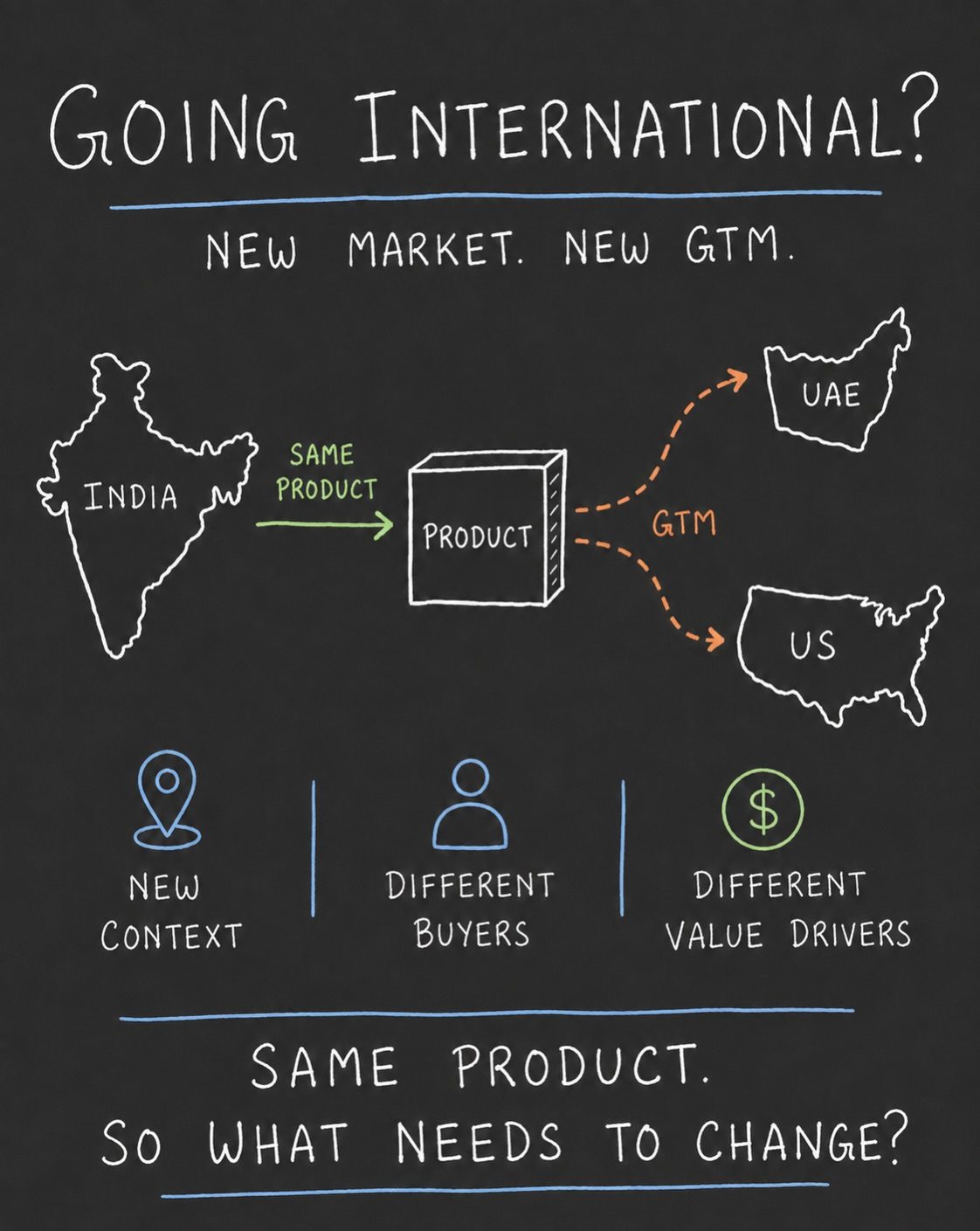
Entering new markets with an existing product can be fraught with challenges. This is especially true when expanding a successful product from India to markets like the UAE or the United States. Success in one market does not guarantee success in another. International expansion requires a nuanced approach, one that considers the unique characteristics of each market.
Context / Why this Matters
The assumption that a product's success in one market can be replicated in another is a common pitfall. The reality is that market dynamics, customer needs, and purchasing behaviors can vary significantly. For instance, the buyer personas, value drivers, and even the channels through which customers discover products can be entirely different.
Main discussion
Adapting to New Markets
When expanding internationally, it's crucial to recognize that the buying environment changes. The same product that worked in India might not resonate with customers in the UAE or the US. This is because the customers in these markets might experience the problem differently. The person using the product might not be the one approving the purchase. Additionally, the pricing strategy that worked in India might not make sense in the new market.
The on-screen text emphasizes the need to evaluate several factors before entering a new market: the problem, the buyer, the offer, the proof, the path, and the economics. Each of these components plays a critical role in the success of the product in a new market. For example, the problem must be real and urgent enough to warrant a solution. The buyer personas—who uses the product, who influences the purchase, who approves it, and who can block it—must be clearly identified. The offer, including the promise, pricing, packaging, and onboarding, might need adjustments to fit the new market. Local trust signals, such as case studies and testimonials, are essential for building credibility. The path to customer discovery, evaluation, and purchase can vary significantly between markets.
Understanding Buyer Personas
Identifying and understanding buyer personas is a crucial step in international expansion. The user of the product might not be the one making the purchasing decision. There are typically four key roles involved in a purchase decision: the user, the influencer, the decision-maker, and the person who can block the purchase. Understanding each of these personas and their roles is essential for effective marketing.
Building Trust in New Markets
Trust does not automatically transfer from one market to another. Local case studies and testimonials are essential for building credibility in a new market. Content creation is key to establishing trust and demonstrating the value of the product to potential customers. Local trust assets, such as case studies and testimonials, can help bridge the gap between the existing market and the new one.
Scaling International Expansion
A phased approach to international expansion is often the most effective strategy. This involves starting with a narrow market segment, proving the concept, and then scaling. It's important to focus on a narrow market segment initially, where success is achievable, before broadening the reach.
Practical Tips
- Evaluate the Market: Before entering a new market, evaluate the problem, the buyer, the offer, the proof, the path, and the economics. Ensure that the product addresses a real and urgent need in the new market.
- Identify Buyer Personas: Clearly define the user, influencer, decision-maker, and the person who can block the purchase. Tailor your marketing efforts to address the unique needs and concerns of each persona.
- Build Local Trust: Create local trust assets, such as case studies and testimonials, to establish credibility in the new market. Content creation is key to building trust and demonstrating the value of the product.
- Phased Approach: Start with a narrow market segment, prove the concept, and then scale. Focus on a repeatable channel for success before expanding into broader market segments.
Important Takeaways
Expanding a product internationally requires a strategic approach that considers the unique characteristics of each market. The product may remain the same, but the approach needs to change. Understanding buyer personas, building local trust, and taking a phased approach to expansion are essential for success. By carefully evaluating the market and adapting the strategy accordingly, businesses can successfully enter new markets and achieve sustainable growth.
Conclusion
International market expansion is a complex process that requires careful planning and execution. By understanding the unique characteristics of each market, identifying buyer personas, building local trust, and taking a phased approach to expansion, businesses can successfully enter new markets and achieve their growth objectives.
Watch the Reel
Questions readers ask
What are the key differences between the India to UAE and India to US market entry strategies?
The key differences lie in cultural nuances, regulatory environments, and consumer behaviors. The UAE market, for instance, has a high concentration of expatriates, which can influence purchasing decisions. In contrast, the US market is vast and diverse, with varying consumer preferences across different regions. Tailoring your product and marketing strategies to align with these unique aspects is crucial for success.
How can understanding market dynamics in India help when entering new markets?
Understanding market dynamics in India can provide a baseline for your product's strengths and weaknesses. However, it is essential to conduct thorough market research in the target region, as market dynamics can vary significantly. For example, consumer preferences, pricing strategies, and distribution channels in the UAE or US might differ greatly from India.
What role do customer needs play in a global product launch?
Customer needs are pivotal in a global product launch. What works in India might not resonate with consumers in the UAE or US. Conducting thorough market research to understand the specific needs, preferences, and buying behaviors of the target audience in each region is essential. This insight will help tailor your product, pricing, and promotional strategies effectively.
Why is a tailored approach necessary for entering new markets?
A tailored approach is necessary because market dynamics, customer needs, and purchasing behaviors can vary significantly from one region to another. What makes a product successful in India might not translate to success in the UAE or US. By customizing your strategy to each market's unique characteristics, you increase the likelihood of product acceptance and sales success.
What are some common pitfalls to avoid in international market expansion?
Some common pitfalls include assuming that a product's success in one market can be replicated elsewhere, underestimating cultural differences, and overlooking local regulations. Additionally, failing to adapt your marketing and sales strategies to the unique needs and preferences of the target market can hinder your success. It's crucial to conduct thorough market research and tailor your approach accordingly.
How can a company ensure product success in markets like the UAE or US?
To ensure product success, companies should invest in comprehensive market research to understand local consumer behaviors, preferences, and purchasing power. Developing a tailored market entry strategy that aligns with these insights, and continuously monitoring and adapting to market changes, can significantly enhance the chances of success. Local partnerships and strategic marketing can also play a pivotal role.
What are some effective strategies for entering new markets beyond India?
Effective strategies for entering new markets include conducting thorough market research to understand local dynamics, adapting your product and marketing strategies to meet local needs, and leveraging local partnerships. Building a strong local presence, whether through physical stores, online platforms, or strategic alliances, can also facilitate market entry and enhance brand visibility. Regularly reviewing and adjusting your strategy based on market feedback is essential for long-term success.
Recent articles
Fresh deep dives from the latest Reels we unpacked.




Comments
Be the first to comment.