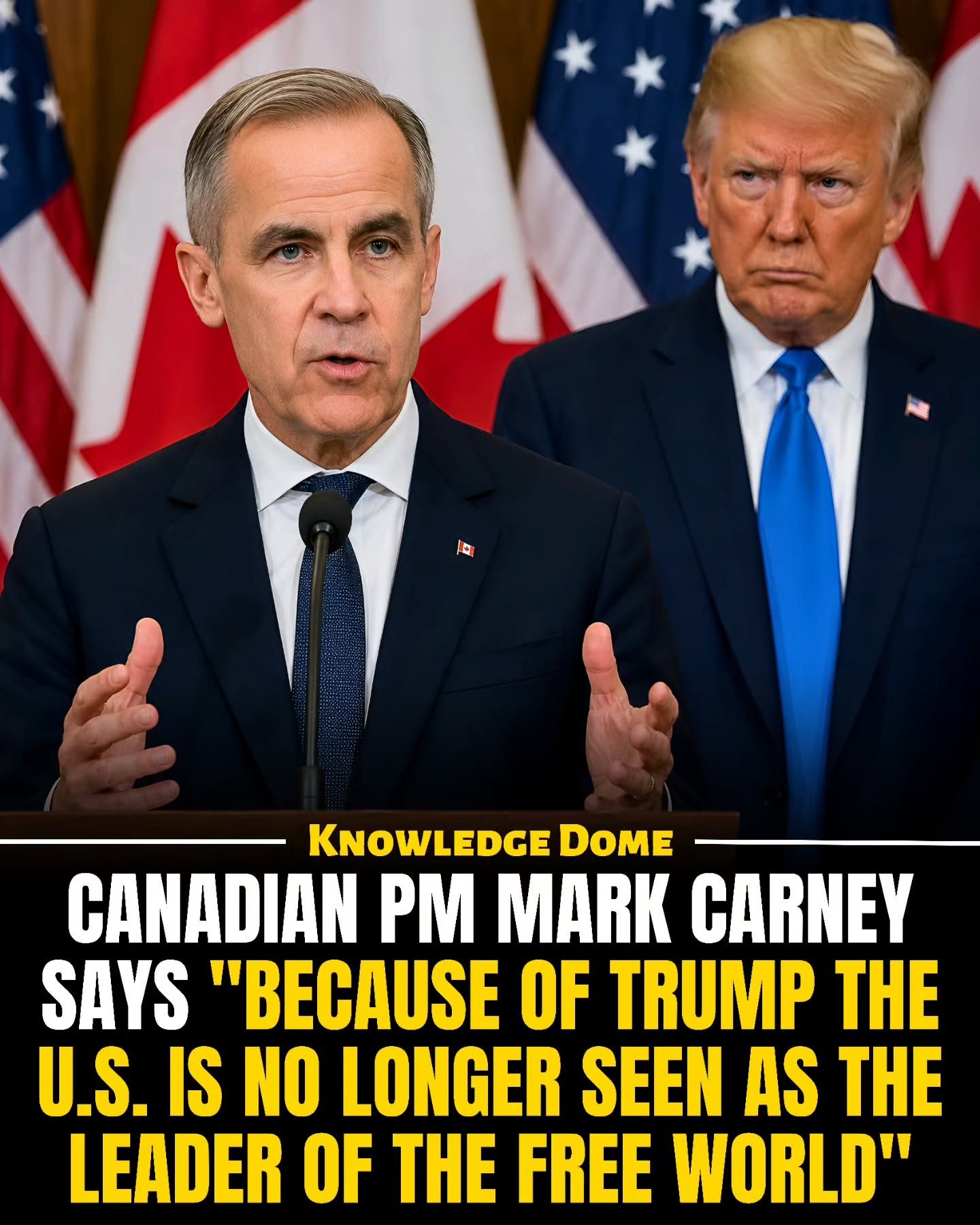
Canada and the Shifting Global Dynamics: Mark Carney on U.S. Leadership
In recent political discourse, Mark Carney, a prominent former Canadian Prime Minister, has offered a critical perspective on the U.S. global leadership. He attributes a significant shift in perception to the policies and actions of President Donald Trump. This shift is particularly notable in how Canada and other allies now view the United States.
Why This Matters
For decades, the United States has been widely regarded as the leader of the free world. However, Carney's comments indicate a profound change in international relations. His statement reflects a broader sentiment among Canada and other allies that the U.S. is no longer seen as the top global leader. This shift has significant implications for geopolitical alliances, economic policies, and international diplomacy.
The Impact of U.S. Policies on Global Alliances
Changing Perceptions of U.S. Leadership
Carney's remarks come at a time of rising tension between Washington and its traditional allies. The former Prime Minister specifically points to Trump's policies, particularly the tariff hikes, as a primary reason for the weakening of international trust. These policies have strained relationships and caused allies to reassess their reliance on the U.S.
Strategic Risks for Canada
Carney noted that Canada can no longer depend on the same close relationship with the U.S. as before. This change in dynamics poses a strategic risk, prompting Canada to look for new partners around the world. The traditional trust between the two nations has eroded, leading to a more complex and potentially less secure global landscape.
Global Implications
The ripple effects of these changes are significant. Other countries, not just Canada, are reevaluating their relationships with the U.S. The shift in perception represents a broader trend in international relations, where the U.S. is no longer seen as the unequivocal leader. This change has the potential to alter global trade, security alliances, and international cooperation.
Practical Tips for Understanding Global Politics
To better navigate the evolving geopolitical landscape, it's essential to stay informed about key developments and their implications. Here are some practical tips:
Stay Informed
Regularly follow reliable news sources and political analyses to stay updated on the latest developments. Understanding the context and nuances of international relations can help you make more informed decisions.
Analyze Policy Changes
Pay close attention to policy changes and how they impact international relations. Policies, especially those related to trade and security, can have far-reaching effects on global alliances and economies.
Consider Multiple Perspectives
Recognize that political decisions often have global repercussions. Consider the perspectives of various countries and how they might be affected by changes in U.S. policies. This broader view can provide a more comprehensive understanding of the geopolitical landscape.
Important Takeaways
Mark Carney's comments highlight a significant shift in the global political landscape. The U.S. is no longer seen as the leader of the free world by Canada and other allies, largely due to the policies and actions of Donald Trump. This shift has strategic implications for Canada and other nations, prompting them to seek new partners and reassess their relationships with the U.S. The evolving dynamics underscore the need for a nuanced understanding of international relations and the importance of staying informed about geopolitical changes.
Conclusion
As the world continues to evolve, so do the dynamics of global leadership. Mark Carney's insights offer a critical perspective on how political decisions in the U.S. can impact international relations. His comments serve as a reminder to stay informed, consider multiple perspectives, and analyze policy changes to better navigate the complexities of global politics. This ongoing dialogue is vital for understanding the current state and future directions of international alliances.
Watch the Reel
Questions readers ask
Who is Mark Carney and why are his comments significant?
Mark Carney is a prominent former Canadian leader. His comments are significant because they reflect a broader sentiment among Canada and other allies about the shifting dynamics in global leadership, particularly the perception of the United States' role in the international community.
What specific policies has Mark Carney attributed to the shift in U.S. global leadership?
Mark Carney specifically mentions the policies and actions of President Donald Trump as a significant factor in the shift in perception of U.S. global leadership. This includes changes in U.S. foreign policy that have impacted international alliances, particularly with Canada and other allies.
How has the U.S.'s role as a global leader changed according to Mark Carney?
According to Mark Carney, the U.S. is no longer seen as the top global leader by Canada and other allies. This shift is evident in the changing dynamics of international relations and the perception of the U.S. as a trusted and influential leader in the global arena.
What are the implications of this shift in U.S. leadership for international alliances?
The implications of this shift are significant for international alliances, particularly with Canada. The U.S. is no longer viewed in the same light as a global leader, which could affect diplomatic relations, economic cooperation, and geopolitical strategies.
How has Canada's view of the U.S. changed in light of these comments?
Canada, along with other allies, now perceives the U.S. in a new light due to the policies and actions under President Trump. This new perspective is reflected in the shifting global dynamics and the perception of the U.S. as a global leader.
Recent articles
Fresh deep dives from the latest Reels we unpacked.




Comments
Be the first to comment.