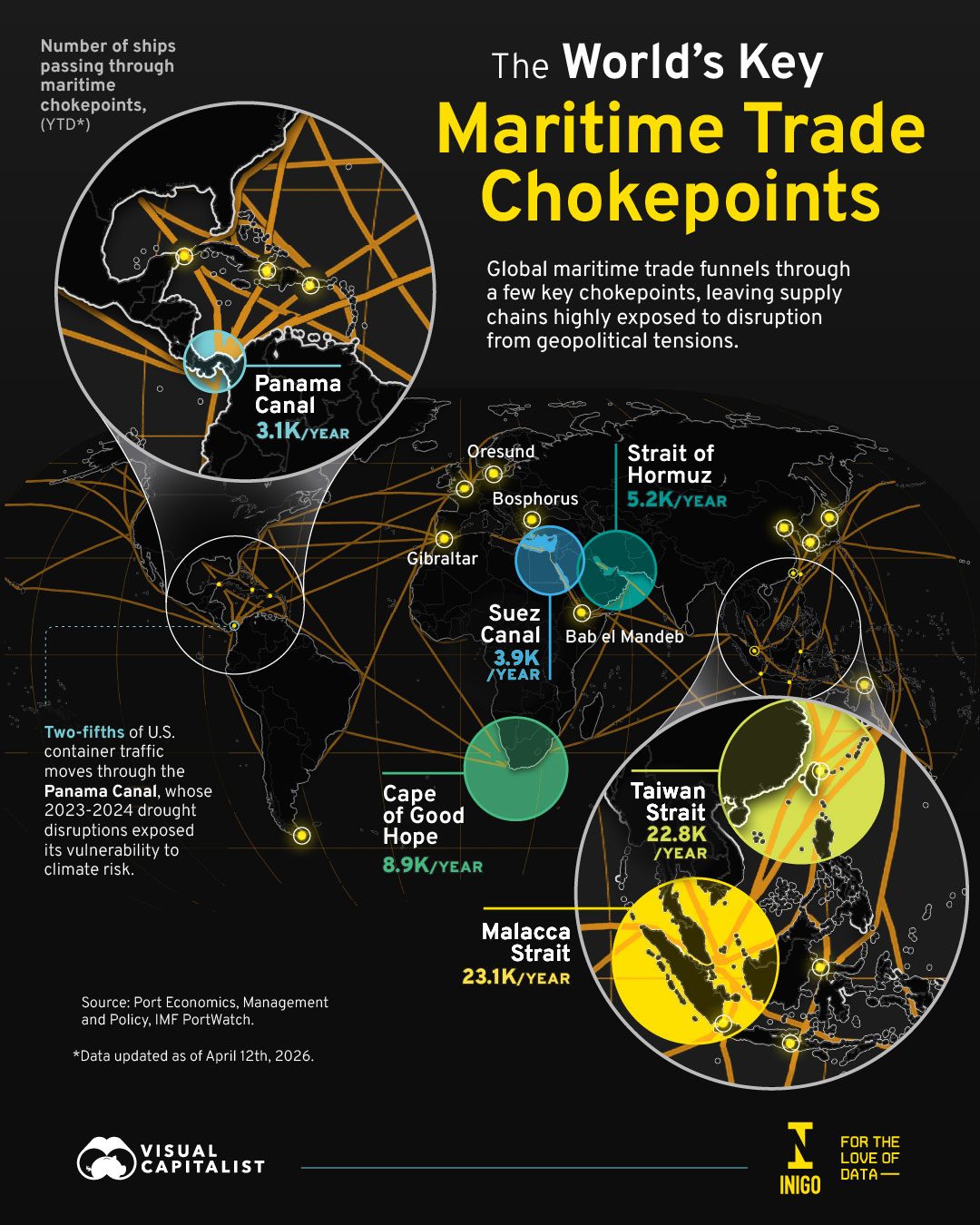
Maritime Trade Chokepoints
Maritime trade chokepoints are critical points along global shipping routes where a significant portion of goods passes through narrow or constrained passages. These chokepoints play a pivotal role in the movement of goods, and their significance cannot be overstated.
Why This Matters
More than 80% of global trade by volume is transported by sea. This makes maritime routes the backbone of the global supply chain. Any disruption at these chokepoints can have cascading effects on industries and economies around the world. Understanding these trade corridors and the risks they face is essential for maintaining a stable and efficient global supply chain.
Main Discussion
Key Maritime Trade Chokepoints
Several key maritime trade chokepoints funnel global trade:
-
Panama Canal: This waterway connects the Atlantic and Pacific Oceans, serving as a crucial link in global shipping routes. It handles a significant volume of trade, including container ships, tankers, and bulk carriers.
-
Suez Canal: Located in Egypt, this canal is a vital link between the Mediterranean Sea and the Red Sea, facilitating trade between Europe, Africa, and Asia. It supports a wide range of goods, from oil to consumer products.
-
Strait of Hormuz: Situated between the Persian Gulf and the Gulf of Oman, this strait is a critical passage for oil tankers and other vessels. Nearly 20% of global oil supply passes through this narrow waterway, making it a focal point for global energy security.
-
Malacca Strait: This strait in Southeast Asia is one of the world's busiest shipping lanes, connecting the Indian Ocean and the Pacific Ocean. It is a key route for trade between Asia and the rest of the world, carrying goods such as electronics, textiles, and raw materials.
Impact of Climate Change and Disruptions
Maritime trade chokepoints are vulnerable to various disruptions, including geopolitical tensions, natural disasters, and climate change. The 2023-2024 droughts exposed the vulnerability of these routes to climate risk, highlighting the need for resilience and adaptability in global trade networks.
Trade Volumes and Data
The volume of trade passing through these chokepoints is immense. For instance, the Panama Canal handles approximately 23.1K vessels per year, while the Suez Canal sees around 22.8K vessels annually. Other significant routes, such as the Strait of Hormuz and the Malacca Strait, handle thousands of vessels each year, underscoring their importance in global trade.
Practical Tips
Risk Management
Businesses and governments should develop contingency plans to mitigate the risks associated with disruptions at maritime trade chokepoints. This includes diversifying supply routes, investing in infrastructure, and enhancing monitoring and response capabilities.
Infrastructure Investment
Investing in the infrastructure around these chokepoints can improve their resilience and efficiency. This includes dredging, port expansion, and the implementation of advanced navigation technologies. By investing in these areas, we can ensure that these vital trade routes remain operational and efficient.
Climate Adaptation
Climate change poses a significant risk to maritime trade chokepoints. It is essential to develop climate adaptation strategies to protect these routes from the impacts of extreme weather events, rising sea levels, and other climatic changes. This may involve building more resilient infrastructure and implementing sustainable practices in maritime operations.
Important Takeaways
Maritime trade chokepoints are critical to the global supply chain, and their vulnerability to disruptions and climate change is a growing concern. By understanding the significance of these routes and taking practical steps to mitigate risks, we can ensure the stability and efficiency of global trade.
Conclusion
Global trade relies heavily on maritime routes, and the chokepoints along these routes are essential to the movement of goods worldwide. By recognizing the importance of these chokepoints and taking proactive measures to manage risks, we can build a more resilient and sustainable global supply chain.
Watch the Reel
Questions readers ask
What are maritime trade chokepoints and why are they important?
Maritime trade chokepoints are narrow, crucial passages that facilitate the movement of goods by sea. They are important because they handle a significant portion of global trade, making them vital for maintaining smooth supply chains. Disruptions at these points can lead to widespread delays and economic impacts.
Which are the most significant maritime trade chokepoints?
Some of the most significant maritime trade chokepoints include the Panama Canal, the Suez Canal, the Strait of Hormuz, and the Malacca Strait. These routes are pivotal for global shipping and any disruption can have far-reaching consequences.
How do disruptions at maritime chokepoints affect global trade?
Disruptions at maritime chokepoints can cause significant delays and backlogs in supply chains. This can lead to shortages, increased shipping costs, and economic instability in affected regions and globally, highlighting their critical role in maintaining efficient trade flows.
What role do maritime trade chokepoints play in climate risk for global trade?
Maritime chokepoints are also vulnerable to the impacts of climate change, such as extreme weather events and rising sea levels. These environmental factors can exacerbate disruptions, making it crucial to consider climate resilience in managing these critical routes.
Are there any visual aids to better understand maritime chokepoints?
Yes, a trade routes infographic can be an excellent visual aid to understand maritime chokepoints. These infographics typically display the locations of key chokepoints, the volume of trade they handle, and the interconnected nature of global shipping routes.
Recent articles
Fresh deep dives from the latest Reels we unpacked.




Comments
Be the first to comment.