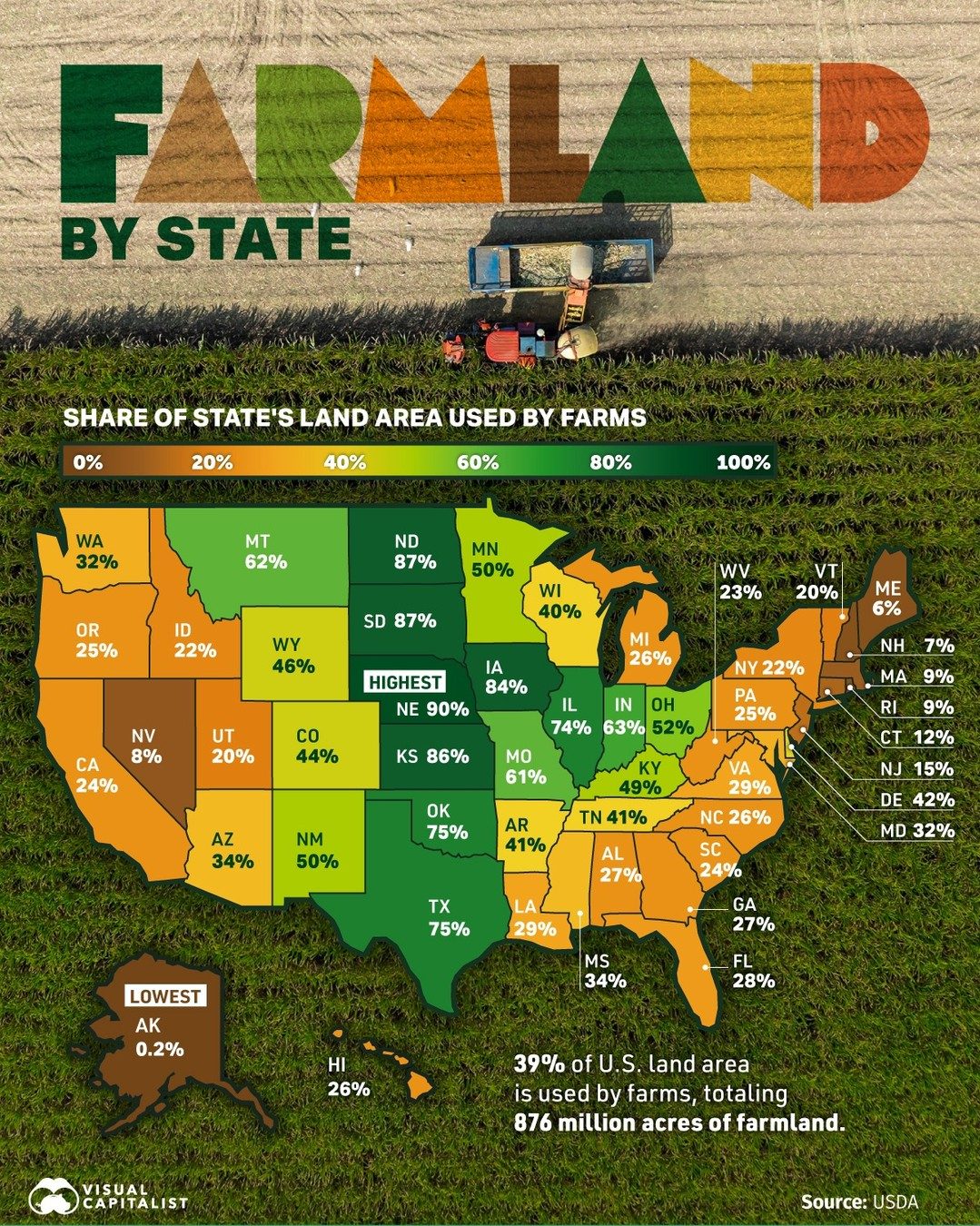
US Farmland Distribution
The United States is a land of vast agricultural landscapes, with nearly 39% of its total land area dedicated to farms. This agricultural footprint is particularly pronounced in the central strip of states, stretching from North Dakota to Texas, where at least 75% of the land is used for farming.
Why This Matters
Understanding the distribution of farmland across the United States is crucial for various reasons. It provides insights into the agricultural economy, food security, and environmental impacts. By examining which states have the highest and lowest percentages of farmland, we can better understand regional economic dependencies and the implications for land use policies. Additionally, this data is essential for policymakers, farmers, and consumers to make informed decisions about agriculture, environmental sustainability, and land management.
Main Discussion
The Central Strips of Farmland
The central region of the United States, often referred to as the "breadbasket" of the country, is the heart of American agriculture. States like Nebraska, Kansas, and the Dakotas lead the nation in the percentage of land dedicated to farming.
States with High Farmland Percentage
- Kansas (86%): Known for its vast wheat fields and livestock production, Kansas is one of the leading states in agricultural output.
- Nebraska (90%): Nebraska's expansive plains are ideal for growing crops like corn and soybeans, making it a top producer in the country.
- Iowa (84%): Iowa's fertile soil and ample rainfall support a robust agricultural industry, with a focus on corn and pork production.
- Minnesota (87%): Minnesota's agricultural sector is diverse, with significant contributions from dairy, poultry, and crop farming.
States with Lower Farmland Percentage
While the central states dominate in farmland, other regions have significantly lower percentages. These states often have more varied economies and different land use priorities.
States with Lower Farmland Percentage
- Alaska (0.2%): Due to its unique geography and climate, Alaska has minimal farmland, focusing more on fishing and mining.
- Nevada (8%): Nevada's arid climate and urban development limit its agricultural land, making it the least agricultural state.
- Georgia (6%): Georgia's economy is more diversified, with significant contributions from manufacturing, technology, and tourism alongside farming.
The Impact of Agricultural Zoning
Agricultural zoning plays a crucial role in determining the amount of land dedicated to farming. States with more stringent zoning laws often have higher percentages of farmland, as these laws protect agricultural land from urban development.
Practical Tips
Understanding the distribution of farmland can provide valuable insights for those involved in agriculture, land management, and policy-making. Here are some practical tips:
For Farmers
- Know Your Market: Be aware of the agricultural trends in your region. Understanding the market can help you make informed decisions about what crops to grow or livestock to raise.
- Invest in Technology: Utilize modern farming technologies to increase efficiency and yield. Precision agriculture, drones, and GIS systems can help monitor and manage farmland more effectively.
For Policymakers
- Support Agricultural Zoning: Implement and enforce zoning laws that protect farmland from urban sprawl. This ensures the preservation of agricultural land for future generations.
- Invest in Research and Development: Allocate resources to agricultural research to develop new farming techniques and crops that are more resilient to climate change and other environmental challenges.
For Consumers
- Understand the Source: Knowing where your food comes from can help you make more informed choices about what you eat. Supporting local farmers and sustainable agriculture practices can have a positive impact on the environment and local economies.
Important Takeaways
- Agricultural Diversity: The distribution of farmland varies widely across the United States, with some states relying heavily on agriculture while others have more diversified economies.
- Economic Impact: The agricultural sector plays a significant role in the economy of many states, particularly in the central region.
- Environmental Considerations: Understanding farmland distribution is essential for environmental sustainability, as it helps in developing policies that protect agricultural land and promote sustainable farming practices.
Conclusion
The distribution of farmland in the United States is a complex and multifaceted issue that impacts agriculture, the economy, and the environment. By examining the data, we gain valuable insights into the agricultural landscape of the country and the factors that shape it. Whether you're a farmer, policymaker, or consumer, understanding the distribution of farmland can help you make more informed decisions and contribute to a sustainable future.
Watch the Reel
Questions readers ask
Which states in the US have the highest percentage of farmland?
The states with the highest percentage of farmland are primarily located in the central United States. North Dakota, Nebraska, and Kansas are among the top, with each state using over 85% of their land for agricultural purposes. Other significant states include South Dakota, Montana, and Oklahoma, each utilizing more than 80% of their land for farming.
How does farmland distribution impact the US economy?
Farmland distribution significantly influences the US economy by shaping regional economies. States with extensive farmland often have economies heavily dependent on agriculture, impacting job markets, income, and overall economic stability. Additionally, the distribution of farmland affects trade, as states with larger agricultural sectors tend to export more goods, contributing to the national economy.
What are the environmental implications of US farmland distribution?
The concentration of farmland in certain regions has notable environmental impacts. Intensive agricultural practices can lead to soil degradation, water pollution, and habitat loss. However, these areas also contribute to biodiversity and carbon sequestration. Understanding the environmental footprint of farmland distribution is crucial for developing sustainable agricultural practices and conservation strategies.
Why is it important to know the percentage of farmland by state?
Knowing the percentage of farmland by state provides valuable insights into regional food security, economic dependencies, and land use policies. For instance, states with high percentages of farmland may have robust food production capacities, while those with lower percentages might rely more on imports. This information is essential for policymakers, farmers, and consumers to make informed decisions.
What are the key differences in farmland distribution across the US?
The central states, such as North Dakota, Nebraska, and Kansas, have the highest concentration of farmland, using 75% or more of their land for agriculture. In contrast, states on the east and west coasts, as well as in the Northeast, have much lower percentages of farmland, often utilizing less than 20% of their land for farming. This disparity reflects the varying geographic and climatic conditions across the country, as well as differing regional economic priorities.
How does farmland distribution affect food security in the US?
Farmland distribution plays a pivotal role in food security by determining where food is produced. States with extensive farmland contribute significantly to the national food supply, ensuring availability and affordability. Conversely, states with limited farmland may face challenges in maintaining local food supplies, potentially relying more on imports. Understanding this distribution is key for developing strategies to enhance food security across all regions.
What role does farmland distribution play in land use policies?
Farmland distribution is a critical factor in shaping land use policies. Policymakers use this information to balance agricultural needs with urban development, environmental conservation, and other land uses. By understanding where farmland is concentrated, policymakers can create targeted policies to support farmers, protect agricultural land, and promote sustainable land use practices, thereby fostering a resilient and productive agricultural sector.
Related deep dives
Similar reads based on topic and creator.



Recent articles
Fresh deep dives from the latest Reels we unpacked.




Comments
Be the first to comment.