America’s Global Military Presence
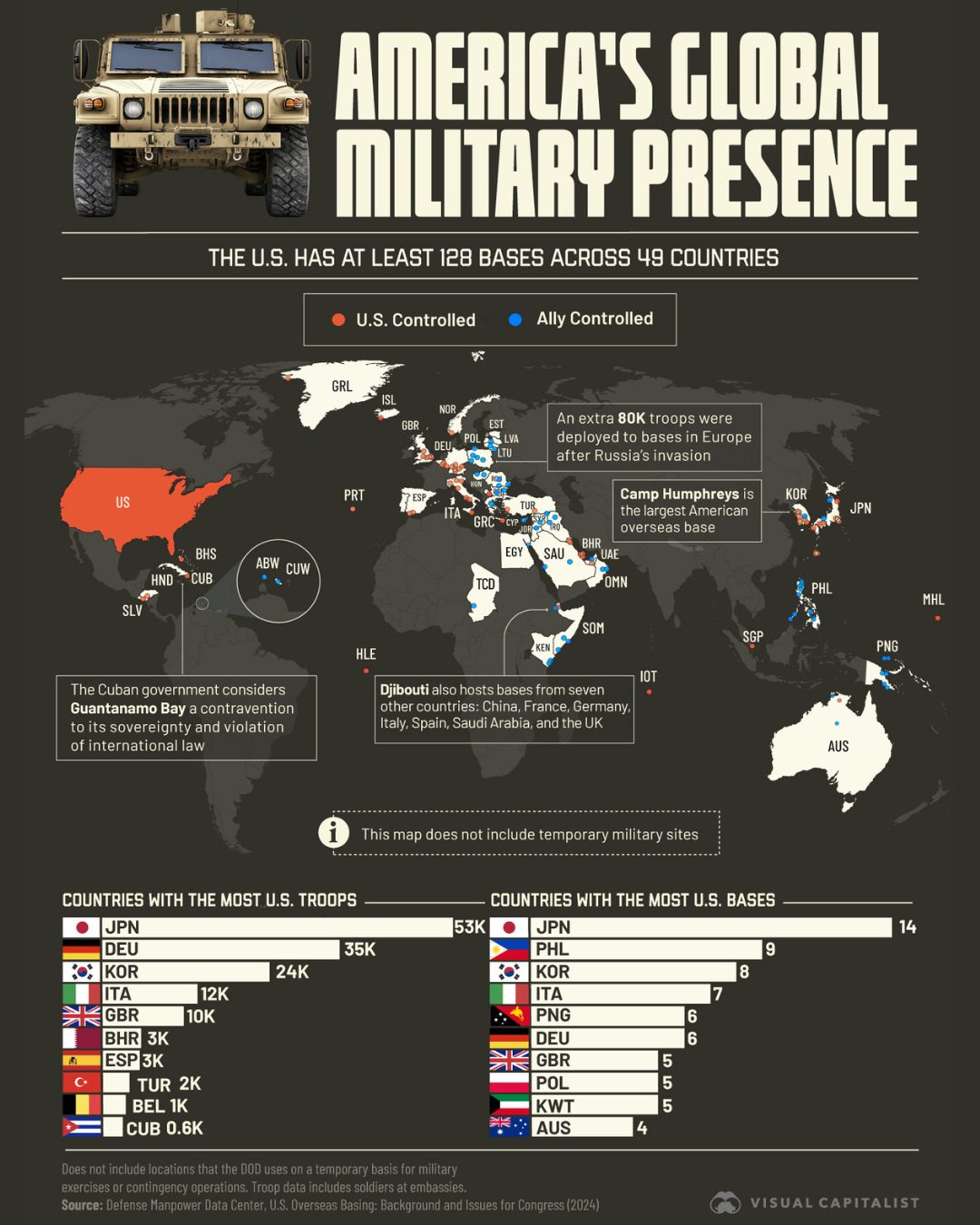
The United States maintains a significant military presence around the world, with a particular concentration in Europe and Asia. This global network of bases and troops plays a crucial role in various military and strategic objectives. The infographic highlights key countries where the U.S. has a substantial military footprint, including Japan, South Korea, and Germany, which together account for nearly 75% of all stationed troops.
Why This Matters
Understanding the distribution of U.S. military bases and troops is essential for comprehending global defense strategies, diplomatic relations, and geopolitical dynamics. The presence of American forces in key regions like Europe and Asia serves multiple purposes, including deterrence, alliance strengthening, and rapid response capabilities. This network of bases allows the U.S. to project power, support allies, and respond to crises more effectively.
The Global Footprint
Key Regions and Countries
The U.S. has established a vast network of military bases and deployments across the globe. The infographic reveals that the U.S. has at least 128 bases across 49 countries, with a significant concentration in Europe and Asia. This distribution is strategic, reflecting the U.S.'s focus on maintaining influence and security in these regions.
Europe
In Europe, the U.S. has a strong presence, with bases in countries like Germany, Turkey, the United Kingdom, and Belgium. Germany, in particular, is home to a significant number of U.S. troops and bases, underscoring the strategic importance of this NATO ally. The U.S. presence in Europe is crucial for maintaining regional stability, supporting NATO allies, and deterring potential threats from Russia and other adversaries.
Asia
Asia is another critical region for U.S. military operations. Japan and South Korea host the largest number of U.S. bases and troops in the region. Camp Humphreys in South Korea is the largest American overseas base, housing a substantial portion of the U.S. forces in the region. The presence of U.S. troops in Japan and South Korea is essential for maintaining regional security, deterring aggression from North Korea, and supporting allies in the face of China's growing influence.
Major U.S. Bases and Troop Deployments
Camp Humphreys in South Korea stands out as the largest American overseas base. This facility is a testament to the U.S.'s commitment to maintaining a strong military presence in the region. Other key countries with significant U.S. military deployments include the Philippines, Australia, and the United Kingdom. These bases serve as strategic hubs for military operations, training, and logistical support.
The Role of Alliances
The U.S. military presence is not only about maintaining bases but also about forging and strengthening alliances. Many of the bases are either U.S.-controlled or ally-controlled, reflecting the cooperative nature of these military deployments. For example, the U.S. has bases in countries like Germany, South Korea, and Japan, which are crucial for regional security and stability. The presence of U.S. troops in these countries helps to deter potential adversaries and provides a rapid response capability in case of crises.
Practical Tips for Understanding Global Military Presence
Keeping Track of Military Deployments
For those interested in understanding the U.S. military's global presence, it's essential to keep track of key deployments and their strategic significance. This can involve following military news, reviewing defense policy documents, and analyzing geopolitical developments. Understanding the distribution of U.S. bases and troops can provide valuable insights into global military strategies and regional security dynamics.
Analyzing Regional Security
Analyzing the U.S. military presence in different regions can offer a deeper understanding of global security. For example, the concentration of U.S. troops in Europe and Asia reflects the strategic importance of these regions for maintaining international security. By understanding the roles of key bases and their functions, one can gain a clearer perspective on the U.S.'s military efforts and strategic objectives in these regions.
Important Takeaways
Strategic Importance of Key Regions
The concentration of U.S. military bases and troops in Europe and Asia underscores the strategic importance of these regions. These deployments are crucial for maintaining regional stability, deterring potential threats, and supporting allies. Understanding the significance of these deployments can provide valuable insights into global military strategies and geopolitical dynamics.
The Role of Alliances
The U.S. military presence is not only about maintaining bases but also about forging and strengthening alliances. Many of the bases are either U.S.-controlled or ally-controlled, reflecting the cooperative nature of these military deployments. The presence of U.S. troops in these countries helps to deter potential adversaries and provides a rapid response capability in case of crises.
Conclusion
The U.S. maintains a significant military presence globally, with a particular focus on Europe and Asia. This network of bases and troops plays a crucial role in various military and strategic objectives, including deterrence, alliance strengthening, and rapid response capabilities. Understanding the distribution of U.S. military bases and troops is essential for comprehending global defense strategies, diplomatic relations, and geopolitical dynamics. By keeping track of key deployments and analyzing regional security, one can gain a deeper understanding of the U.S.'s military efforts and strategic objectives in these regions.
Watch the Reel
Questions readers ask
How many military bases does the U.S. have overseas?
The exact number of U.S. military bases overseas can vary, but it is estimated that the U.S. has hundreds of bases and facilities spread across the globe. These bases are strategically located to support various military and strategic objectives, with a significant concentration in regions like Europe and Asia.
What are the top countries hosting U.S. military bases?
The top countries hosting U.S. military bases include Japan, South Korea, and Germany. Together, these three countries account for nearly 75% of all stationed U.S. troops overseas, highlighting their importance in U.S. global military strategy.
Why is the U.S. military presence in Europe and Asia so significant?
The U.S. military presence in Europe and Asia is significant due to several reasons. These regions are crucial for global defense strategies, diplomatic relations, and geopolitical dynamics. The presence of American forces in these areas serves multiple purposes, including deterrence, alliance strengthening, and maintaining global security.
How does the distribution of U.S. military bases affect global security?
The distribution of U.S. military bases plays a critical role in global security by enabling rapid response to potential threats, supporting allies, and maintaining stability in key regions. This strategic deployment allows the U.S. to project power and influence, contributing to a more secure international environment.
What are some of the strategic objectives of U.S. military bases overseas?
The strategic objectives of U.S. military bases overseas include deterrence of potential adversaries, support for allied nations, and the ability to respond quickly to crises. These bases also facilitate training, logistics, and intelligence operations, enhancing the overall effectiveness of U.S. military capabilities.
What is the role of U.S. military bases in diplomatic relations?
U.S. military bases play a significant role in diplomatic relations by fostering partnerships and alliances. The presence of U.S. forces in various countries strengthens bilateral and multilateral relationships, promotes regional stability, and enhances cooperation on security and defense matters.
How can I access a map of U.S. military deployments overseas?
A comprehensive map of U.S. military deployments overseas can be found through various sources, including government publications, defense ministry websites, and independent research organizations. These resources often provide detailed information on the locations of U.S. military bases and the distribution of troops, offering valuable insights into global military strategy.
Recent articles
Fresh deep dives from the latest Reels we unpacked.




Comments
Be the first to comment.