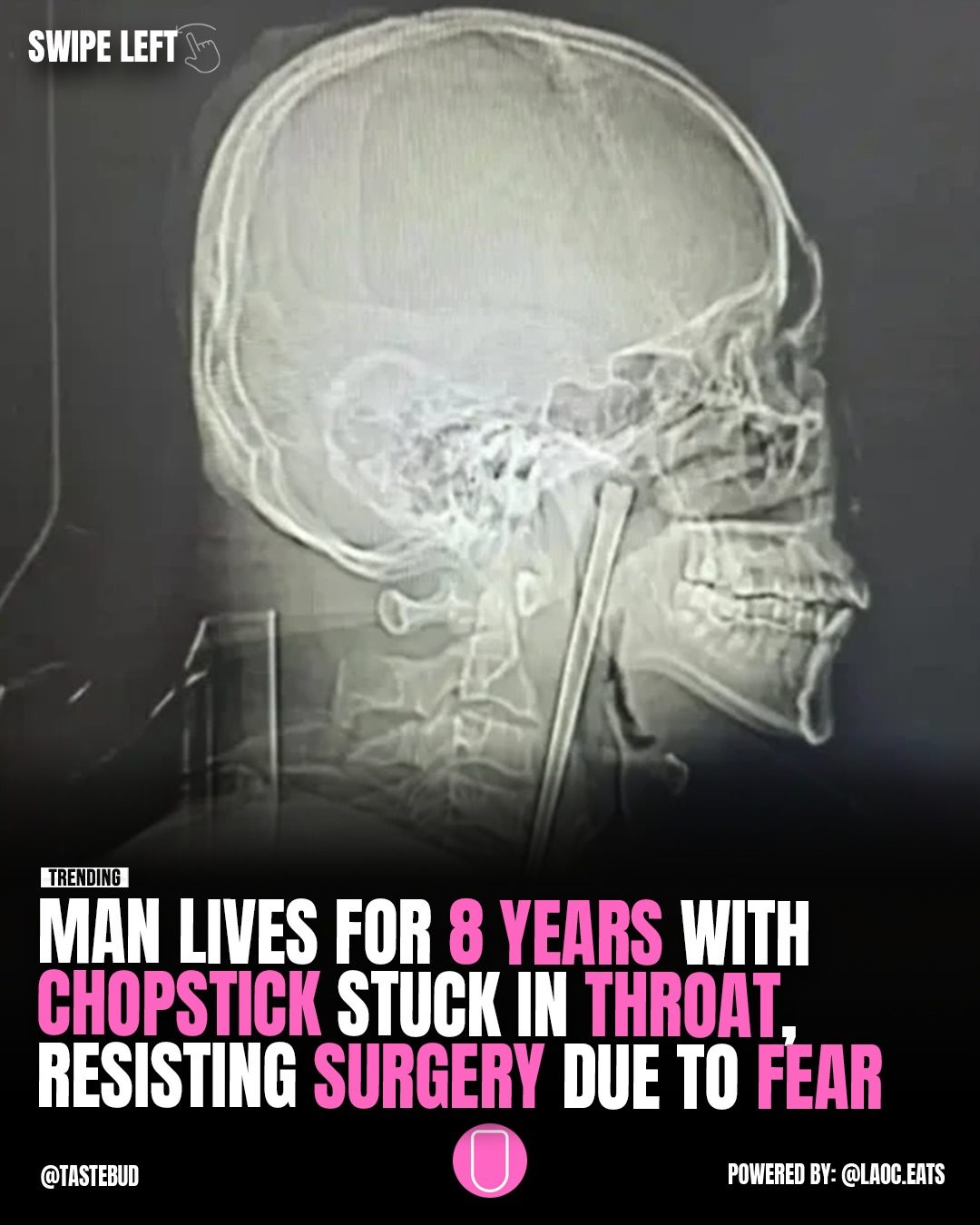
A Man Lives for Eight Years with a Chopstick Lodged in His Throat
In northeastern China, an extraordinary medical case unfolded when a man lived for eight years with a 12 cm metal chopstick lodged in his throat. Initially, the man ignored the pain, attributing it to alcohol consumption, but his symptoms worsened over time. Doctors in Dalian successfully removed the object through a minimally invasive procedure, helping him recover well and closing an unusual chapter in his health history.
Why This Matters
This case highlights several important aspects of medical practice and human behavior. It underscores the potential consequences of ignoring medical symptoms and the importance of timely intervention. Additionally, it shows the advancements in medical procedures that allow for minimally invasive removals, reducing the need for major surgery in certain cases. The scenario also offers insights into the psychological factors that might influence a person’s decision to delay medical treatment.
The Case and Its Implications
The Accidental Swallowing
The man in this case accidentally swallowed a metal chopstick. This type of incident is rare but not unheard of, particularly in regions where chopsticks are commonly used. The initial pain he experienced was likely severe, but his decision to attribute it to alcohol and delay seeking medical attention is noteworthy. This delay allowed the chopstick to remain lodged in his throat for an extended period, causing long-term complications.
The Psychological Aspect
The fear of surgery is a common barrier to seeking medical treatment. In this case, the man's fear likely played a significant role in his decision to delay treatment. This psychological barrier can be overwhelming and prevent individuals from seeking the care they need. Understanding these psychological factors can help healthcare professionals address patients' fears and encourage them to seek timely medical attention.
The Medical Intervention
Doctors in Dalian were eventually able to remove the chopstick through a minimally invasive procedure. This approach is less traumatic for the patient and often results in faster recovery times compared to major surgery. The success of this procedure underscores the advances in medical technology and techniques, which often allow for safer and less invasive treatments.
Practical Tips
If you suspect that you or someone else has accidentally swallowed a foreign object, it’s crucial to seek immediate medical attention. Ignoring symptoms can lead to severe complications and prolonged suffering. Here are some practical steps to take:
- Seek Immediate Medical Help: Even if the pain seems manageable, do not delay seeking medical attention. Early intervention can prevent complications and ensure a quicker recovery.
- Be Honest with Healthcare Providers: Be transparent about the details of the incident, including what was swallowed and any symptoms you are experiencing. This information is vital for accurate diagnosis and treatment.
- Consider Psychological Support: If fear of medical procedures is a barrier to seeking treatment, consider speaking with a mental health professional. They can provide strategies to manage anxiety and encourage timely medical care.
Important Takeaways
- Accidentally swallowing a foreign object, such as a chopstick, can have serious medical consequences if left untreated.
- Fear of surgery and other psychological factors can delay seeking medical attention, leading to prolonged suffering.
- Advances in medical procedures now allow for minimally invasive treatments, reducing the need for major surgery and promoting faster recovery.
- Seeking immediate medical attention and being honest with healthcare providers are crucial steps in addressing medical emergencies.
Conclusion
The story of a man living with a chopstick lodged in his throat for eight years is a stark reminder of the importance of timely medical intervention. It highlights the potential consequences of ignoring symptoms, the psychological barriers to seeking treatment, and the advancements in medical procedures that make treatment more accessible and less invasive. By understanding these factors, we can better address medical emergencies and promote healthier outcomes.
Watch the Reel
Questions readers ask
How was the chopstick initially lodged in the man's throat?
The man accidentally lodged the 12 cm metal chopstick in his throat, possibly while eating or handling it carelessly. He initially ignored the pain, mistakenly believing it was due to alcohol consumption, which led to the chopstick remaining in his throat for eight years.
What procedure was used to remove the chopstick?
Doctors in Dalian, China, successfully removed the chopstick using a minimally invasive procedure. This approach allowed for the safe and effective extraction of the foreign object with minimal discomfort and recovery time for the patient.
What are the potential risks of ignoring medical symptoms, as seen in this case?
Ignoring medical symptoms can lead to prolonged discomfort, worsening of the condition, and even life-threatening situations. In this case, the man's delay in seeking treatment resulted in an eight-year period of living with a foreign object in his throat, which could have caused severe complications.
What psychological factors might have contributed to the man's delay in seeking treatment?
Psychological factors such as fear of medical procedures, denial of the severity of the symptoms, or avoidance behaviors could have contributed to the man's delay in seeking treatment. These factors can often lead individuals to avoid medical intervention, even when it is necessary.
What advancements in medical procedures were highlighted by this case?
This case highlights the advancements in minimally invasive surgical procedures, which allow for the removal of foreign objects with less discomfort and quicker recovery times compared to traditional surgical methods. These advancements make it possible to address complex medical issues more effectively and with fewer risks.
How common are cases of long-term foreign objects in the throat?
Cases of long-term foreign objects in the throat are relatively rare, but they can occur due to accidents, negligence, or delayed medical treatment. Each case is unique and requires careful assessment and intervention by medical professionals to ensure the best possible outcome for the patient.
What should be done if a foreign object is suspected to be lodged in the throat?
If you suspect that a foreign object is lodged in the throat, it is crucial to seek immediate medical attention. Prompt intervention can prevent complications and ensure that the object is removed safely. Do not attempt to remove the object yourself, as this could cause further injury.
Related deep dives
Similar reads based on topic and creator.



Recent articles
Fresh deep dives from the latest Reels we unpacked.




Comments
Be the first to comment.