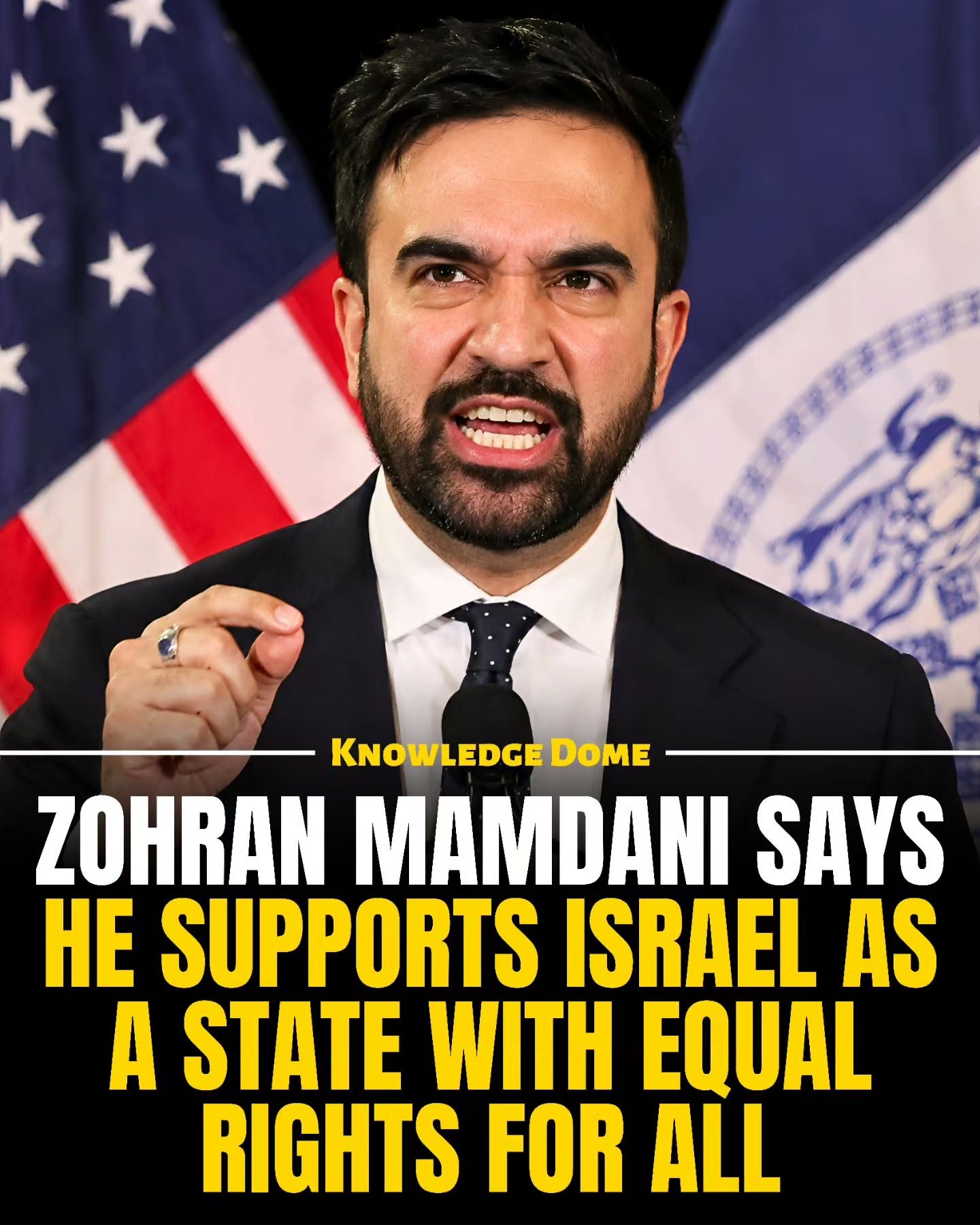
New York City Mayor Zohran Mamdani's Statement on Israel's Jewish Identity
New York City Mayor Zohran Mamdani's recent statements on Israel have sparked significant debate and criticism. During a late June 2026 interview on ABC’s This Week, Mamdani expressed his support for Israel as a state with equal rights for all people, but he also made it clear that he would not endorse any state that privileges one religion over another. This nuanced stance has led to a complex discussion about the nature of Israel's identity and the role of religion in governance.
Context: Why This Matters
Understanding Mamdani's stance on Israel is crucial for several reasons. First, it highlights the ongoing debate about the role of religion in governance and the concept of a secular state. Second, it underscores the political and diplomatic challenges faced by leaders in navigating international relations, particularly in the Middle East. Lastly, it illustrates the delicate balance between supporting a state's existence and advocating for its specific religious or ethnic identity.
Mamdani's Views on Equality and Religion
Mamdani's position is rooted in the belief that a state should not prioritize one religion over others. When asked directly by host Jonathan Karl if he supports Israel as a Jewish state, Mamdani responded that he supports Israel as a state with equal rights for all. However, he made it clear he would not back any country that privileges one religion. This stance extends to Israel, Saudi Arabia, or any other nation. This view has profound implications for how nations are perceived and governed.
Backlash and Criticism
Mamdani's remarks have not been well-received by some Israeli officials and American Jewish groups. Critics argue that his refusal to explicitly support Israel’s Jewish identity creates a double standard. They believe that his position undermines Israel’s unique identity as a Jewish state and sets a problematic precedent for other nations. The controversy has also been amplified by Mamdani's absence from the 2026 Israel Day Parade. This marked the first time a sitting New York City mayor did not attend the event since 1964, adding fuel to the fire of the ongoing debate.
The Gaza Crisis and War Crimes
Adding to the complexity of the situation, Mamdani has described the crisis in Gaza as a genocide and strongly condemned the October 7 attacks as horrific war crimes. This stance further emphasizes his commitment to human rights and equality, even if it means adopting a more critical view of Israeli policies.
Main Discussion
The Nuances of Israel's Identity
Israel's identity as a Jewish state is a central theme in the ongoing debate. Supporters argue that Israel's Jewish character is integral to its existence and that recognizing this identity does not preclude equal rights for all citizens. Opponents, like Mamdani, believe that such an identity creates inherent inequalities and that a secular state is preferable.
The Role of Religion in Governance
The role of religion in governance is a contentious issue worldwide. Many countries grapple with balancing religious traditions and modern governance principles. Mamdani's stance highlights the challenges leaders face in reconciling these competing interests. His refusal to support a state that privileges one religion over another underscores his commitment to secular governance and equality.
The Political and Diplomatic Landscape
The political and diplomatic landscape in the Middle East is fraught with complexity. Leaders must navigate delicate issues surrounding religion, identity, and governance while maintaining international relations. Mamdani's statements reflect the broader challenges faced by leaders in this region and the importance of clear, principled stances on these issues.
Practical Tips
For Politicians
Politicians should aim for clarity and consistency in their stances on international issues. Engage in open dialogue with various stakeholders to understand different perspectives and build bridges. Transparency and accountability are crucial in addressing controversial topics.
For Public Engagement
Engage with diverse communities to foster understanding and empathy. Clear communication and a willingness to listen can help build consensus and reduce polarization. Public figures should be prepared to defend their positions and address criticism with respect and clarity.
For Journalists
Journalists play a critical role in facilitating informed discussions. They should provide balanced coverage and context for complex issues. Encourage dialogue rather than division, and present all sides of the story with fairness and accuracy.
Important Takeaways
Balancing Principles and Politics
Leaders must balance their principles and political realities. Mamdani's stance illustrates the challenges of maintaining a consistent moral position while navigating international relations. His example highlights the importance of integrity and clarity in public statements.
The Complexity of Identity and Governance
The debate surrounding Israel's identity as a Jewish state underscores the complexity of identity and governance. Nations must strive for equality and inclusion while respecting their unique traditions and histories.
The Role of Public Figures
Public figures wield significant influence and must use their platforms responsibly. Their statements and actions can shape public discourse and international relations. Mamdani's example serves as a reminder of the weight of leadership and the need for thoughtful, principled leadership.
Conclusion
Zohran Mamdani's statements on Israel have sparked a significant debate about the role of religion in governance, the nature of a secular state, and the complexities of international relations. While his views have been met with criticism, they highlight important principles of equality and justice. As the discussion continues, it is essential to engage in thoughtful, respectful dialogue that recognizes the multifaceted nature of these issues. Leaders, politicians, and the public must navigate these challenges with clarity, empathy, and a commitment to justice and equality.
Watch the Reel
Questions readers ask
What exactly did Mayor Mamdani say about Israel in his 2026 interview?
During his interview on ABC’s This Week in June 2026, Zohran Mamdani expressed support for Israel as a state that ensures equal rights for everyone. He also stated that he would not endorse any state that gives preference to one religion over others.
Why has Mayor Mamdani's stance on Israel sparked controversy?
Mamdani's comments have sparked controversy due to his refusal to endorse a state that privileges one religion, which has sparked a debate about Israel's identity as a Jewish state and the role of religion in its governance.
How does Mamdani's stance relate to the broader debate about Israel?
Mamdani's stance brings to the forefront the ongoing discussion about whether Israel should be defined as a Jewish state or a state for all its citizens, regardless of their religion or ethnicity. This debate is central to understanding the complexities of Israeli governance and international relations.
What is the significance of Mamdani's views on the role of religion in governance?
Mamdani's views challenge the idea of a state that privileges one religion, advocating instead for a secular state where all citizens have equal rights. This perspective adds a significant dimension to the discussion about the nature of governance and the treatment of minorities in Israel and beyond.
How has the public and political sphere responded to Mamdani's statements?
The public and political response to Mamdani's statements has been mixed. Some support his stance on equal rights and the separation of religion and state, while others criticize him for seemingly undermining Israel's Jewish identity. This controversy highlights the deep divisions in the debate.
What are the implications of Mamdani's stance for international relations?
Mamdani's stance has implications for international relations, particularly in how other nations and leaders view Israel and engage with it. His position on equal rights and secular governance may influence diplomatic discussions and policies regarding Israel and the broader Middle East.
How does Mamdani's position compare to other views on Israel?
Mamdani's nuanced stance contrasts with views that strongly endorse Israel as a Jewish state, as well as those that advocate for a purely secular state. His position is distinctive in that it focuses on equal rights for all while rejecting religious privilege, making it a unique perspective in the ongoing debate.
Related deep dives
Similar reads based on topic and creator.


Recent articles
Fresh deep dives from the latest Reels we unpacked.




Comments
Be the first to comment.