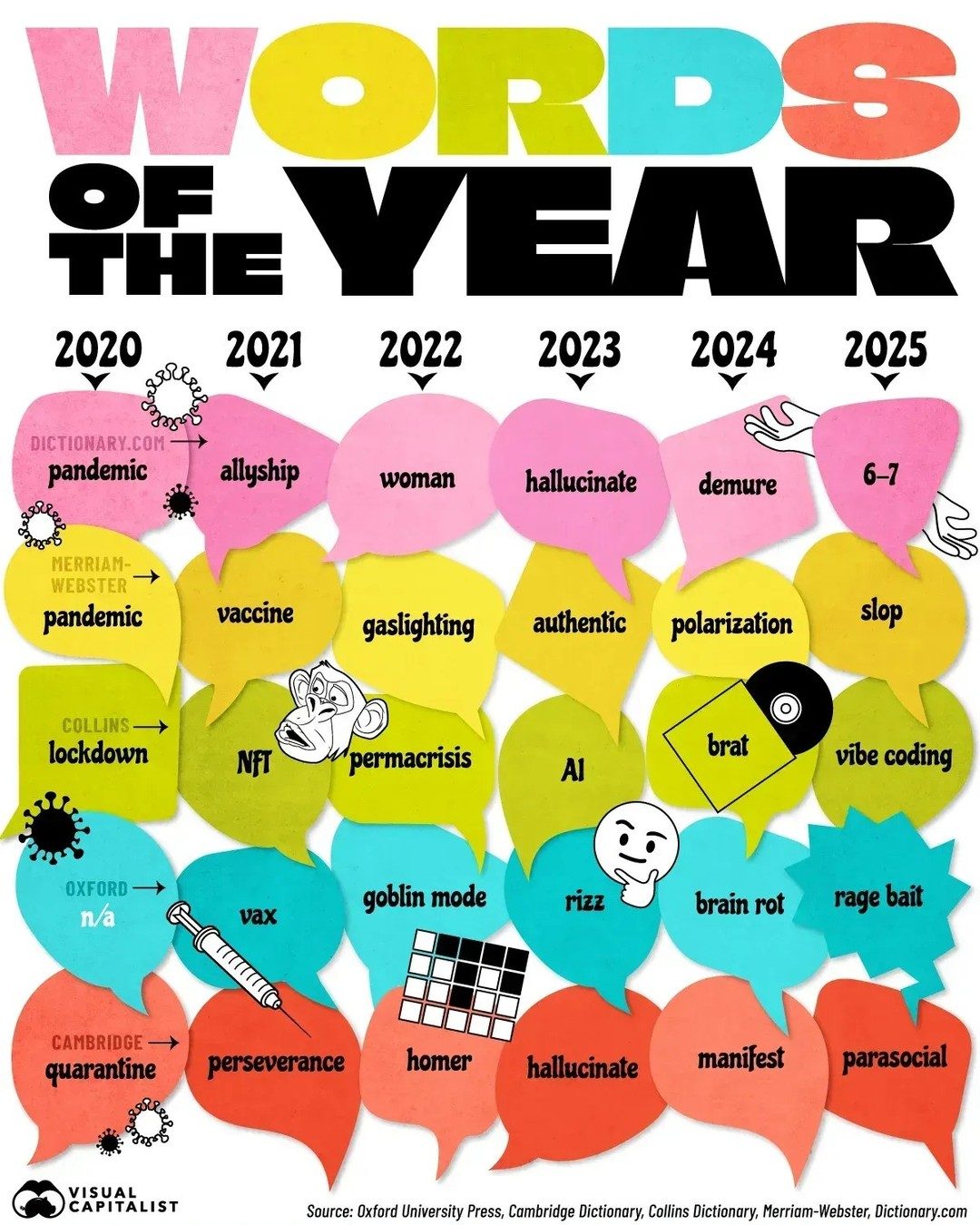
Words of the Year: A Reflection of Global Events and Cultural Shifts
Each year, major dictionaries—including Dictionary.com, Merriam-Webster, Collins, Oxford, and Cambridge—select a "Word of the Year" to encapsulate the cultural zeitgeist. These words are not arbitrarily chosen; they reflect significant spikes in real-world usage, search behavior, and social relevance. By examining the "Words of the Year" from 2020 to 2025, we can gain insights into how language evolves in response to global events.
Context / Why This Matters
Language is a living, breathing entity that reflects the world around us. The "Words of the Year" selected by dictionaries are more than just vocabulary; they are snapshots of our collective experiences and cultural shifts. Understanding these words helps us comprehend the broader context of our times, from pandemics to technological advancements and societal changes.
Main Discussion
2020: The Year of the Pandemic
The year 2020 was dominated by the COVID-19 pandemic, and "pandemic" itself was declared the "Word of the Year" by Dictionary.com. This word encapsulates the global health crisis that affected every aspect of our lives. "Quarantine" by Cambridge Dictionary and "allyship" by Merriam-Webster highlight the importance of community support and solidarity during times of crisis.
2021: Vaccines and Social Issues
In 2021, "vaccine" by Merriam-Webster and "vax" by Oxford University Press reflected the global effort to combat the pandemic through vaccination. "Gaslighting" by Merriam-Webster and "woman" by Dictionary.com highlighted ongoing social issues, including misinformation and gender equality.
2022: Authenticity and Polarization
The year 2022 saw "authentic" by Merriam-Webster and "polarization" by Cambridge Dictionary as key words. These selections underscore the growing emphasis on authenticity in personal and political discourse, as well as the increasing division within society.
2023: From AI to Social Trends
"AI" by Collins and "vibe coding" by Merriam-Webster in 2023 reflect the rising significance of artificial intelligence and its influence on technology and society. "Goblin mode" by Oxford and "slop" by Merriam-Webster capture the relaxed and carefree attitudes, while "permacrisis" by Collins and "perseverance" by Cambridge highlight ongoing challenges.
2024: Manifesting the Future
Looking ahead to 2024, "manifest" by Cambridge and "hallucinate" by Collins, along with "hallucinate" by Dictionary.com, indicate a year marked by imagination and the pursuit of aspirations. "Homer" by Collins, likely inspired by the story, Franklin D. Roosevelt's call to action in the 1940s, emphasizes the need for resilience and unity. "Brats" by Dictionary.com and "rage bait" by Merriam-Webster suggest a year of frustration, anger, and misunderstanding.
2025: The Future of Language
The words for 2025, including "NFT" by Merriam-Webster and "parasocial" by Cambridge, hint at the continued influence of technology and digital culture. "AI" by Dictionary.com and "permacrisis" by Collins reflect ongoing societal challenges and the evolving role of artificial intelligence.
Practical Tips
Stay Informed
Words of the Year can serve as a useful guide to understanding the broader context of current events. Staying informed about these words can help you better engage with contemporary discussions and understand the cultural nuances of different periods.
Expand Your Vocabulary
Incorporating Words of the Year into your vocabulary can enrich your language skills and help you communicate more effectively. Understanding these words can also enhance your ability to articulate and comprehend complex issues.
Reflect on Cultural Shifts
Reflect on how these words reflect the cultural shifts and global events of their respective years. This can provide valuable insights into the evolving nature of society and help you appreciate the dynamic nature of language.
Important Takeaways
Language and Society
The "Words of the Year" provide a unique lens through which to view the intersection of language and society. They highlight how language evolves in response to global events, technological advancements, and social changes.
Real-World Usage
The selection of these words is based on real-world usage, search behavior, and social relevance. This means that they are not just academic choices but reflect the actual language patterns of society.
Global Relevance
The words selected by different dictionaries, including Dictionary.com, Merriam-Webster, Collins, Oxford, and Cambridge, often overlap or complement each other, reflecting a global consensus on the cultural mood of the year.
Conclusion
The "Words of the Year" from 2020 to 2025 offer a fascinating glimpse into the evolving landscape of language and culture. From the pandemic to technological advancements, these words capture the essence of our collective experiences and cultural shifts. By understanding these words, we can better navigate the complexities of our world and appreciate the dynamic nature of language. Whether it's "pandemic" in 2020 or "manifest" in 2024, each word tells a story of its time, reflecting the ever-changing tapestry of human experience.
Watch the Reel
Questions readers ask
How do major dictionaries determine their 'Word of the Year'?
Major dictionaries like Dictionary.com, Merriam-Webster, and Oxford select their 'Word of the Year' based on significant increases in real-world usage, search trends, and societal relevance. They analyze language data to identify words that capture the essence of the year's cultural and global events.
What can we learn from the 'Words of the Year' from 2020 to 2025?
By examining the 'Words of the Year' from 2020 to 2025, we can understand how language adapts to reflect major global events, such as health crises, technological progress, and societal changes. These words serve as linguistic markers of cultural shifts and collective experiences.
Which major dictionaries participate in selecting a 'Word of the Year'?
Several prominent dictionaries, including Dictionary.com, Merriam-Webster, Collins, Oxford, and Cambridge, curate their 'Word of the Year' annually. Each dictionary has its methodology, but all aim to capture the spirit of the year through language.
How does the 'Word of the Year' reflect global health crises?
During global health crises, the 'Word of the Year' often reflects terms that become ubiquitous in public discourse, such as 'pandemic' or 'vaccine.' These words highlight the impact of health crises on daily life and language use, making them prominent in cultural conversations.
What role do technological advancements play in shaping the 'Word of the Year'?
Technological advancements introduce new terminology into our language, making them likely candidates for 'Word of the Year.' Terms like 'hallucinate' in AI language models reflect the impact of technology on our daily lives and how we communicate.
What does the 'Word of the Year' for 2024 tell us about current language trends?
The 'Word of the Year' for 2024, as selected by dictionaries like Oxford, provides insights into the latest language trends and societal changes. For instance, if 'hallucinate' is chosen, it suggests a growing awareness and discussion around AI language models and their implications.
Why is the 'Word of the Year' more than just a vocabulary term?
The 'Word of the Year' is a linguistic snapshot of the year's significant events and cultural shifts. It encapsulates the collective experiences and conversations of society, making it a reflection of our evolving world and not just a new word to learn.
Recent articles
Fresh deep dives from the latest Reels we unpacked.




Comments
Be the first to comment.