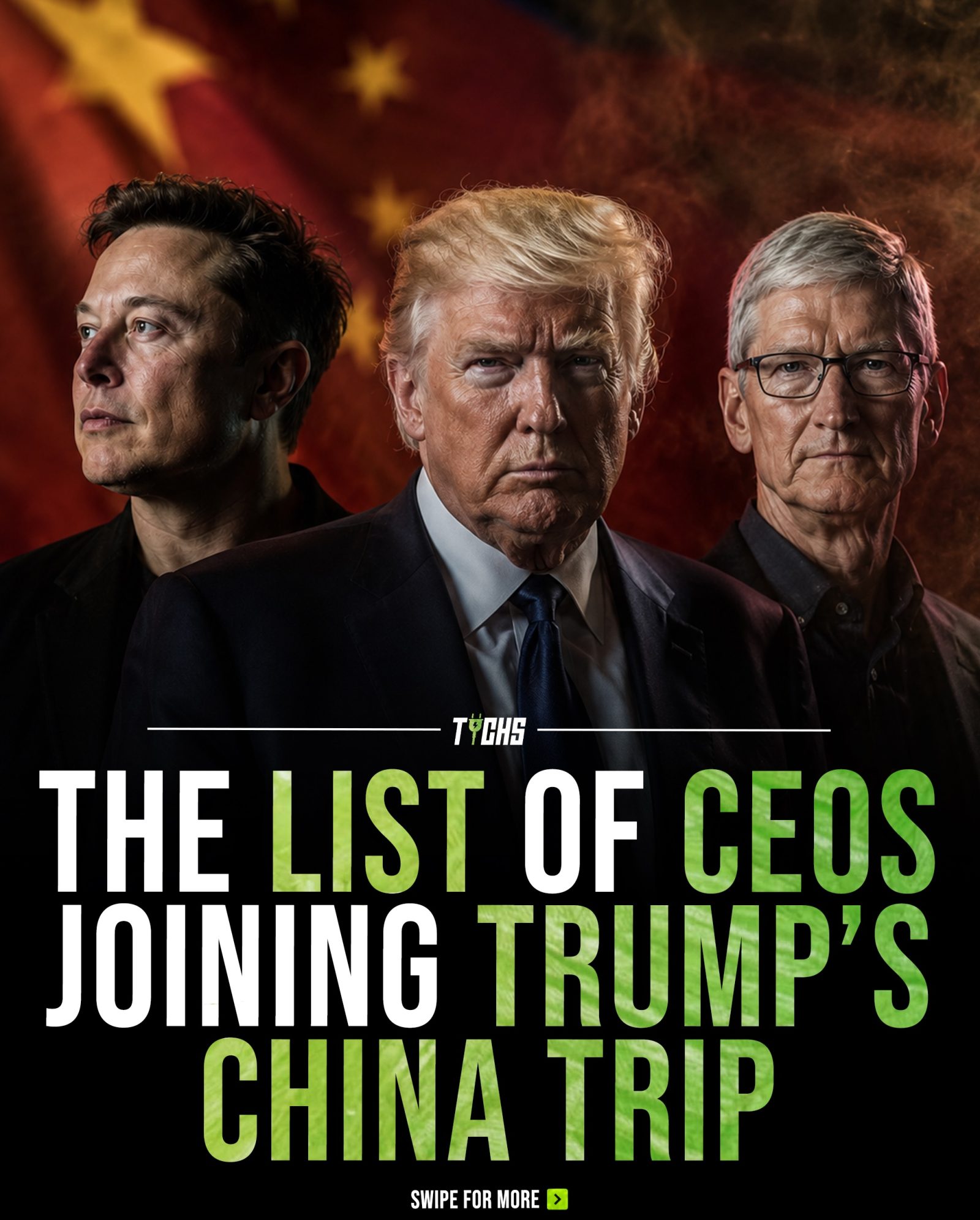
Major Global Companies Sending Top Executives to Join Donald Trump’s China Trip
The upcoming China trip by Donald Trump is attracting significant attention, particularly due to the high-profile delegation of CEOs and business leaders accompanying him. This trip underscores the intricate links between business, technology, finance, and geopolitics, highlighting the deep economic ties between the United States and China.
Why This Matters
The trip is a clear indicator of the strategic importance of the US-China relationship. Despite increasing geopolitical tensions, major corporations are actively balancing their supply chains, investments, and trade opportunities across international markets. These companies recognize the critical role that China plays in the global economy, making it essential to maintain strong ties and strategic influence.
Main Discussion
Prominent CEOs and Their Companies
The delegation includes prominent CEOs and senior leaders from some of the world's most influential companies. These leaders represent a broad spectrum of industries, reflecting the diverse nature of the economic ties between the US and China.
-
Apple: Tim Cook, CEO of Apple, is a notable figure in the delegation. Apple's presence in China is significant, with extensive manufacturing operations and a massive consumer market. Cook's participation underscores the importance of maintaining strong trade relations for Apple's global operations.
-
Tesla: Elon Musk, CEO of Tesla, is another key figure. Tesla's expansion into the Chinese market, including the establishment of a plant in Shanghai, highlights the company's strategic interest in the region. Musk's involvement in the trip is a testament to Tesla's commitment to China as a crucial market and manufacturing hub.
-
BlackRock: Larry Fink, CEO of BlackRock, brings a financial perspective to the delegation. BlackRock's global investment strategies often include significant exposure to Chinese markets, making it essential for the company to maintain strong ties with Chinese financial institutions and regulatory bodies.
-
Boeing: David Calhoun, CEO of Boeing, is also part of the delegation. Boeing's extensive supply chain in China and its significant market for aerospace products make it crucial for the company to foster strong relationships with Chinese partners.
-
Goldman Sachs: David Solomon, CEO of Goldman Sachs, highlights the importance of financial services in the US-China relationship. Goldman Sachs has a long history of involvement in the Chinese market, and Solomon's participation underscores the company's commitment to the region.
-
Qualcomm: Cristiano Amon, CEO of Qualcomm, represents the semiconductor industry. Qualcomm's technology is integral to many of China's technological advancements, and Amon's presence in the delegation underscores the critical role of technology in the US-China economic relationship.
-
Visa: Ryan Mcinerney, CEO of Visa, brings the payment and financial technology sector into focus. Visa's global payments network is heavily integrated with the Chinese market, and Mcinerney's involvement highlights the importance of maintaining seamless financial transactions between the two countries.
-
Mastercard: Michael Miebach, CEO of Mastercard, is another key figure in the payment sector. Mastercard's extensive network and services in China make it essential for the company to foster strong relationships with Chinese financial institutions.
-
Meta: Mark Zuckerberg, CEO of Meta, represents the technology sector, particularly social media and digital communications. Meta's interest in the Chinese market, despite regulatory challenges, underscores the importance of maintaining a presence in the world's largest consumer market.
-
Micron: Sanjay Mehrotra, CEO of Micron, brings a focus on the semiconductor industry. Micron's memory and storage solutions are integral to many technological advancements, and Mehrotra's participation highlights the importance of maintaining strong relationships with Chinese partners in the tech industry.
Industries Represented
The delegation covers a wide range of industries, reflecting the diverse economic ties between the US and China. These industries include:
-
Technology: Companies like Apple, Tesla, and Qualcomm are at the forefront of technological innovation. Their presence in the delegation underscores the importance of technology in the US-China economic relationship.
-
Banking and Finance: Financial services are a critical component of the US-China relationship, as highlighted by the presence of CEOs from companies like BlackRock, Goldman Sachs, Visa, and Mastercard. These companies play a pivotal role in facilitating financial transactions and investments between the two countries.
-
Aerospace: Boeing's involvement highlights the importance of the aerospace industry in the US-China economic relationship. Boeing's extensive supply chain and significant market in China make it essential for the company to maintain strong ties with Chinese partners.
-
Semiconductors: The presence of Qualcomm and Micron underscores the critical role of semiconductors in the global economy. These companies are integral to many technological advancements, and their presence in the delegation highlights the importance of maintaining strong relationships with Chinese partners.
-
Payments and Energy: Visa and Mastercard represent the payments sector, while companies like Meta and Tesla are involved in the energy sector. These industries play a crucial role in the US-China economic relationship, facilitating seamless financial transactions and driving technological advancements.
Practical Tips
For businesses looking to navigate the complex landscape of US-China economic relations, several practical tips can be beneficial:
Stay Informed
Keeping up-to-date with the latest developments in US-China relations is crucial. This includes monitoring geopolitical tensions, regulatory changes, and economic policies that could impact business operations.
Diversify Supply Chains
Diversifying supply chains can help mitigate risks associated with geopolitical tensions. By spreading operations across multiple regions, companies can reduce their dependence on any single market and enhance their resilience.
Foster Strong Relationships
Building and maintaining strong relationships with Chinese partners is essential. This involves cultivating trust, understanding cultural nuances, and engaging in collaborative efforts to drive mutual growth and success.
Invest in Technology
Technology is a key driver of economic growth and innovation. Investing in cutting-edge technologies and fostering innovation can help companies stay competitive in the global market and strengthen their ties with Chinese partners.
Adapt to Regulatory Changes
The regulatory environment in China can be complex and subject to change. Companies must stay informed about regulatory developments and adapt their strategies accordingly to ensure compliance and minimize risks.
Leverage Financial Services
Financial services play a critical role in facilitating investments and trade. Leveraging financial services can help companies navigate the complexities of cross-border transactions and ensure seamless operations.
Important Takeaways
The delegation of top executives accompanying Donald Trump on his China trip highlights the deep economic ties between the US and China. Key takeaways from this trip include:
- The importance of maintaining strong relationships with Chinese partners.
- The critical role of technology, finance, and trade in the US-China economic relationship.
- The need for companies to stay informed about geopolitical developments and adapt their strategies accordingly.
- The value of diversifying supply chains and fostering innovation to drive mutual growth and success.
Conclusion
The China trip by Donald Trump, accompanied by a delegation of top executives, underscores the deep economic ties between the US and China. Despite rising geopolitical tensions, major corporations recognize the strategic importance of maintaining strong relationships with Chinese partners. By staying informed, diversifying supply chains, fostering innovation, and adapting to regulatory changes, companies can navigate the complexities of the US-China economic relationship and drive mutual growth and success. The trip serves as a reminder of the interconnected nature of global business, technology, and geopolitics, and the importance of strategic partnerships in achieving long-term success.
Watch the Reel
Questions readers ask
Which prominent CEOs are part of Donald Trump's delegation for his China visit?
Tim Cook of Apple and Elon Musk of Tesla are among the notable CEOs joining Donald Trump on his China trip. Other high-profile business leaders have been invited to be part of the delegation.
Why is the delegation of CEOs accompanying Trump to China significant?
The high-profile delegation indicates the importance of the US-China relationship. It reveals how important China is to the global economy. This trip underscores the interconnectedness of business, technology, finance, and geopolitics.
What is the purpose of Trump's China visit with top business executives?
The visit aims to strengthen US-China economic ties and explore trade opportunities. Despite geopolitical tensions, major corporations are actively balancing their supply chains, investments, and trade opportunities across international markets.
Which companies are represented by the CEOs joining Trump in China?
While Tim Cook's Apple and Elon Musk's Tesla are among the well-known companies, other influential corporations, including Goldman Sachs are also represented in this high-profile delegation.
How does this visit reflect the current state of US-China relations?
The visit highlights the complex nature of US-China relations. While there are geopolitical tensions, the deep economic ties and strategic importance of the relationship are evident through this high-level business delegation.
What role do global CEOs play in the geopolitics between the U.S. and China?
Global CEOs act as key players in bridging the gap between the U.S. and China. Their presence in this delegation signals the importance of maintaining open lines of communication and cooperation, especially in the areas of technology and finance.
What can we expect from the Trump and business leaders' China visit?
The visit is expected to yield discussions and agreements that could influence the global economy. It may also provide insights into how major corporations are navigating the complex geopolitical landscape and their strategies for maintaining strong economic ties with China.
Recent articles
Fresh deep dives from the latest Reels we unpacked.




Comments
Be the first to comment.