Aging and Fitness: The Importance of Strength Training
Aging is an inevitable part of life, but it doesn't have to mean a decline in physical health and mobility. Strength training plays a crucial role in maintaining muscle mass, improving posture, and enhancing overall well-being as we age. After the age of 30, our bodies naturally begin to lose muscle if we don't use it. This loss can significantly impact our posture, bone health, and balance. However, incorporating regular strength training into our routines can help preserve muscle, improve posture, and keep us independent as we age.
Why This Matters
The goal isn't just to live longer; it's to live stronger. As we age, muscle loss can lead to a more slumped posture, weakness, and an increased risk of falls and injuries. This is particularly important to note as we approach our 40s and beyond. By engaging in strength training, we can combat these effects and maintain a more youthful and functional physique.
Maintaining Muscle Mass
The Role of Strength Training
Strength training is essential for maintaining muscle mass and preventing age-related muscle loss. Regular exercise, particularly resistance training, helps to build and preserve muscle tissue. This is crucial because muscle tissue supports bone health, improves balance, and enhances overall physical function. By focusing on strength training, you can invest in a body that will carry you through every stage of life with greater ease and resilience.
Visualizing the Impact
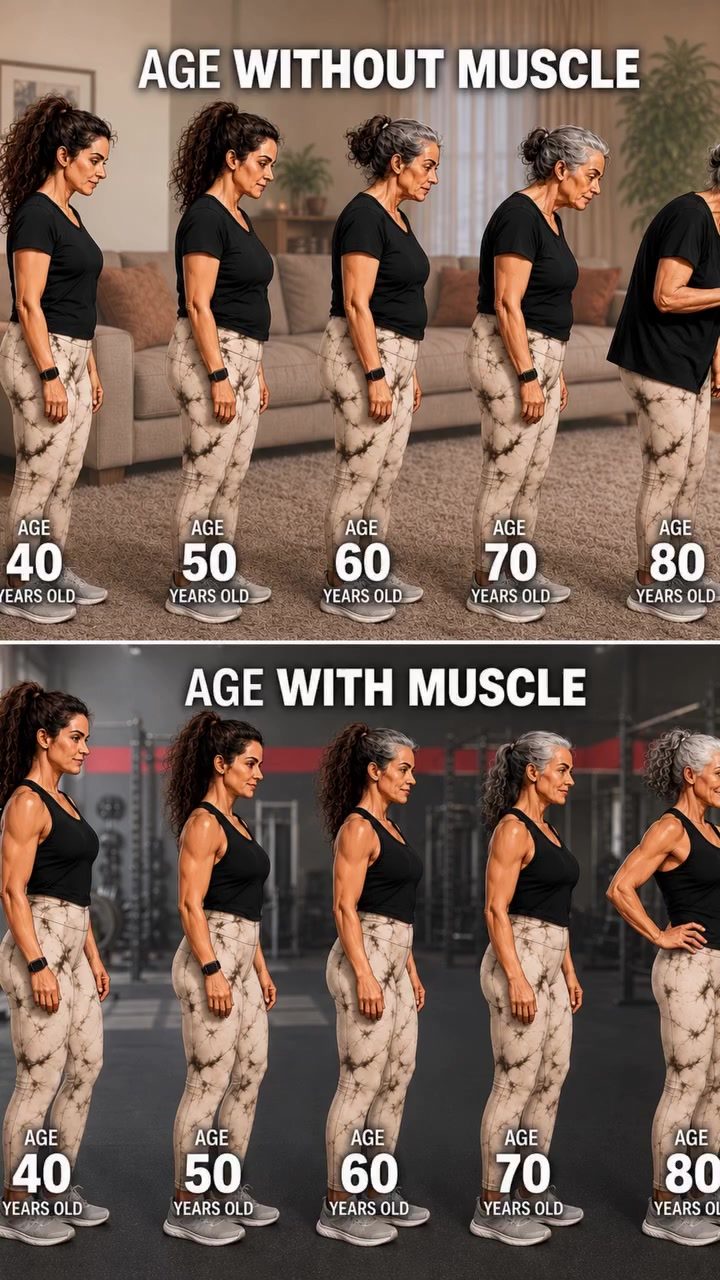
To understand the impact of muscle on body shape and posture across different age groups, consider the following visual analogy: imagine two sides of a comparison. On one side, you see individuals aged 40, 50, 60, 70, and 80 without significant muscle mass. These individuals exhibit a more slumped posture and an aging appearance. On the other side, you see the same age groups with well-maintained muscle mass. Here, the individuals show a more upright, toned, and youthful physique. This visual demonstrates that maintaining muscle mass can positively affect your posture and overall appearance as you age.
Benefits of Muscle Maintenance
Regular exercise and strength training contribute to a more youthful appearance and a stronger, more independent lifestyle. When you maintain your muscle mass, you are not only improving your physical appearance but also your overall health and mobility.
Key Areas of Improvement
- Posture: Muscle mass helps support the spine and maintain proper alignment, reducing the risk of back pain and improving posture.
- Bone Health: Strength training stimulates bone growth and density, reducing the risk of osteoporosis and fractures.
- Balance: Improved muscle strength and endurance enhance balance, reducing the risk of falls and injuries.
- Independence: Maintaining muscle mass allows you to perform daily activities with greater ease, promoting independence and a higher quality of life.
Practical Tips for Incorporating Strength Training
To get started with strength training, focus on compound movements that engage multiple muscle groups. Here are some practical tips to incorporate into your routine:
Choose the Right Exercises
- Squats: Target your legs, glutes, and core. Start with bodyweight squats and gradually add weights.
- Push-ups: Work your chest, shoulders, and triceps. Modify as needed by doing them on your knees or against a wall.
- Lunges: Strengthen your legs and glutes. Perform forward, reverse, or walking lunges.
- Deadlifts: Engage your back, legs, and core. Use proper form to prevent injury.
- Rows: Target your back and biceps. Use dumbbells, barbells, or resistance bands.
- Overhead Press: Work your shoulders and triceps. Use dumbbells or a barbell.
Consistency is Key
Aim for at least two to three strength training sessions per week. Consistency is crucial for seeing and maintaining progress. Combine strength training with cardiovascular exercise for a well-rounded fitness routine.
Rest and Recovery
Allow your muscles time to recover between workouts. Rest days are essential for muscle repair and growth. Listen to your body and adjust your routine as needed.
Proper Nutrition
Support your strength training efforts with a balanced diet rich in protein, vitamins, and minerals. Proper nutrition fuels your workouts and aids in muscle recovery and growth.
Professional Guidance
Consider working with a fitness professional to ensure proper form and technique. They can provide personalized guidance and help you progress safely and effectively.
Important Takeaways
Aging and fitness go hand in hand. Regular strength training can help you maintain muscle mass, improve posture, and enhance your overall quality of life. By investing in your body today, you are building a stronger, more resilient future self. Remember, age is just a number—it's how you use your body that truly makes the difference. Start lifting, stay active, and invest in the body that will carry you through every stage of life.
Conclusion
Strength training is a powerful tool for combating age-related muscle loss and maintaining overall health and mobility. By incorporating regular strength training into your routine, you can preserve muscle mass, improve posture, and enjoy a more youthful and active lifestyle. Start today and reap the benefits of a stronger, healthier future.
Watch the Reel
Questions readers ask
At what age should I start incorporating strength training into my routine?
It's never too early or too late to begin strength training. However, it's particularly important to start focusing on it after the age of 30, as this is when the body naturally begins to lose muscle mass. For seniors, strength training is crucial for maintaining muscle and improving overall well-being.
How often should older adults engage in strength training?
Adults over the age of 65, or those with senior status, should aim for strength training exercises at least two days per week. Each session should focus on different muscle groups and include 8-12 repetitions of each exercise. It's essential to allow for adequate rest and recovery between sessions.
What are some effective resistance exercises for seniors?
Effective resistance exercises for seniors include bodyweight exercises like squats, lunges, and push-ups, as well as weightlifting exercises using dumbbells or resistance bands. Additionally, exercises that focus on balance and stability, such as yoga or tai chi, can be beneficial for improving posture and preventing falls.
Can strength training help prevent falls and injuries in older adults?
Yes, strength training can significantly reduce the risk of falls and injuries in older adults. By improving muscle strength, bone health, and balance, seniors can enhance their overall physical function and maintain independence. Incorporating exercises that focus on stability and balance is especially important for fall prevention.
Is it safe for elderly individuals to start strength training?
Yes, strength training can be safe and beneficial for elderly individuals, even for those with health conditions. However, it's crucial to consult with a healthcare provider before starting any new exercise program. A qualified professional can provide guidance tailored to individual needs and capabilities, ensuring a safe and effective training routine.
What are some benefits of strength training for maintaining muscle mass?
Strength training helps maintain muscle mass by challenging the muscles and promoting growth. Regular resistance exercises can preserve physical function, support bone health, and enhance overall well-being. Additionally, strength training can improve posture, reduce the risk of falls and injuries, and keep seniors independent as they age.
Recent articles
Fresh deep dives from the latest Reels we unpacked.




Comments
Be the first to comment.