Stock Buybacks: A Deep Dive into the Magnificent Seven
The recent financial landscape has seen significant variation in the stock buyback strategies of some of the world's largest tech companies. This analysis gives a comprehensive overview of the stock repurchase activities of the Magnificent Seven—Apple, Amazon, Tesla, Microsoft, NVIDIA, Meta, and Alphabet.
Why This Matters
Stock buybacks play a crucial role in a company's financial strategy. By reducing the number of outstanding shares, companies can boost earnings per share, making their stock more attractive to investors. This move can lead to increased stock prices, reinforcing the company's market position. The actions of these tech giants often set trends in the broader market, making their buyback strategies particularly noteworthy.
The Magnificent Seven: Buyback Strategies
The stock buyback activities of the Magnificent Seven companies reveal a mix of aggressive and cautious strategies. These companies' financial decisions offer valuable insights into their market positions and future growth plans.
Apple: A Leader in Buybacks
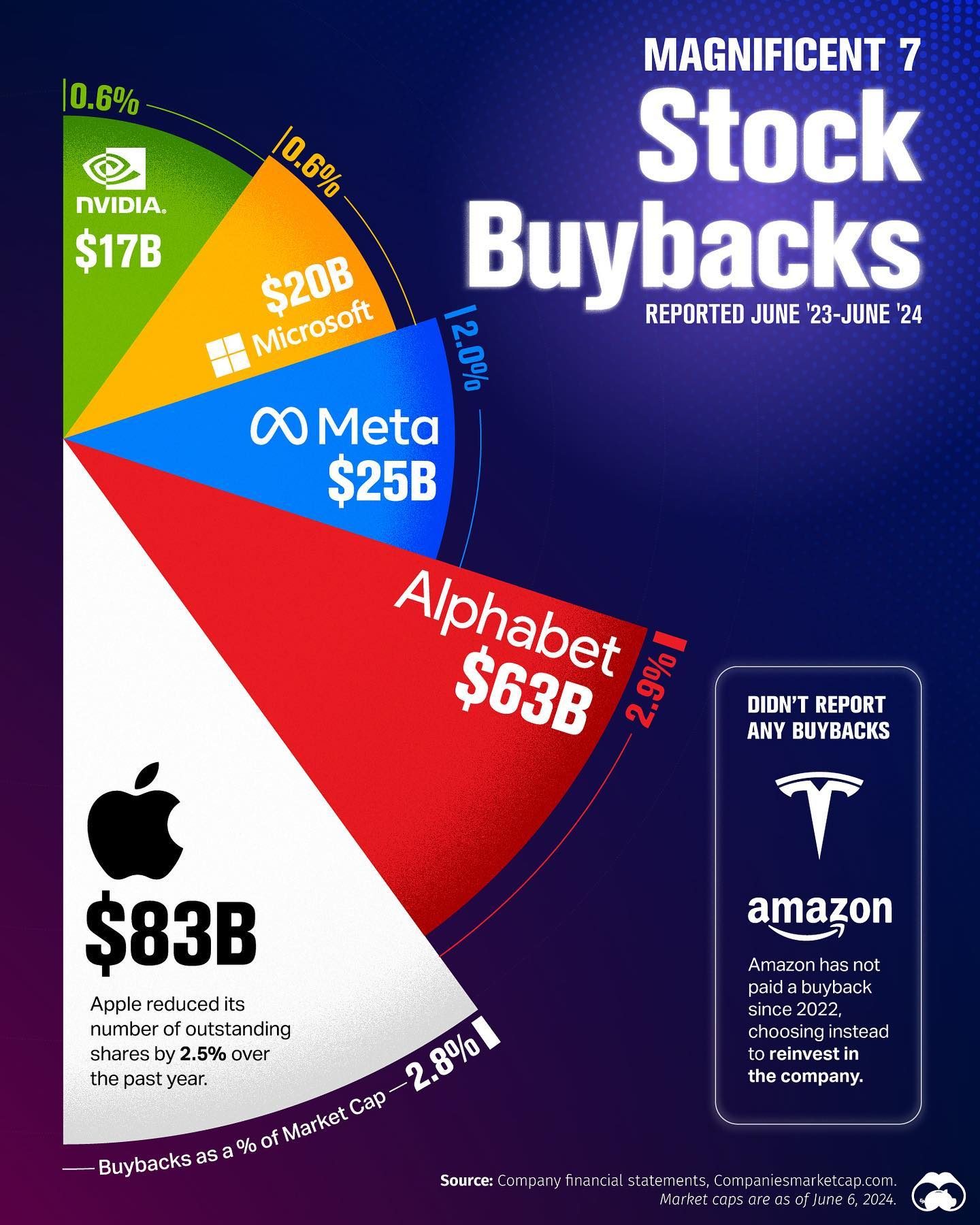
Apple stands out as a leader in stock buybacks. The company's ongoing share repurchase plan has significantly boosted its earnings per share (EPS). Apple reported a significant increase in EPS from $1.26 to $1.53, highlighting the effectiveness of its buyback strategy. The company reduced its number of outstanding shares by 2.5% of its market cap since 2022, choosing to invest heavily in this strategy.
Microsoft: Strategic Spend
Microsoft also engaged in substantial stock buyback activities, repurchasing $20 billion in shares. This move aligns with its broader strategy to return value to shareholders while maintaining a strong balance sheet for future investments.
Alphabet: The Biggest Spender
Alphabet, the parent company of Google, led the pack with a massive $63 billion in stock buybacks. This aggressive strategy reflects Alphabet's strong financial health and its commitment to enhancing shareholder value.
Meta: Significant Investments
Meta, formerly known as Facebook, reported $25 billion in stock buybacks. This move comes as the company focuses on redefining its brand and expanding its offerings, including investments in the metaverse.
NVIDIA: Balanced Approach
NVIDIA reported $17 billion in stock buybacks, reflecting a balanced approach to managing its financial resources. The company continues to invest in innovation while returning value to its shareholders.
Amazon and Tesla: Reinvesting for Growth
Amazon and Tesla have taken a different approach, choosing not to issue stock buybacks in the last four quarters. Amazon, in particular, has not paid a buyback since 2022 and has instead focused on reinvesting in the company. Tesla also did not report any buybacks, indicating a strategy prioritizing growth and innovation over immediate shareholder returns.
Understanding the Impact
The decision to engage in stock buybacks or reinvest in the company has far-reaching implications. Here’s a closer look at the factors influencing these strategies.
Market Capitalization and Buyback Impact
Buybacks as a percentage of market cap vary significantly among these companies. For instance, Apple reduced its outstanding shares by 2.5% of its market cap, while Meta and Alphabet engaged in substantial buybacks, reflecting their strong market positions. This variation underscores the importance of considering market cap when evaluating the impact of buybacks.
Earnings per Share (EPS) Boost
A key benefit of stock buybacks is the boost to earnings per share. By reducing the number of outstanding shares, companies can increase EPS, making their stock more attractive to investors. However, the effectiveness of this strategy depends on various factors, including the company's growth prospects and financial health.
Reinvestment vs. Shareholder Returns
Companies like Amazon and Tesla have chosen to reinvest in growth rather than engage in buybacks. This strategy can be particularly effective in high-growth sectors, where future earnings potential justifies current investments. Companies that choose this path often prioritize long-term growth over immediate shareholder returns.
Practical Tips for Investors
Understanding a company's buyback strategy can provide valuable insights for investors. Here are some practical tips to consider:
Analyze Financial Statements
Review a company's financial statements to understand its buyback activities. Key metrics to look for include the total value of shares repurchased, the percentage of market cap used in buybacks, and the impact on EPS.
Consider Reinvestment Strategies
Companies that choose to reinvest rather than engage in buybacks may offer unique opportunities for growth. Evaluate the company's reinvestment strategy and its potential to drive future earnings.
Evaluate Market Position
Assess a company's market position and growth prospects when evaluating its buyback strategy. Companies with strong market positions and robust growth potential may see more significant benefits from buybacks.
Important Takeaways
Stock buybacks are a critical component of a company's financial strategy, and the actions of the Magnificent Seven provide valuable insights. Key takeaways include:
- Apple, Alphabet, and Microsoft have engaged in significant buyback activities, boosting EPS and shareholder value.
- Amazon and Tesla prioritize reinvestment, focusing on long-term growth and innovation.
- NVIDIA and Meta strike a balance between buybacks and reinvestment, aligning with their strategic goals.
- Evaluating buyback strategies involves considering market cap, EPS impact, and the overall financial health of the company.
Conclusion
The Magnificent Seven companies offer a diverse range of approaches to stock buybacks, each tailored to their unique market positions and strategic goals. Whether choosing to boost EPS through buybacks or reinvesting in growth, these companies' decisions reflect their commitment to maximizing shareholder value and driving future success. Understanding these strategies can provide valuable insights for investors and offer a deeper understanding of the financial landscape.
Watch the Reel
Questions readers ask
What are stock buybacks and how do they affect a company's earnings per share?
Stock buybacks occur when a company repurchases its own shares from the market. This reduces the number of outstanding shares, which in turn increases the earnings per share (EPS). Higher EPS can make the company's stock more appealing to investors, potentially driving up the stock price.
Which companies are part of the 'Magnificent Seven' tech companies and are they all actively involved in stock buybacks?
The Magnificent Seven tech companies are Apple, Amazon, Tesla, Microsoft, NVIDIA, Meta, and Alphabet. While all these companies are significant players in the tech industry, their involvement in stock buybacks varies. Companies like Apple and Microsoft have historically been active in repurchasing shares, whereas others may have different approaches.
How do stock buybacks by tech giants influence the broader market?
The stock buyback activities of major tech companies can set trends in the broader market. When these large companies reduce their outstanding shares, it can lead to increased stock prices and influence investor sentiment. Other companies may follow suit, creating a ripple effect across various sectors and industries.
What is the expected trend for stock buybacks in 2024, particularly among the Magnificent Seven?
2024 is anticipated to see continued strategic use of buybacks by the Magnificent Seven. Companies like Apple and Microsoft are likely to continue their robust buyback programs, while others may adjust their strategies based on market conditions and financial performance. Investors should keep an eye on announcements from these companies for insights into their buyback plans.
How does reducing outstanding shares impact a company's market position?
Reducing outstanding shares through buybacks can enhance a company's market position by increasing earnings per share and making the stock more valuable. This can attract more investors, leading to higher demand and potentially higher stock prices, which strengthens the company's financial standing in the market.
What are the key differences in the buyback strategies of Apple and Tesla?
Apple has consistently engaged in large-scale stock buybacks, using them as a key part of its financial strategy to boost shareholder value. Tesla, on the other hand, has historically been more focused on growth and innovation, with its buyback activities being less prominent. However, Tesla has started to show more interest in buybacks in recent years as it seeks to optimize its shareholder returns.
What are some potential financial impacts of stock buybacks on Meta and Alphabet?
For companies like Meta and Alphabet, stock buybacks can have a significant financial impact by increasing earnings per share and potentially boosting stock prices. This can make the companies more attractive to investors, leading to increased market capitalization and a stronger financial position. However, the effectiveness of these buybacks also depends on the overall market conditions and the companies' financial health.
Related deep dives
Similar reads based on topic and creator.


Recent articles
Fresh deep dives from the latest Reels we unpacked.




Comments
Be the first to comment.