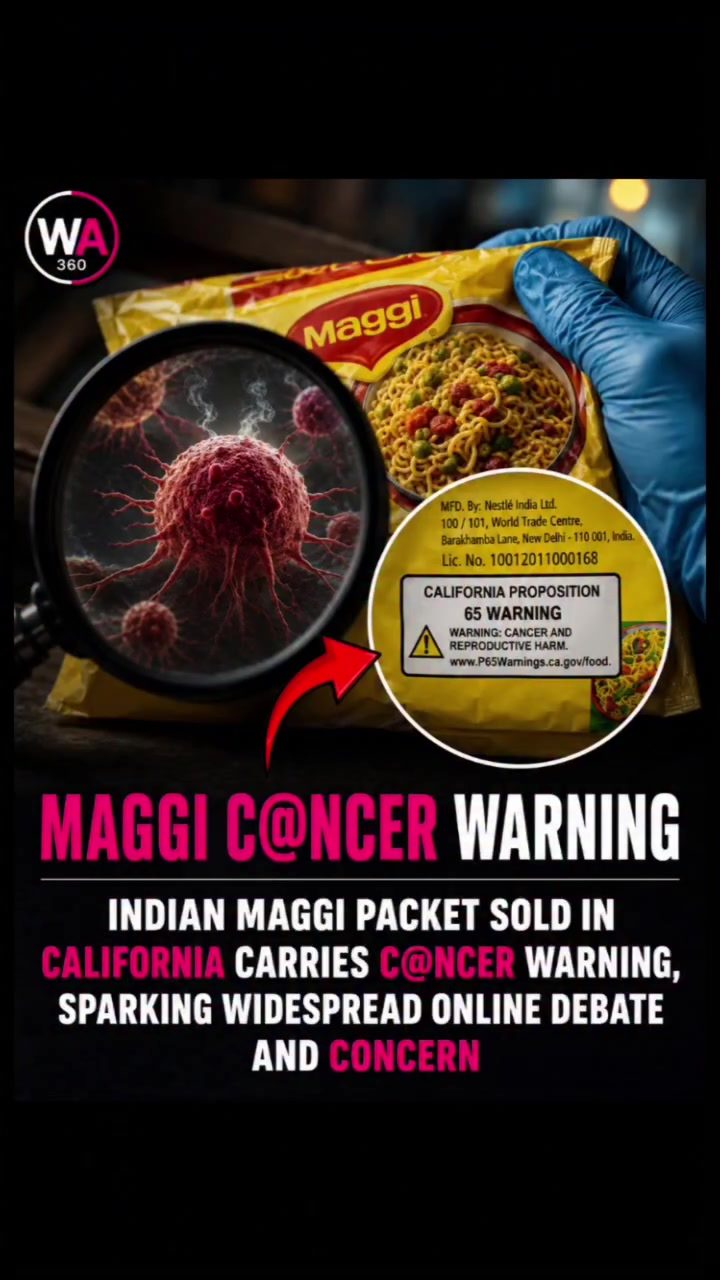
Maggi Noodles and California Proposition 65: Understanding the Warning
Maggi instant noodles have recently sparked controversy, particularly in California. A Maggi packet sold in the state carried a warning label that has led to extensive online discussions and concerns. The label in question is part of California's Proposition 65, which requires businesses to warn consumers about potential exposure to chemicals known to the state of California to cause cancer or reproductive harm.
Context: What is California Proposition 65?
California's Proposition 65, officially known as the Safe Drinking Water and Toxic Enforcement Act of 1986, is a law designed to protect consumers from exposure to harmful chemicals. It mandates that businesses provide clear and reasonable warnings to consumers about significant exposures to chemicals that are known to cause cancer, birth defects, or other reproductive harm.
The law lists over 900 chemicals that fall under this category. When a product contains one of these chemicals at or above the specified safe harbor levels, a warning must be displayed. It's important to note that the presence of a warning does not equate to a product being dangerous to consume. Instead, it signals that the product may contain chemicals listed under Proposition 65. Manufacturers must either remove the listed chemicals or provide a warning to consumers.
The Maggi Noodle Warning Label
Maggi noodles, manufactured by Nestlé India, are widely consumed across various countries. The recent controversy stems from a warning label found on a Maggi packet sold in California. The label states, “WARNING: CANCER AND REPRODUCTIVE HARM. www.P65Warnings.ca.gov/food.” This label is a direct result of California's Proposition 65 requirements. It does not imply that the product necessarily causes cancer or reproductive harm, but rather indicates the presence of a chemical that, per California regulations, requires a warning.
Understanding the Chemicals in Question
The specific chemicals listed under Proposition 65 that may be present in Maggi noodles are not publicly detailed in online discussions. However, common chemicals often found in food products that are subject to Proposition 65 warnings include acrylamide, lead, and arsenic. These chemicals can be present in varying levels in many food products, not just Maggi noodles, and are a result of various factors, such as manufacturing processes and environmental contamination.
Why This Matters
The Maggi noodle controversy highlights several important aspects of consumer awareness, food safety standards, and ingredient regulations.
Consumer Awareness
Consumers are increasingly concerned about the safety and health implications of the products they purchase. On seeing a warning label, many consumers might immediately assume the product poses a significant health risk. Understanding the context behind such warnings is crucial for making informed decisions. Proposition 65 warnings can sometimes be misleading to the uninformed, who might not realize the complexity behind these labels.
Food Safety Standards
Food safety standards vary greatly across different countries. While California's Proposition 65 aims to enhance consumer awareness, it sometimes leads to confusion. Regulations in India, where Maggi noodles are manufactured, may differ significantly from those in the United States. This disparity can lead to misunderstandings and concerns among consumers in different regions.
Ingredient Regulations
The controversy also sheds light on ingredient regulations and the need for transparency. Manufacturers must adhere to various regulations and standards set by different regions and countries. This requires robust quality control measures, regular audits, and compliance with local laws to ensure the safety and quality of products.
Practical Tips for Consumers
In light of the Maggi noodle controversy, here are some practical tips for consumers:
Read Labels Carefully
Pay attention to warning labels on food products. If you see a Proposition 65 warning, it doesn't necessarily mean the product is harmful, but it does indicate the presence of certain chemicals. Look for additional context and verified information to understand the potential risks.
Stay Informed
Rely on verified scientific information and reputable sources for health and safety information. Government health websites, regulatory bodies, and trusted news outlets can provide more accurate and detailed information compared to viral claims or rumors.
Practice Balanced Consumption
Maintain a balanced diet and limit the intake of any single food item, including instant noodles. While occasional consumption of Maggi noodles or similar products is generally safe, adherence to a varied diet is essential for overall health.
Engage with Manufacturers
Encourage transparency and accountability from manufacturers by asking questions, providing feedback, and staying informed about their practices and ingredients. Many companies are now more open to consumer inquiries and feedback, which can lead to better products and practices.
Important Takeaways
Understanding the Context
It's essential to understand that Proposition 65 warnings do not imply that a product is inherently dangerous. They are regulatory requirements designed to inform consumers about potential exposures to listed chemicals.
The Role of Regulation
Regulations like Proposition 65 play a crucial role in enhancing consumer awareness. However, they can sometimes lead to misunderstandings. It is important for consumers to seek additional information and context to make informed decisions.
Transparency and Accountability
Transparency is key for both consumers and manufacturers. Consumers should be informed about the ingredients and potential risks in the products they consume, while manufacturers should adhere to standards and provide accurate information.
Conclusion
The Maggi noodle controversy, sparked by a Proposition 65 warning, has raised important questions about food safety, ingredient regulations, and consumer awareness. By understanding the context behind such warnings and relying on verified scientific information, consumers can make more informed decisions. Transparency from manufacturers, robust regulations, and ongoing dialogue will continue to shape how consumers view and interact with food products in the future.
Watch the Reel
Related deep dives
Similar reads based on topic and creator.




Recent articles
Fresh deep dives from the latest Reels we unpacked.




Comments
Be the first to comment.