Macroeconomic Risk Map
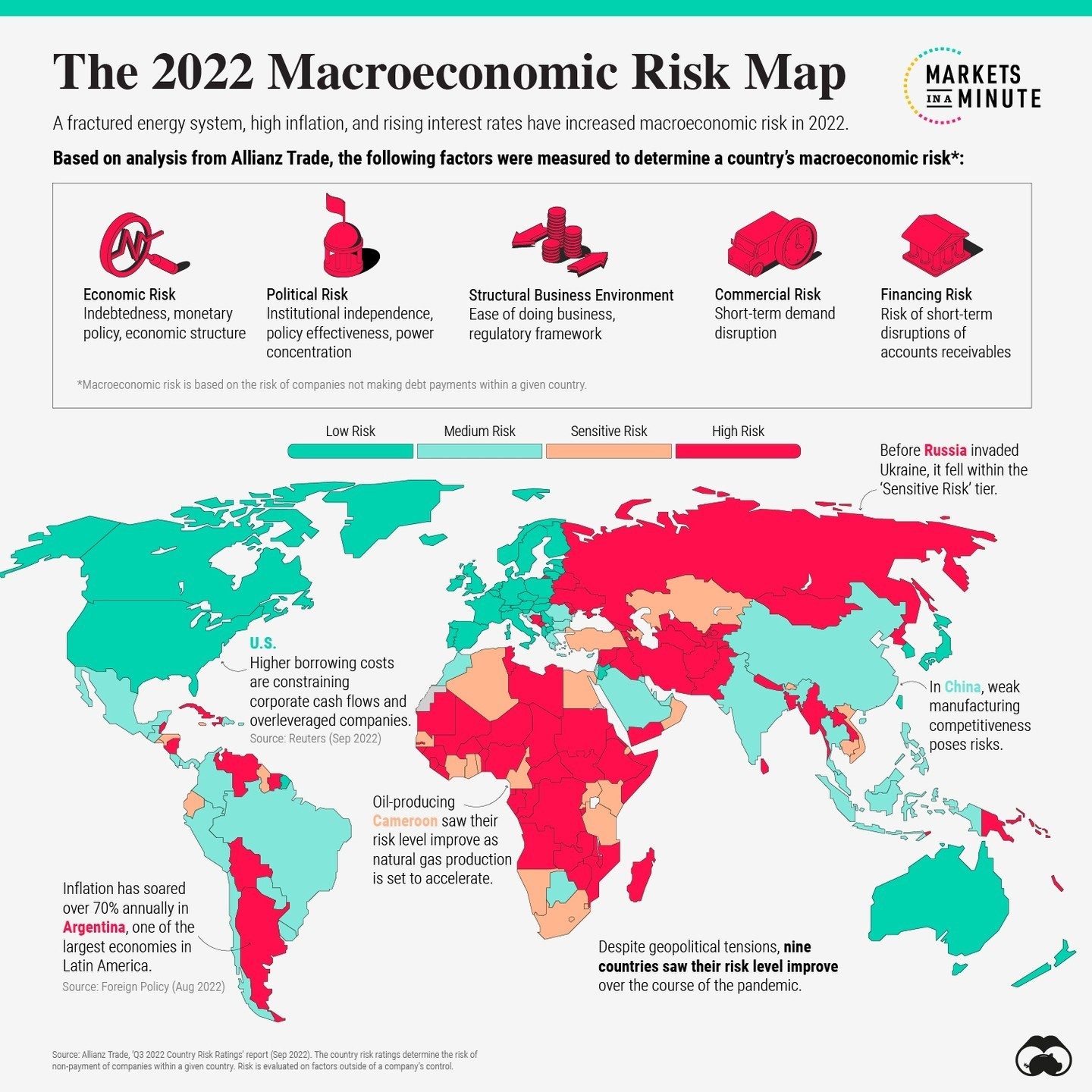
The 2022 Macroeconomic Risk Map offers a detailed overview of the global economic landscape, highlighting the significant impacts of recent geopolitical events and economic trends on various countries. Initially spurred by the disruption of vital grain export routes in Ukraine's Port of Odesa due to the Russian invasion, the map provides a comprehensive view of the global economic risks stemming from these disruptions and other key factors.
Why This Matters
Understanding the macroeconomic risks is crucial for businesses, investors, and policymakers. Rising global inflation, disrupted energy markets, and soaring European heating costs are all interconnected issues that have a profound impact on the world’s economy. Central banks around the world are responding to these challenges by raising interest rates, which in turn affects borrowing costs and economic stability.
The Allianz Trade 2022 Macroeconomic Risk Map is a valuable tool that visually represents these risks, categorizing them into economic, political, structural business environment, and financing risk. This categorization helps to identify the most vulnerable areas and provides insights into how these risks can impact different regions and economies.
Key Factors Influencing Global Macroeconomic Risks
Energy Market Disruptions
The global energy market has been severely disrupted, leading to significant increases in energy prices. European heating costs, for example, have skyrocketed due to supply chain disruptions and the shift in energy sources. The war in Ukraine also led to the closure of vital grain export routes in the Port of Odesa. These energy disruptions have far-reaching effects, impacting everything from manufacturing costs to consumer prices.
High Inflation
Inflation is a major concern globally, with many countries experiencing high inflation rates. Central banks are raising interest rates to combat inflation, which can lead to higher borrowing costs and potentially slow economic growth. Countries like Argentina, which already face high inflation, are particularly vulnerable to these economic pressures.
Political and Structural Risks
Political instability and structural weaknesses in the business environment can exacerbate macroeconomic risks. For instance, China's manufacturing competitiveness is weakened by structural issues, which poses additional risks. The map highlights these factors to provide a more nuanced understanding of the economic landscape.
Financing Risks
Financing risks are another critical component of the macroeconomic risk map. These risks are influenced by factors outside of a company’s control, such as interest rate changes and potential disruptions in financial markets. The Allianz Trade 2022 Country Risk Ratings report evaluates the risk of non-payment of companies within a given country, providing a clear picture of financing risks.
Argentina
Argentina, one of the largest economies in Latin America, faces significant macroeconomic risks due to high inflation and economic instability. The country’s economic risk is categorized as high, reflecting the challenges posed by inflation and other structural issues. This makes it a critical area to monitor for global macroeconomic stability.
China
China’s manufacturing competitiveness is a key factor in the global economy. However, weak manufacturing competitiveness poses risks to the country's economic stability. The structural business environment in China is influenced by various factors, including regulatory policies and global market dynamics. Weak competitiveness can lead to higher production costs and potential disruptions in supply chains.
Cameroon
Cameroon's oil production is accelerating, which has a significant impact on the country's economic outlook. Oil production plays a crucial role in the macroeconomic risk landscape, as fluctuations in oil prices can lead to economic volatility. The country's financing risk is also influenced by factors outside of a company’s control, such as global market conditions and regulatory policies.
Practical Tips for Navigating Macroeconomic Risks
Diversify Your Investments
Diversifying your investment portfolio can help mitigate the risks associated with macroeconomic instability. By spreading your investments across different asset classes and regions, you can reduce the impact of economic downturns in any single area.
Monitor Economic Indicators
Keeping a close eye on key economic indicators, such as inflation rates, interest rates, and energy prices, can help you anticipate potential disruptions. Regularly reviewing these indicators can provide valuable insights into the economic landscape and help you make informed decisions.
Stay Informed About Geopolitical Events
Geopolitical events can have a significant impact on the global economy. Staying informed about political developments and conflicts can help you anticipate potential disruptions and adjust your strategies accordingly.
Important Takeaways
The 2022 Macroeconomic Risk Map provides a comprehensive overview of the global economic landscape, highlighting the significant impacts of recent geopolitical events and economic trends. Key factors such as energy market disruptions, high inflation, and political instability play a crucial role in shaping the macroeconomic risk landscape. Understanding these risks and their potential impacts is essential for navigating the current economic environment.
Conclusion
The Allianz Trade 2022 Macroeconomic Risk Map is a valuable tool for businesses, investors, and policymakers seeking to understand the global economic landscape. By providing a detailed overview of the risks associated with energy market disruptions, high inflation, political instability, and financing risks, the map helps to identify the most vulnerable areas and provides insights into how these risks can impact different regions and economies.
Watch the Reel
Questions readers ask
What are the primary geopolitical events highlighted in the 2022 Macroeconomic Risk Map?
The map highlights the Russian invasion of Ukraine and the disruption of grain export routes in Ukraine's Port of Odesa as significant geopolitical events affecting the global economy.
How does the 2022 Macroeconomic Risk Map address energy market disruptions?
The map details how recent geopolitical events and economic trends have disrupted energy markets, leading to increased costs and potential shortages, particularly in Europe.
What role do central banks play in mitigating the risks outlined in the 2022 Macroeconomic Risk Map?
Central banks are responding to the interconnected issues of global inflation, energy market disruptions, and rising heating costs by adjusting monetary policies to stabilize economies.
Which countries are most affected by the global economic risks identified in the 2022 Macroeconomic Risk Map?
While the map provides a global perspective, it specifically highlights how European countries are highly impacted by rising heating costs and energy market disruptions.
What are the key factors contributing to the global economic risks in 2022 according to the Macroeconomic Risk Map?
The key factors include geopolitical tensions, Energy market disruptions, inflation, and supply chain issues, all of which are interconnected and have significant global impacts.
How can businesses and investors use the 2022 Macroeconomic Risk Map to their advantage?
Businesses and investors can use the map to identify potential risks and opportunities in different regions, allowing for better strategic planning and risk management.
What is the significance of the disruption of grain export routes in Ukraine's Port of Odesa?
The disruption of grain export routes in Ukraine's Port of Odesa is significant because it affects global food supply chains, leading to potential food shortages and price increases in various countries.
Recent articles
Fresh deep dives from the latest Reels we unpacked.




Comments
Be the first to comment.