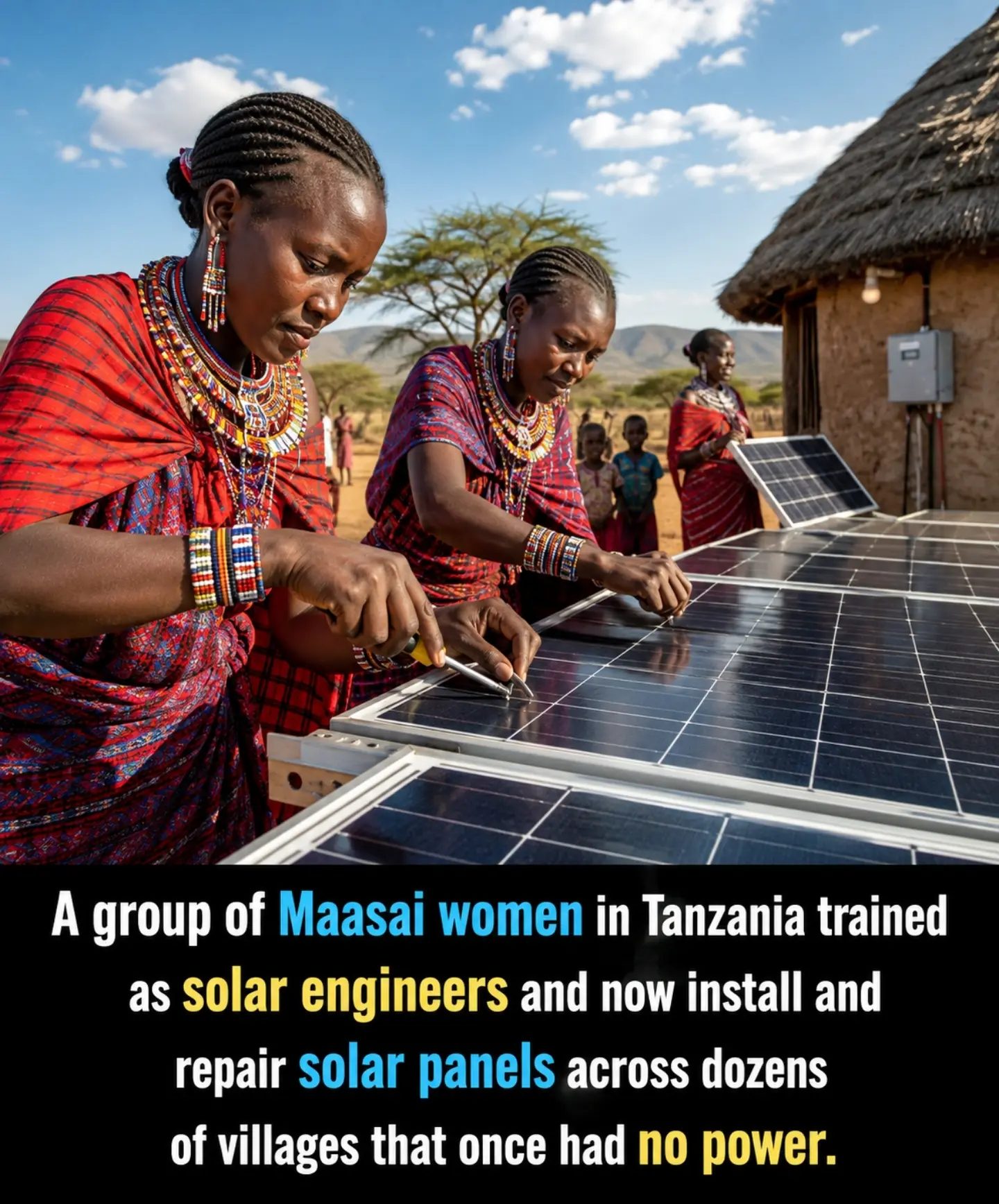
Solar Panel Repair: Empowerment through Renewable Energy in Tanzania
The training of Maasai women in Tanzania as solar engineers is a remarkable initiative that brings electricity to remote villages. This program not only provides essential services but also empowers local women by equipping them with valuable skills.
Context: Why This Matters
Access to electricity is a fundamental need that many rural communities in Tanzania have historically lacked. Solar panels offer a sustainable solution to this problem, providing a reliable source of power without the environmental impact of fossil fuels. By training local women as solar engineers, the initiative not only addresses the energy crisis but also fosters community development and gender equality.
Main Discussion
The Initiative
The training program focuses on equipping Maasai women with the skills needed to install and repair solar panels. These women are not just learning a new trade; they are becoming crucial members of a community empowerment initiative. Their work involves installing and repairing solar panels across dozens of villages that previously had no power, transforming the lives of countless individuals.
Installation and Repair
The installation of solar panels involves several steps, including site assessment, panel placement, wiring, and connecting to the electrical grid. Maasai women are trained to handle all these aspects, ensuring that the panels are installed correctly and efficiently. This hands-on training also covers the maintenance and repair of solar panels, which is essential for long-term sustainability. Regular checks and repairs ensure that the panels continue to function optimally, providing a steady supply of electricity to the villages.
Community Impact
The impact of this initiative on the community is profound. For the first time, these villages have access to electricity, which opens up new possibilities for education, healthcare, and economic development. Solar power enables schools to stay open longer and provides lighting for households, improving quality of life. Moreover, the presence of electricity supports local businesses and creates new economic opportunities for the community.
Empowering Women
Training Maasai women as solar engineers is a powerful example of gender empowerment. By providing them with technical skills and economic independence, the program challenges traditional gender roles. These women are breaking barriers and becoming role models for future generations, demonstrating that technical fields are accessible to everyone regardless of gender. Their involvement in the initiative also fosters a sense of community ownership and pride.
Practical Tips
If you are considering a similar initiative or looking to support renewable energy projects, here are some practical tips:
- Community Engagement: Involving the local community from the start is crucial. Understand their needs and ensure that the initiative aligns with their goals and aspirations.
- Training and Support: Provide comprehensive training and ongoing support to ensure that the skills are well-understood and practiced. Regular refresher courses and mentorship programs can be beneficial.
- Sustainability: Focus on long-term sustainability by including maintenance and repair training. Ensure that the community has access to spare parts and technical support.
- Cultural Sensitivity: Be mindful of cultural sensitivities and gender norms. Adapt the program to respect local traditions while promoting gender equality.
- Partnerships: Collaborate with local organizations, educational institutions, and government agencies to maximize the impact of the initiative.
Important Takeaways
The training of Maasai women as solar engineers in Tanzania highlights the transformative power of renewable energy and community empowerment. This initiative not only brings electricity to remote villages but also empowers local women, fostering economic and social development. The success of this program serves as a model for similar initiatives around the world, demonstrating the importance of community involvement, gender equality, and sustainable practices.
Conclusion
The journey of Maasai women in Tanzania from traditional roles to becoming solar engineers is a testament to the power of community-driven initiatives. By providing access to electricity and empowering local women, this program is transforming lives and communities. As we look to the future, such initiatives offer a sustainable path forward, combining renewable energy with community development and gender equality.
Watch the Reel
Questions readers ask
How does training Maasai women in solar panel installation benefit rural communities in Tanzania?
Training Maasai women in solar panel installation brings electricity to remote villages, improving daily life and driving local economic growth. Additionally, it fosters community development by creating local jobs and reducing reliance on traditional fuels.
What makes solar energy a suitable solution for rural electrification in Tanzania?
Solar energy is ideal for rural electrification in Tanzania due to its sustainability and reliability. Solar panels provide a consistent power source without the environmental drawbacks of fossil fuels, making them perfect for remote areas with limited infrastructure.
How does this initiative contribute to gender equality in Tanzania?
By training Maasai women as solar engineers, this initiative equips them with valuable skills, enhances their confidence, and opens up new economic opportunities. This empowerment helps challenge traditional gender roles and promotes women's participation in the workforce.
What kind of solar power training do the Maasai women receive?
The Maasai women undergo comprehensive training in solar panel installation, repair, and maintenance. This includes hands-on workshops and practical experience, enabling them to provide essential services to their communities and beyond.
Are there other communities in Africa benefiting from similar solar workshops for women?
Yes, similar initiatives are being implemented across Africa. These programs aim to empower women by providing them with skills in solar energy, promoting rural electrification, and fostering economic growth in remote areas.
What impact does rural electrification have on health and safety in Maasai communities?
Rural electrification improves health and safety in Maasai communities by providing light for medical facilities, enabling better food preservation, and enhancing overall quality of life. Access to electricity also reduces the risk of accidents and health issues associated with traditional fuels.
What obstacles have the Maasai women faced during their solar panel training?
Maasai women have faced challenges such as cultural barriers, limited access to resources, and the need to balance training with their traditional roles. However, their determination and the support of their communities have helped them overcome these obstacles, leading to successful outcomes.
Recent articles
Fresh deep dives from the latest Reels we unpacked.




Comments
Be the first to comment.