Brand Loyalty Trends in the Luxury Automotive Market
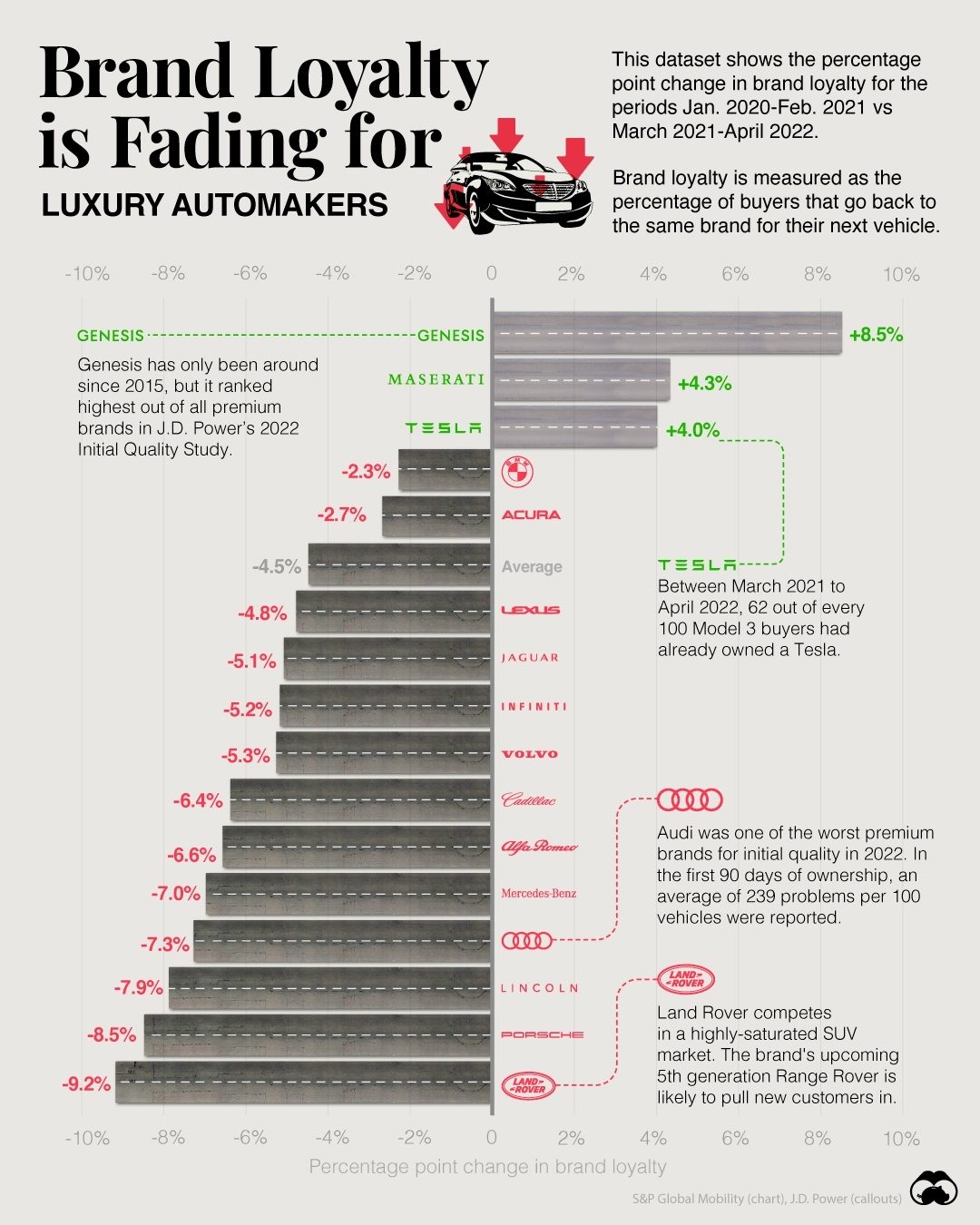
Luxury car buyers are increasingly less likely to stick with the same brand for their next purchase, according to a recent study by S&P Global Mobility. The research, spanning from January 2020 to April 2022, shows that brand loyalty, defined as the percentage of buyers returning to the same brand for their subsequent vehicle, is on the decline.
Why This Matters
Understanding shifts in brand loyalty among luxury automakers is crucial for manufacturers, dealerships, and industry analysts. This trend has significant implications for marketing strategies, customer retention efforts, and overall market dynamics in the competitive luxury automotive segment.
Main Discussion
The Overall Trend
The data reveals a general decline in brand loyalty across the luxury automotive market. This trend is evident when examining the percentage point changes in brand loyalty from March 2021 to February 2022. The visualizations highlight that several high-end brands have seen fluctuations in customer retention, with some experiencing notable increases and others significant decreases.
Standout Performers
Several brands stood out for their positive changes in brand loyalty. Maserati topped the list with a substantial increase of 8.5%. Tesla also showed a positive shift, with a 4.0% rise in loyalty. These gains suggest that these brands have successfully implemented strategies that resonate with their customers, encouraging repeat purchases.
Brands Facing Challenges
On the other hand, certain brands faced notable declines in brand loyalty. Genesis saw a decrease of 2.2%, while Land Rover experienced a more significant drop of 8.5%. These declines indicate potential issues with customer satisfaction, competitive pressures, or shifts in consumer preferences. Land Rover's substantial decrease is particularly noteworthy, suggesting that the brand may need to reevaluate its approach to customer retention.
Key Factors Influencing Loyalty
Several factors likely contribute to the observed trends in brand loyalty. These include:
- Product Quality and Innovation: Brands that consistently deliver high-quality products and innovate effectively are more likely to retain customers. Tesla's positive change, for instance, may be attributed to its reputation for innovative technology and cutting-edge features.
- Customer Experience: The overall purchasing and ownership experience plays a crucial role. This encompasses everything from the dealership experience to after-sales service. Brands that excel in providing a seamless and enjoyable customer journey are more likely to foster loyalty.
- Market Competition: The luxury automotive market is highly competitive. Brands must continually adapt to evolving consumer preferences and technological advancements. Those that fail to keep pace may see declines in loyalty.
- Environmental and Social Factors: Increasingly, consumers are influenced by a brand's environmental and social initiatives. Brands that demonstrate a strong commitment to sustainability and social responsibility may attract and retain eco-conscious buyers.
Practical Tips
For luxury automakers aiming to boost brand loyalty, consider the following strategies:
- Enhance Product Offerings: Invest in research and development to ensure that your vehicles offer the latest features and technologies. Stay ahead of the curve in terms of innovation and quality.
- Improve Customer Service: Focus on providing exceptional customer service throughout the buying process and beyond. This includes a seamless purchasing experience, responsive customer support, and comprehensive after-sales service.
- Build Emotional Connections: Create a strong brand identity and emotional connection with your customers. This can be achieved through effective marketing, community engagement, and aligning with customer values.
- Monitor and Adapt: Continuously monitor market trends and customer feedback. Be prepared to adapt your strategies based on changing consumer preferences and competitive pressures.
Important Takeaways
Brand loyalty in the luxury automotive market is undergoing significant changes. While some brands are successfully retaining customers, others are facing challenges that require strategic adaptations. Key takeaways include:
- Loyalty is Declining: Overall, brand loyalty is on the decline, indicating a shift in consumer behavior.
- Innovation Matters: Brands that innovate and deliver high-quality products are more likely to retain customers.
- Customer Experience is Crucial: A positive customer experience from purchase to ownership is essential for fostering loyalty.
- Adaptability is Key: Brands must stay agile and responsive to market changes and consumer preferences to maintain and enhance loyalty.
Conclusion
The luxury automotive market is in a state of flux, with brand loyalty declining and shifting among various manufacturers. This trend underscores the importance of continuous innovation, exceptional customer service, and adaptability. As luxury car buyers become more discerning, automakers need to focus on building lasting relationships and delivering products and services that meet evolving consumer expectations. By understanding and addressing the key factors influencing brand loyalty, luxury automakers can navigate this changing landscape and secure their place in the competitive market.
Watch the Reel
Questions readers ask
What does the recent study by S&P Global Mobility reveal about luxury car brand loyalty?
The study shows a clear decline in luxury car brand loyalty, indicating that a smaller percentage of buyers are returning to the same brand for their next vehicle. This trend has been observed from 2020 to 2022.
Which luxury car brands have seen notable changes in brand loyalty?
Brands like Tesla and Land Rover have experienced significant shifts in buyer loyalty. This is part of a broader trend where high-end automotive brands are seeing changes in customer retention.
Why is it important for automakers to understand the shift in luxury car brand loyalty?
Understanding these shifts is crucial for automakers to adjust their marketing strategies and customer retention efforts. This trend affects the overall market dynamics in the competitive luxury automotive segment, influencing how brands approach their customers.
How have luxury car buyer preferences changed from 2021 to 2022?
Luxury car buyer preferences have evolved, with a noticeable increase in brand switching. Buyers are becoming more open to exploring different brands, leading to a decrease in loyalty towards a single brand.
What are the key factors driving the changes in the luxury car market from 2020 to 2022?
Several factors are driving these changes, including advancements in technology, shifts in consumer priorities, and the introduction of new models by emerging brands. These elements are influencing buyer behavior and contributing to the decline in brand loyalty.
What impact do luxury car buyers' brand switching have for automakers?
The switch to different brands impacts automakers' sales, customer retention, and market positioning. Automakers need to be more innovative and competitive in their offerings and marketing strategies to retain existing buyers and attract new ones.
Related deep dives
Similar reads based on topic and creator.

Recent articles
Fresh deep dives from the latest Reels we unpacked.




Comments
Be the first to comment.