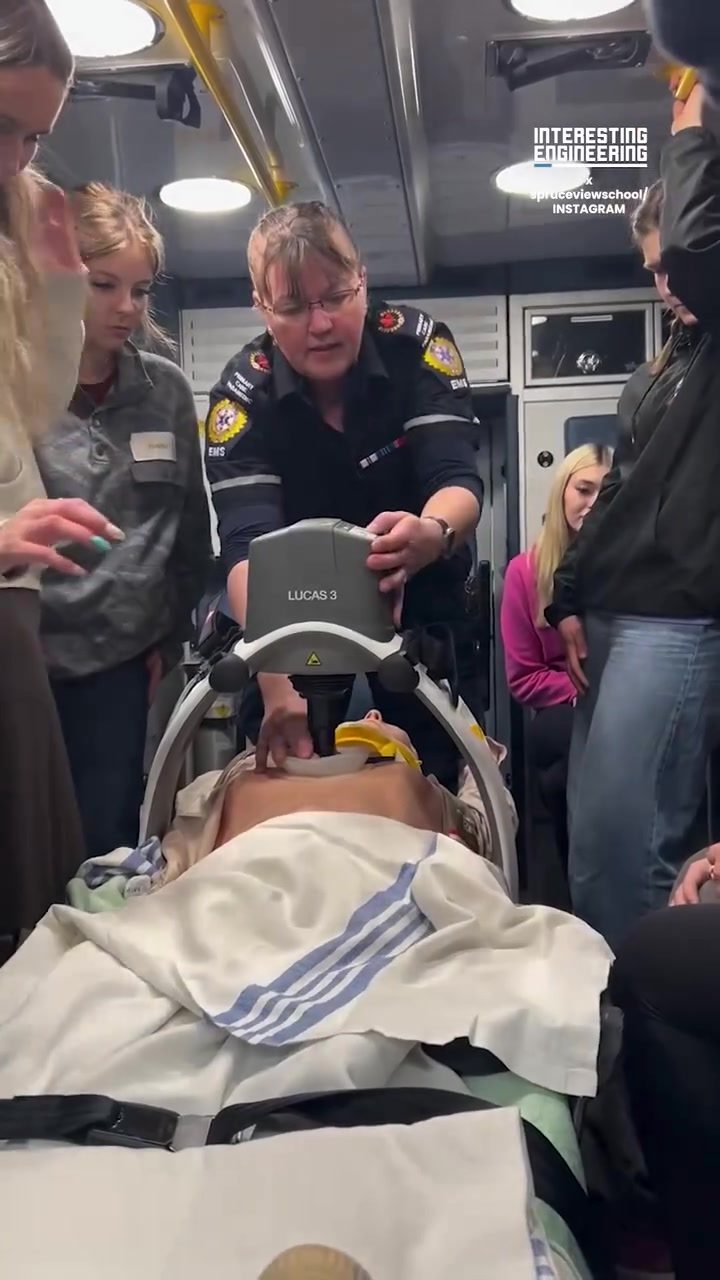
The Lucas 3 mechanical chest compression device is transforming emergency medical care by automating the most critical aspect of CPR: consistent, high-quality chest compressions.
Context: CPR and Emergency Response
Cardiopulmonary resuscitation (CPR) is a lifesaving technique used in medical emergencies, such as sudden cardiac arrest. High-quality CPR involves performing chest compressions at a rate of 100–120 compressions per minute and allowing for full chest recoil. Maintaining this rhythm and strength consistently is challenging, even for trained professionals. The Lucas 3 device addresses this issue by providing automated, high-quality chest compressions, allowing emergency responders to focus on other critical aspects of patient care.
The Lucas 3: How it Works
The Lucas 3 is a portable, battery-operated device designed to provide consistent chest compressions. Here's how it works:
Setup and Operation:
- Placement: The device is positioned over the patient's chest and secured using a suction cup mechanism. This ensures the device stays in place during transport.
- Activation: Once activated, the Lucas 3 automatically begins delivering chest compressions. It uses a piston-driven mechanism to compress the chest at a consistent rate and depth.
- Portability: The device is lightweight and compact, making it easy to use in various emergency settings, including ambulances and helicopters.
Emergency Response:
Emergency medical personnel use the Lucas 3 to perform high-quality CPR and assist with patient stabilization. The device allows responders to:
- Focus on other interventions:
- Reduce responder fatigue: Performing manual CPR can be physically exhausting, leading to decreased compression quality over time. The Lucas 3 helps maintain consistent compressions, reducing responder fatigue.
- Improve patient outcomes: Studies have shown that consistent, high-quality chest compressions can improve survival rates and neurological outcomes in patients experiencing cardiac arrest.
Mechanical CPR Devices
The Lucas 3 is part of a broader category of mechanical CPR devices designed to automate and improve the quality of chest compressions. Other devices in this category include:
- LUCAS-2: The predecessor to the Lucas 3, the Lucas-2 was widely adopted for its portability and ease of use. It operates on a similar piston-driven mechanism but with a larger footprint and heavier design.
- AutoPulse: This device uses a load-distributing band to provide circular chest compressions. It's particularly useful in scenarios where access to the patient's chest is limited, such as in a confining vehicle.
- Corpuls CPR: This device uses a backboard with a motor-driven compressor to deliver chest compressions. It's designed for use in both pre-hospital and in-hospital settings.
The Lucas 3 stands out among these devices due to its portability, ease of use, and consistent compression quality.
Practical Tips for Emergency Responders
When using the Lucas 3 or any mechanical CPR device, keep these practical tips in mind:
Training and Familiarization:
- Ensure all emergency personnel are properly trained on the device's operation, setup, and troubleshooting.
- Regularly practice using the device in simulation scenarios to build muscle memory and increase proficiency.
Maintenance and Readiness:
- Conduct regular maintenance checks to ensure the device is in good working order.
- Keep the device charged and readily available for emergencies.
Patient Assessment:
- Always assess the patient before and during the use of the Lucas 3 to ensure proper placement and effective compressions.
- Monitor the patient's response to CPR and adjust care as needed.
Important Takeaways
The Lucas 3 mechanical chest compression device is a game-changer in emergency medical care. By automating the most critical aspect of CPR, it allows responders to focus on other lifesaving interventions and improves patient outcomes. However, it is essential to remember:
- Training is crucial: Proper training and regular practice are vital for effective use.
- Mechanical CPR should not replace manual CPR entirely: While the Lucas 3 is an invaluable tool, manual CPR skills remain essential for emergency responders.
- Regular maintenance is key: Ensuring the device is in good working order and readily available is crucial for effective emergency response.
The mechanical chest compression devices in hospitals and ambulances represent a significant advancement in emergency medical care, providing a reliable and consistent means of delivering high-quality CPR. By understanding and integrating these devices into emergency response protocols, we can improve patient outcomes and save more lives.
Watch the Reel
Questions readers ask
How does the Lucas 3 improve CPR chest compression quality?
The Lucas 3 ensures consistent, high-quality chest compressions at a rate of 100–120 compressions per minute. By automating this task, it helps maintain proper technique and reduces the physical demands on responders, ensuring better CPR quality.
What are the benefits of using a medical CPR machine like the Lucas 3 in emergency response situations?
The Lucas 3 allows emergency responders to focus on other critical tasks, such as administering medications or managing the patient's airway, while it handles chest compressions. This multitasking can significantly improve overall patient care in emergencies.
Can the Lucas 3 be used by anyone, or does it require special training?
While the Lucas 3 is designed to be user-friendly, it is recommended that users receive training to ensure proper setup and operation. This training is often provided by the manufacturer or local emergency medical services.
What happens if the Lucas 3 malfunctions during use?
In case of a malfunction, responders should immediately switch to manual CPR and follow their standard emergency protocols. The Lucas 3 is equipped with safety features and troubleshooting guidelines to minimize risks, but human intervention may sometimes be necessary.
How does the Lucas 3 compare to manual CPR techniques in terms of effectiveness?
The Lucas 3 provides consistent, high-quality chest compressions that can be difficult to achieve manually, even by trained professionals. Studies have shown that automated CPR devices like the Lucas 3 can improve patient outcomes by maintaining optimal compression rates and depth.
Can the Lucas 3 be used in all emergency CPR situations, or are there limitations?
The Lucas 3 is versatile and can be used in a variety of settings, including pre-hospital care, in-hospital emergencies, and during transport. However, it may not be suitable for all patients, such as those with very small or very large body types, or in certain clinical scenarios where manual CPR is more appropriate.
How does the Lucas 3 address the challenges of maintaining CPR techniques during extended resuscitation efforts?
The Lucas 3 ensures that chest compressions are delivered consistently and at the correct depth and rate, even during extended resuscitation efforts. This allows responders to maintain high-quality CPR without the risk of fatigue, which can compromise manual CPR performance over time.
Recent articles
Fresh deep dives from the latest Reels we unpacked.




Comments
Be the first to comment.