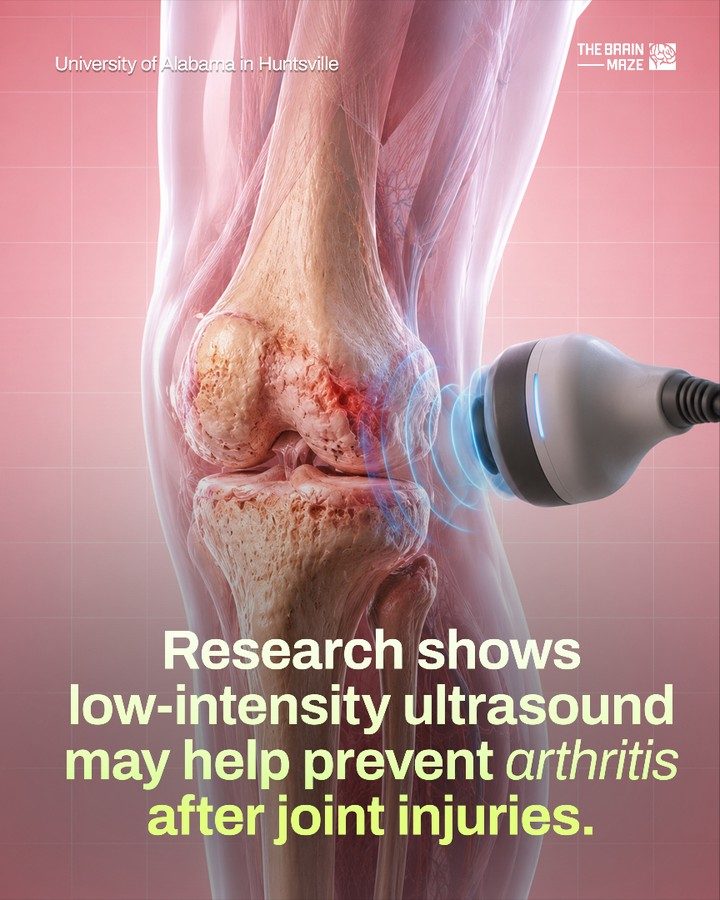
Ultrasound Therapy for Arthritis
Ultrasound therapy has emerged as a promising, non-invasive treatment option for managing and potentially preventing post-traumatic arthritis. Recent studies, particularly those conducted at the University of Alabama in Huntsville, have shed light on how continuous low-intensity ultrasound may play a significant role in shifting immune cells from an inflammatory state to a reparative one, thus promoting tissue healing.
Context / Why This Matters
Post-traumatic arthritis, a common complication following joint injuries, can significantly impact an individual's quality of life. Traditional treatments often involve pain management and anti-inflammatory medications, but these approaches do not address the underlying issue of tissue damage and joint degeneration. Ultrasound therapy presents an exciting, drug-free alternative that could revolutionize joint recovery and long-term joint health.
Main Discussion
The Science Behind Ultrasound Therapy
Ultrasound therapy involves the use of high-frequency sound waves to penetrate deep into tissues. When applied at low intensities, these waves can stimulate cellular activity, reduce inflammation, and promote healing. The study suggests that this non-invasive treatment modifies the behavior of immune cells, transitioning them from a pro-inflammatory state to one that focuses on tissue repair.
Immune Cell Modulation
Inflammatory states are characterized by immune cells that produce substances causing inflammation and tissue damage. However, the research indicates that low-intensity ultrasound can alter this response. By reducing the presence of inflammation markers, the treatment encourages the production of healing-related macrophages, which are crucial for tissue regeneration.
Tissue Repair and Regeneration
One of the key findings of the study is the promotion of tissue repair and regeneration. The low-intensity ultrasound waves stimulate the proliferation of cells involved in repairing damaged tissues. This not only reduces the immediate inflammation but also supports long-term joint health by initiating a cascade of regenerative processes.
The Potential Benefits
Non-Invasive Treatment
One of the most significant advantages of ultrasound therapy is its non-invasive nature. Unlike surgical interventions, which carry inherent risks and require significant recovery time, ultrasound therapy can be administered without incisions or anesthesia. This makes it a more accessible and less risky option for many patients.
Drug-Free Approach
For those seeking to avoid medication, ultrasound therapy offers a promising avenue. Traditional treatments for arthritis often involve the use of anti-inflammatory drugs and pain relievers, which can have side effects and may not address the root cause of the problem. Ultrasound therapy, by focusing on cellular-level changes, provides a more holistic approach to joint health.
Practical Tips
If you are considering ultrasound therapy for joint health, here are some practical tips to keep in mind:
Consult a Healthcare Professional
Before starting any new treatment, it's essential to consult with a healthcare provider. They can assess your specific condition and determine if ultrasound therapy is a suitable option for you.
Regular Treatment Sessions
Consistency is key with ultrasound therapy. Regular treatment sessions, as recommended by your healthcare provider, can help ensure optimal results.
Combine with Other Therapies
Ultrasound therapy can be combined with other rehabilitative measures, such as physical therapy and exercise, to enhance joint recovery and overall health.
Monitor Progress
Keep track of your progress and any changes in your symptoms. Regular check-ins with your healthcare provider can help adjust your treatment plan as needed.
Important Takeaways
Ultrasound therapy represents a groundbreaking approach to managing and preventing post-traumatic arthritis. By modulating immune cell behavior and promoting tissue repair, this non-invasive, drug-free treatment offers a promising alternative to traditional methods. If future studies confirm these findings, ultrasound therapy could become a standard part of post-injury joint care protocols.
Conclusion
Post-traumatic arthritis is a challenging condition that affects many individuals, particularly those who have experienced joint injuries. Continuous low-intensity ultrasound therapy presents a new, non-invasive way to combat this issue by addressing the underlying tissue damage and promoting healing. As research progresses, the potential benefits of ultrasound therapy for joint health become increasingly clear, offering hope for improved recovery and long-term joint health.
Watch the Reel
Questions readers ask
How does low-intensity ultrasound therapy help in managing post-traumatic arthritis?
Low-intensity ultrasound therapy works by encouraging immune cells to transition from an inflammatory state to a reparative one. This shift promotes healing and helps to mitigate tissue damage and joint degeneration, addressing the root causes of the condition.
What makes ultrasound therapy a non-invasive treatment option for arthritis?
Ultrasound therapy is considered non-invasive because it does not require surgery or injections. The treatment uses sound waves to penetrate the body and stimulate healing, making it a drug-free and incision-free option for managing arthritis symptoms.
Can ultrasound therapy be used to prevent post-traumatic arthritis after a joint injury?
Yes, continuous low-intensity ultrasound therapy has shown promise in preventing post-traumatic arthritis by targeting tissue damage at an early stage. By promoting a reparative state, it may help to prevent the onset of arthritis following joint injuries.
How does ultrasound therapy compare to traditional arthritis treatments?
Unlike traditional treatments that often focus on pain management and anti-inflammatory medications, ultrasound therapy addresses the underlying tissue damage and joint degeneration. This approach may offer a more comprehensive solution to managing and potentially preventing post-traumatic arthritis.
What are the potential benefits of using an ultrasound device for arthritis management?
Ultrasound devices for arthritis can provide a drug-free, non-invasive solution to manage joint pain and promote tissue healing. They can be particularly beneficial for individuals seeking to avoid the side effects of medications or those looking for complementary therapies.
Is ultrasound therapy suitable for all types of joint pain?
While ultrasound therapy shows promising results for post-traumatic arthritis and joint pain, its effectiveness can vary. It is particularly noted for its benefits in knee pain and other joint injuries. Consulting with a healthcare provider can help determine if ultrasound therapy is suitable for specific types of joint pain.
What recent research supports the use of ultrasound therapy for arthritis?
Studies, including those conducted at the University of Alabama in Huntsville, have demonstrated that continuous low-intensity ultrasound can shift immune cells toward a reparative state, promoting tissue healing and potentially preventing post-traumatic arthritis. These findings support the growing body of research on the benefits of ultrasound therapy for arthritis management.
Related deep dives
Similar reads based on topic and creator.


Recent articles
Fresh deep dives from the latest Reels we unpacked.




Comments
Be the first to comment.