Building Meals: Low-Calorie, High-Volume Foods for Weight Loss
Fat loss or simply eating lighter doesn't have to mean starving yourself. One of the easiest ways to stay full while keeping calories under control is by building meals around low-calorie, high-volume foods. These are foods you can eat plenty of without blowing up your calorie intake. By focusing on these types of foods, you can create meals that are not only satisfying but also nutrient-dense and easier to stick to in the long run.
Why This Matters
In the pursuit of weight loss or maintaining a healthy lifestyle, many people struggle with feeling hungry or deprived. Incorporating low-calorie, high-volume foods into your diet can help alleviate these issues. These foods provide the satisfaction of eating more while keeping calorie intake in check, making it easier to stick to your nutritional goals. Additionally, these foods are often rich in essential nutrients, which support overall health and well-being.
Low-Calorie Vegetables
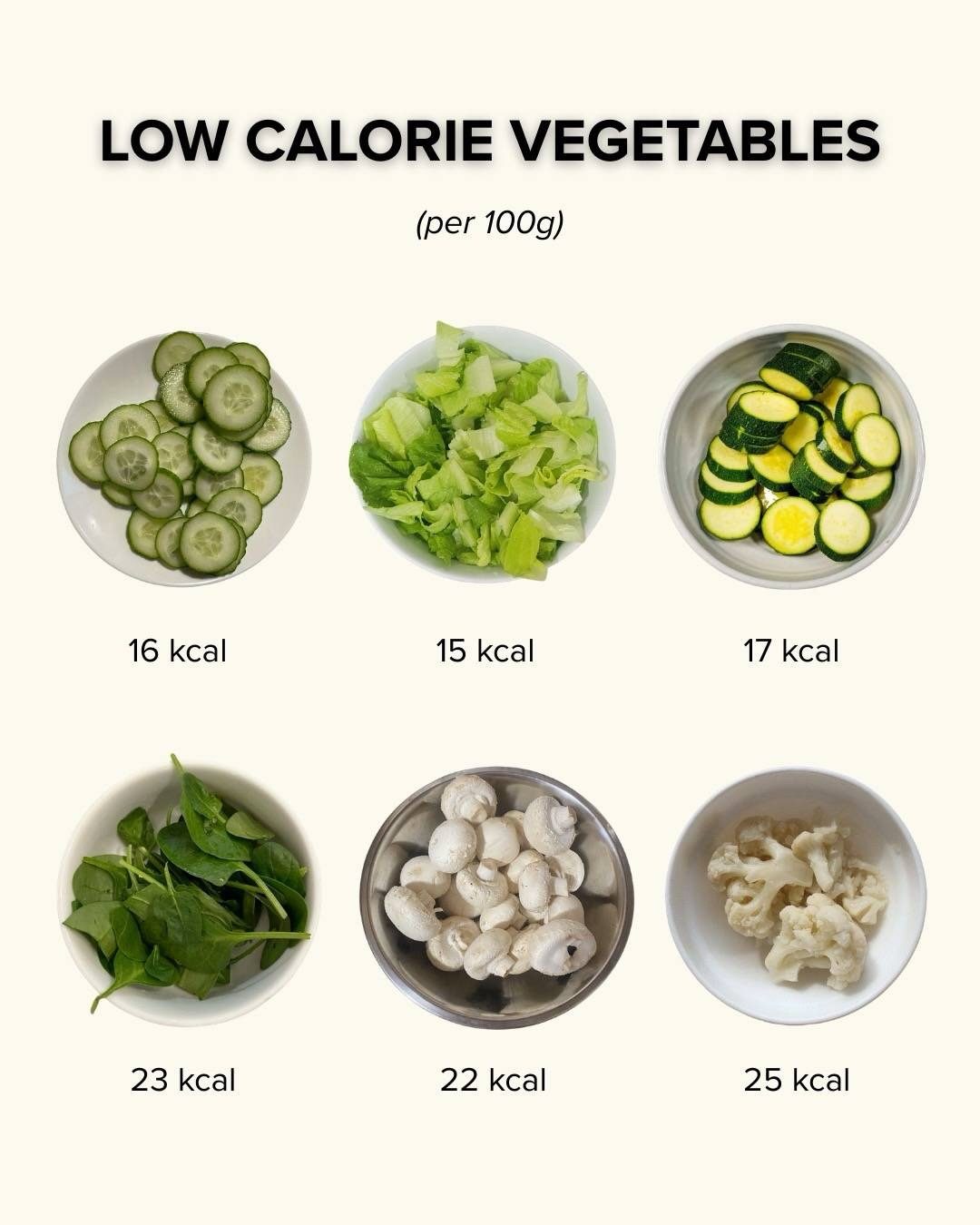
Low-calorie vegetables are a cornerstone of high-volume, low-calorie meals. These vegetables add bulk to your meals without significantly increasing calorie intake. Some of the best low-calorie vegetables include:
- Cucumbers: With only 16 calories per 100 grams, cucumbers are an excellent choice for adding crunch and hydration to salads and snacks.
- Lettuce: At just 15 calories per 100 grams, lettuce is a versatile base for salads and wraps.
- Zucchini: With 17 calories per 100 grams, zucchini can be spiralized into noodles or sliced into sticks for dipping.
- Spinach: Packing 23 calories per 100 grams, spinach is a nutrient-dense option for salads and smoothies.
- Mushrooms: At 22 calories per 100 grams, mushrooms add a savory flavor and meaty texture to dishes.
- Cauliflower: With 25 calories per 100 grams, cauliflower can be riced, roasted, or used to make low-calorie pizza crusts.
These vegetables not only add volume to your meals but also provide essential fiber, vitamins, and minerals that support digestion and overall health.
Practical Tips for Incorporating Low-Calorie Vegetables
- Snack Smart: Keep pre-cut vegetables like cucumbers and carrots in the fridge for easy snacking.
- Load Up on Salads: Use lettuce as the base for your salads and add a variety of other low-calorie vegetables for volume.
- Get Creative: Experiment with zucchini noodles, cauliflower rice, and roasted vegetables to add variety to your meals.
- Hydrate: Use high-water-content vegetables like cucumbers and lettuce to stay hydrated and feel full.
Low-Calorie Fruits
Fruits are another excellent source of low-calorie, high-volume foods. They provide natural sweetness, hydration, and a variety of essential nutrients. Some of the best low-calorie fruits include:
- Watermelon: With just 30 calories per 100 grams, watermelon is a hydrating and refreshing snack.
- Strawberries: At 32 calories per 100 grams, strawberries are a sweet and juicy option for snacks and desserts.
- Cantaloupe: Packing 34 calories per 100 grams, cantaloupe is a versatile fruit that can be eaten on its own or added to salads.
- Kiwi: With 36 calories per 100 grams, kiwi offers a tangy flavor and a boost of vitamin C.
- Papaya: At 39 calories per 100 grams, papaya is a tropical fruit that adds a unique flavor to smoothies and salads.
- Mango: With 52 calories per 100 grams, mango is a sweet and juicy fruit that can be enjoyed in moderation.
These fruits are perfect for snacks, breakfasts, or as a sweet addition to meals. They provide natural sugars, fiber, and various vitamins and minerals that support overall health.
Lean Proteins
Incorporating lean proteins into your meals helps you feel full for longer and maintains muscle mass while you train. Some of the best lean protein sources include:
- Eggs: A versatile and nutrient-dense protein source.
- Shrimp: Low in calories and high in protein, making it an excellent choice for seafood lovers.
- Tuna: A lean fish that can be enjoyed in salads, sandwiches, or as a main dish.
- Chicken Breast: A popular lean protein option that can be prepared in various ways.
- Turkey: A versatile and lean protein source that can be used in sandwiches, salads, or as a main dish.
These protein sources not only help with satiety but also support muscle maintenance and growth, which is crucial for overall health and fitness.
Practical Tips for Incorporating Lean Proteins
- Plan Ahead: Prep protein sources like chicken breasts or hard-boiled eggs in advance for easy meal assembly.
- Mix and Match: Combine different protein sources throughout the week to keep meals interesting.
- Snack on Protein: Incorporate Greek yogurt, cottage cheese, or a small handful of nuts as protein-rich snacks.
The Sustainable Coach App
One tool that can help you stay consistent with both training and daily movement is the Sustainable Coach app. This app rewards you for workouts, runs, and even daily steps, making it easier to stay accountable and actually enjoy the process of staying active. The app provides detailed nutrition insights, tracks your daily calorie goals, macro breakdowns, and even calculates your Total Daily Energy Expenditure (TDEE).
Important Takeaways
- Volume Over Calories: Focus on high-volume, low-calorie foods to stay full and satisfied while keeping calories in check.
- Variety is Key: Incorporate a variety of low-calorie vegetables, fruits, and lean proteins to keep meals interesting and nutrient-dense.
- Stay Consistent: Use tools like the Sustainable Coach app to stay accountable and motivated in your fitness journey.
Practical Tips
- Meal Prep: Plan and prep your meals in advance to save time and stay on track.
- Stay Hydrated: Drink plenty of water to support digestion and overall health.
- Listen to Your Body: Pay attention to your hunger and fullness cues to avoid overeating.
Conclusion
Creating meals around low-calorie, high-volume foods is a sustainable and effective way to stay full, meet your nutritional goals, and maintain overall health. By incorporating a variety of low-calorie vegetables, fruits, and lean proteins into your diet and using tools like the Sustainable Coach app, you can stay consistent and enjoy the process of eating smart and moving daily.
Watch the Reel
Recent articles
Fresh deep dives from the latest Reels we unpacked.




Comments
Be the first to comment.