Low-Calorie Foods for a Smarter Diet
Low-calorie foods are the key to staying full while managing your calorie intake. This approach allows you to eat more food while maintaining a calorie deficit by focusing on nutrient-dense, low-calorie options that provide volume, satisfaction, and balance. Knowing which foods to choose and how to incorporate them into your meals can make a significant difference in achieving your weight loss goals.
Why This Matters
Many people struggle with diets because they feel deprived and hungry. The traditional approach to weight loss often involves eating less food, which can lead to frustration and eventual failure. However, by focusing on low-calorie foods, you can enjoy generous portions that keep you satisfied and support your weight loss journey. This strategy transforms the way you think about dieting, making it a more enjoyable and sustainable experience.
Main Discussions
The Benefits of Low-Calorie Foods
Low-calorie foods offer a variety of benefits that go beyond just reducing your calorie intake. They are packed with essential nutrients, fiber, and hydration, which are crucial for overall health. Here are some key benefits:
- Satiation and Volume: Foods like vegetables provide a high volume of food for very few calories, which helps you feel full and satisfied.
- Nutrient Density: Many low-calorie foods are rich in vitamins, minerals, and antioxidants, which support your body's functions and overall health.
- Hydration: Vegetables and fruits have a high water content, which can help you stay hydrated and support your body's natural detoxification processes.
- Digestion and Gut Health: High-fiber foods promote healthy digestion and support a healthy gut microbiome.
Low-Calorie Vegetables
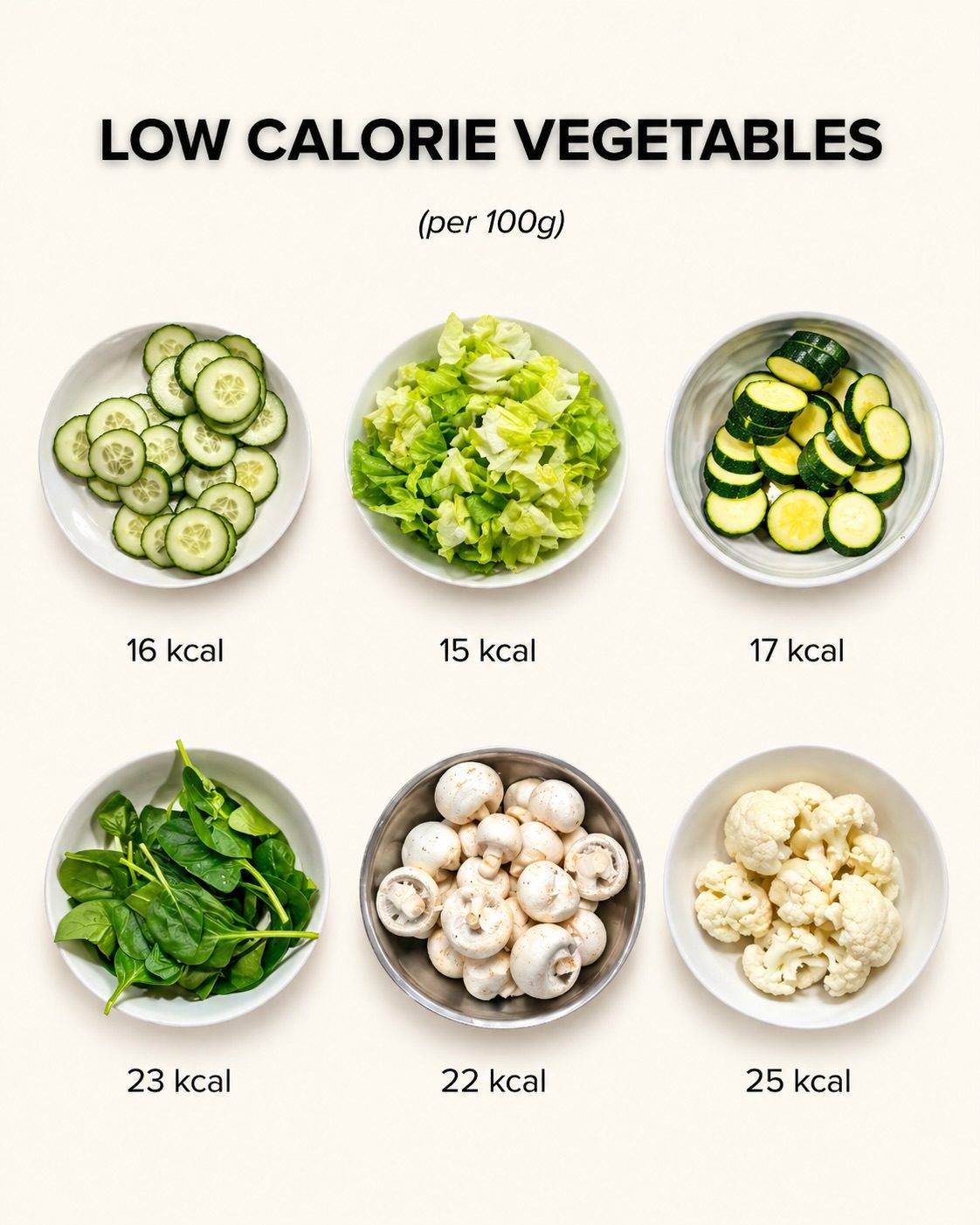
Vegetables are a cornerstone of any low-calorie diet. They are versatile, nutrient-dense, and can be incorporated into almost any meal. Some of the best low-calorie vegetable options include:
- Cucumber: 16 kcal per 100g
- Lettuce: 15 kcal per 100g
- Zucchini: 17 kcal per 100g
- Spinach: 23 kcal per 100g
- Mushrooms: 22 kcal per 100g
- Cauliflower: 25 kcal per 100g
Low-Calorie Fruits
Fruits can be a sweet and satisfying addition to your low-calorie diet. They provide natural sugars along with essential vitamins, minerals, and fiber. Some of the best low-calorie fruit options include:
- Watermelon: 30 kcal per 100g
- Strawberries: 32 kcal per 100g
- Cantaloupe: 34 kcal per 100g
- Honeydew Melon: 36 kcal per 100g
- Papaya: 39 kcal per 100g
- Peach: 43 kcal per 100g
Low-Calorie Protein Sources
Protein is essential for maintaining muscle mass and supporting your body's repair and recovery processes. Here are some low-calorie protein options that can help you stay full and satisfied:
- Boiled Eggs: 70kcal each
- Shrimp: 99 kcal per 100g
- Canned Tuna: 92kcal per 100g
- Chicken Breast: 116 kcal per 100g
- Turkey Breast: 120 kcal per 100g
Building Balanced Meals
Creating balanced meals that incorporate low-calorie foods can help you stay on track with your weight loss goals. Here's a simple guide to building a balanced meal:
- Base: Start with a generous portion of low-calorie vegetables. This will provide volume and fiber, helping you feel full without adding many calories.
- Add: Include a protein source to promote satiety and support muscle maintenance.
- Top: Add a moderate amount of fruit or carbs to balance your meal and provide additional nutrients.
The Role of the Workit App
The Workit app is a valuable tool for anyone looking to lose weight and maintain a healthy lifestyle. It offers personalized meal plans based on your specific goals, making it easier to track your calorie intake and stay on track. The app also provides easy-to-follow fitness challenges and nutrition insights, ensuring that you have all the information you need to succeed.
Data-Driven Nutrition Insights
Workit uses data-driven insights to provide you with a comprehensive understanding of your nutritional needs. The app calculates your Total Daily Energy Expenditure (TDEE) and helps you set realistic goals for weight loss. It also breaks down your daily macro needs, allowing you to understand how much protein, carbs, and fat you should consume to meet your goals.
Tracking and Rewards
Workit simplifies the process of tracking your calorie intake and workouts, making it easier to stay consistent and motivated. The app also rewards you for your efforts, providing an additional incentive to stick with your plan.
Practical Tips
- Plan Ahead: Meal planning is crucial for staying on track. Take some time each week to plan your meals and snacks, ensuring that you have all the necessary ingredients on hand.
- Stay Hydrated: Drink plenty of water throughout the day to support your body's natural processes and help you feel full.
- Portion Control: Pay attention to portion sizes, especially when it comes to higher-calorie foods. Even healthy foods can add up if you eat too much.
- Track Your Progress: Use a food diary or app to track your calorie intake and macronutrient breakdown. This will help you identify areas where you can make improvements and stay on track with your goals.
- Stay Active: Regular physical activity is essential for weight loss and overall health. Find activities that you enjoy and make them a regular part of your routine.
- Consistency is Key: Consistency is crucial for long-term success. Stick with your plan, even on days when you don't feel motivated.
- Listen to Your Body: Pay attention to your body's hunger and fullness cues. Eat when you're hungry and stop when you're full, even if that means leaving some food on your plate.
Important Takeaways
- Low-calorie foods are an essential component of a successful weight loss strategy. They provide volume, satiety, and balance, helping you stay full and satisfied while maintaining a calorie deficit.
- Include a variety of low-calorie vegetables, fruits, and protein sources in your diet. These foods are packed with essential nutrients and support overall health and well-being.
- Building balanced meals is key to staying on track with your weight loss goals. Focus on a base of vegetables, add a protein source, and top with fruit or carbs for a well-rounded meal.
- Use tools like the Workit app to simplify the process of tracking your calorie intake and staying motivated. These tools can provide valuable insights and support, helping you achieve your goals.
Conclusion
Low-calorie foods are a game-changer when it comes to weight loss and maintaining a healthy lifestyle. By focusing on nutrient-dense, low-calorie options, you can enjoy generous portions that keep you full and satisfied. Incorporating a variety of vegetables, fruits, and proteins into your meals, and using tools like the Workit app, can help you stay on track and achieve your goals without feeling deprived.
Watch the Reel
Questions readers ask
What are some examples of low-calorie foods that can help with weight loss?
Low-calorie foods that support weight loss include leafy greens like spinach and kale, non-starchy vegetables such as broccoli and bell peppers, and low-calorie fruits like apples and berries. High-protein, low-calorie foods such as eggs, lean meats, and Greek yogurt can also be beneficial.
How can low-calorie foods help me feel full and satisfied?
Low-calorie foods often have a high water or fiber content, which can help you feel full and satisfied. Foods like vegetables and fruits contain a lot of volume but fewer calories, so you can eat more of them without consuming excess calories.
What is a calorie deficit and how do low-calorie foods help achieve it?
A calorie deficit occurs when you consume fewer calories than your body burns. Low-calorie foods help achieve this by providing essential nutrients while keeping your calorie intake low, allowing you to maintain a deficit without feeling hungry.
Can I still enjoy large portions while trying to lose weight with low-calorie foods?
Yes, you can enjoy larger portions of low-calorie foods because these foods provide volume without a high number of calories. This allows you to feel full and satisfied, which is crucial for maintaining a balanced diet and adhering to your weight loss goals.
How can I incorporate low-calorie foods into my daily meals?
You can incorporate low-calorie foods into your daily meals by making them the base of your dishes. For example, add plenty of vegetables to your stir-fries, salads, and soups, and choose low-calorie fruits for snacks. Ensure that your meals are balanced with lean proteins and healthy fats to keep you satisfied.
Is it necessary to use a calorie tracking app when focusing on low-calorie foods?
While not strictly necessary, using a calorie tracking app can be very helpful. It allows you to monitor your daily calorie intake and ensure you are staying within your desired range. Many apps also provide detailed nutritional information, helping you make informed choices about the foods you consume.
Which low-calorie foods are particularly good for snacking?
Low-calorie foods that are good for snacking include vegetables like carrots and cucumbers, fruits like apples and oranges, and lean protein snacks like hard-boiled eggs or Greek yogurt. These options provide a satisfying crunch or protein boost without adding many calories.
Recent articles
Fresh deep dives from the latest Reels we unpacked.




Comments
Be the first to comment.