LNG Trade Chokepoints
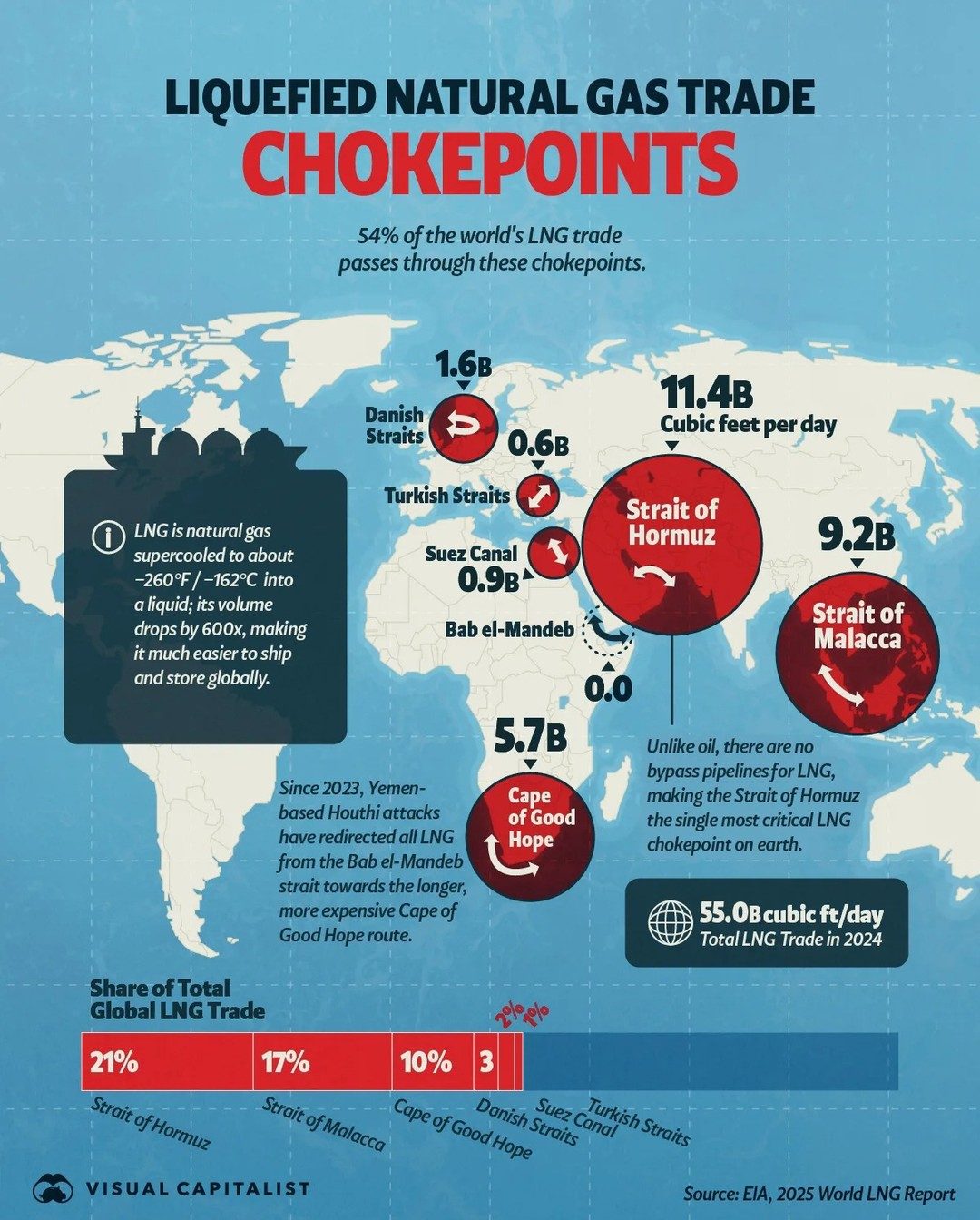
Liquefied natural gas (LNG) chokepoints are critical bottlenecks in the global energy supply chain. These narrow waterways play a vital role in the transportation of LNG, handling a significant portion of the world's trade. Understanding these chokepoints is crucial for grasping the geopolitical dynamics and economic implications of LNG trade.
Context / Why this matters
The global LNG market is heavily reliant on a handful of critical chokepoints. These chokepoints are narrow waterways that facilitate the movement of LNG from production sites to consumption markets. Any disruption in these routes can have far-reaching consequences, affecting global energy prices, supply chains, and geopolitical stability. The Strait of Hormuz, for instance, handles a staggering 21% of global LNG trade. This dependency underscores the strategic importance of these waterways and the need for secure passage through them.
Main discussion
Key LNG Chokepoints
The world's LNG trade is concentrated through a few key chokepoints. These include:
-
Suez Canal: This critical waterway connects the Mediterranean Sea to the Red Sea, facilitating LNG trade between Europe and Asia. It handles 11.4 billion cubic feet per day of LNG, making it one of the most critical routes for global LNG shipments.
-
Turkish Straits: Comprising the Bosporus and Dardanelles straits, these waterways link the Black Sea to the Mediterranean Sea. They play a crucial role in LNG trade between Europe and the Middle East, handling approximately 10% of global LNG shipments.
-
Strait of Hormuz: Located between the Persian Gulf and the Gulf of Oman, the Strait of Hormuz is the world's most vital LNG chokepoint. It handles 21% of global LNG trade, or 9.2 billion cubic feet per day. Any disruption in this route can have significant implications for global energy markets.
-
Bab el-Mandeb: Connecting the Red Sea to the Gulf of Aden, this strait is a critical link between the Middle East and Asia. However, recent Houthi attacks have redirected LNG traffic towards the longer Cape of Good Hope route, impacting trade efficiency and costs.
-
Cape of Good Hope: This route has become an alternative for LNG shipments redirected from Bab el-Mandeb due to security concerns. While it offers a safer passage, it is longer and more costly, affecting the overall efficiency of LNG trade.
Impact of Houthi Attacks
Since 2023, Yemen-based Houthi attacks have significantly impacted LNG trade routes. These attacks have forced the redirection of all LNG from the Bab el-Mandeb strait towards the longer, Cape of Good Hope route. This shift has increased transportation costs and reduced the efficiency of LNG shipments, highlighting the vulnerability of these critical waterways to geopolitical instability.
The LNG Process
Understanding the LNG process is essential for appreciating the challenges and complexities of its trade. LNG is natural gas that has been supercooled to about -260°F (-162°C) into a liquid form. This process makes it much easier to ship and store globally. The liquefaction process involves cooling the gas to very low temperatures, which reduces its volume by about 600 times, making it feasible to transport in specialized tankers.
Global LNG Trade Dynamics
The global LNG trade is characterized by its reliance on these critical chokepoints. Approximately 54% of the world’s LNG trade passes through these narrow waterways. This concentration underscores the strategic importance of maintaining safe and secure passage through these routes. Any disruption, whether due to geopolitical conflicts, natural disasters, or technical issues, can have cascading effects on global energy markets.
Practical tips
-
Monitor Geopolitical Developments: Stay informed about geopolitical developments in regions near critical LNG chokepoints. Understanding the political climate can help anticipate potential disruptions and adjust supply chains accordingly.
-
Diversify Supply Routes: Diversify LNG supply routes to reduce reliance on a single chokepoint. This can mitigate the risks associated with disruptions and ensure a steady supply of LNG.
-
Invest in Safe Passage Infrastructure: Invest in infrastructure that enhances the safety and efficiency of LNG transportation through chokepoints. This includes improved security measures, advanced navigation technologies, and robust maintenance practices.
-
Optimize Storage Solutions: Develop efficient storage solutions for LNG to manage supply fluctuations. This can help balance the demand and supply of LNG during periods of disruption.
-
Enhance Cooperation: Foster cooperation between countries that share LNG chokepoints. Joint efforts can improve the security and efficiency of LNG trade, benefiting all parties involved.
Important takeaways
The global LNG trade is heavily dependent on a few critical chokepoints. These waterways handle a significant portion of the world's LNG shipments, making their security and efficiency vital for global energy markets. The Strait of Hormuz, in particular, is the most critical chokepoint, handling 21% of global LNG trade. Recent Houthi attacks have highlighted the vulnerability of these routes to geopolitical instability, underscoring the need for robust security measures and alternative supply routes.
The LNG process, involving the liquefaction of natural gas, plays a crucial role in facilitating its global trade. Understanding this process can help appreciate the complexities and challenges of LNG transportation. The global LNG trade is characterized by its reliance on these chokepoints, with approximately 54% of the world’s LNG trade passing through these narrow waterways. This concentration underscores the strategic importance of maintaining safe and secure passage through these routes.
Conclusion
LNG chokepoints are vital arteries in the global energy supply chain. Their strategic importance cannot be overstated, as they handle a significant portion of the world's LNG trade. Ensuring the safety and efficiency of these routes is crucial for maintaining stability in global energy markets. By understanding the dynamics of LNG trade and the challenges posed by these chokepoints, stakeholders can better navigate the complexities of the global energy landscape and mitigate the risks associated with disruptions.
Watch the Reel
Related deep dives
Similar reads based on topic and creator.


Recent articles
Fresh deep dives from the latest Reels we unpacked.




Comments
Be the first to comment.