Lithium-Ion Battery Price Trends
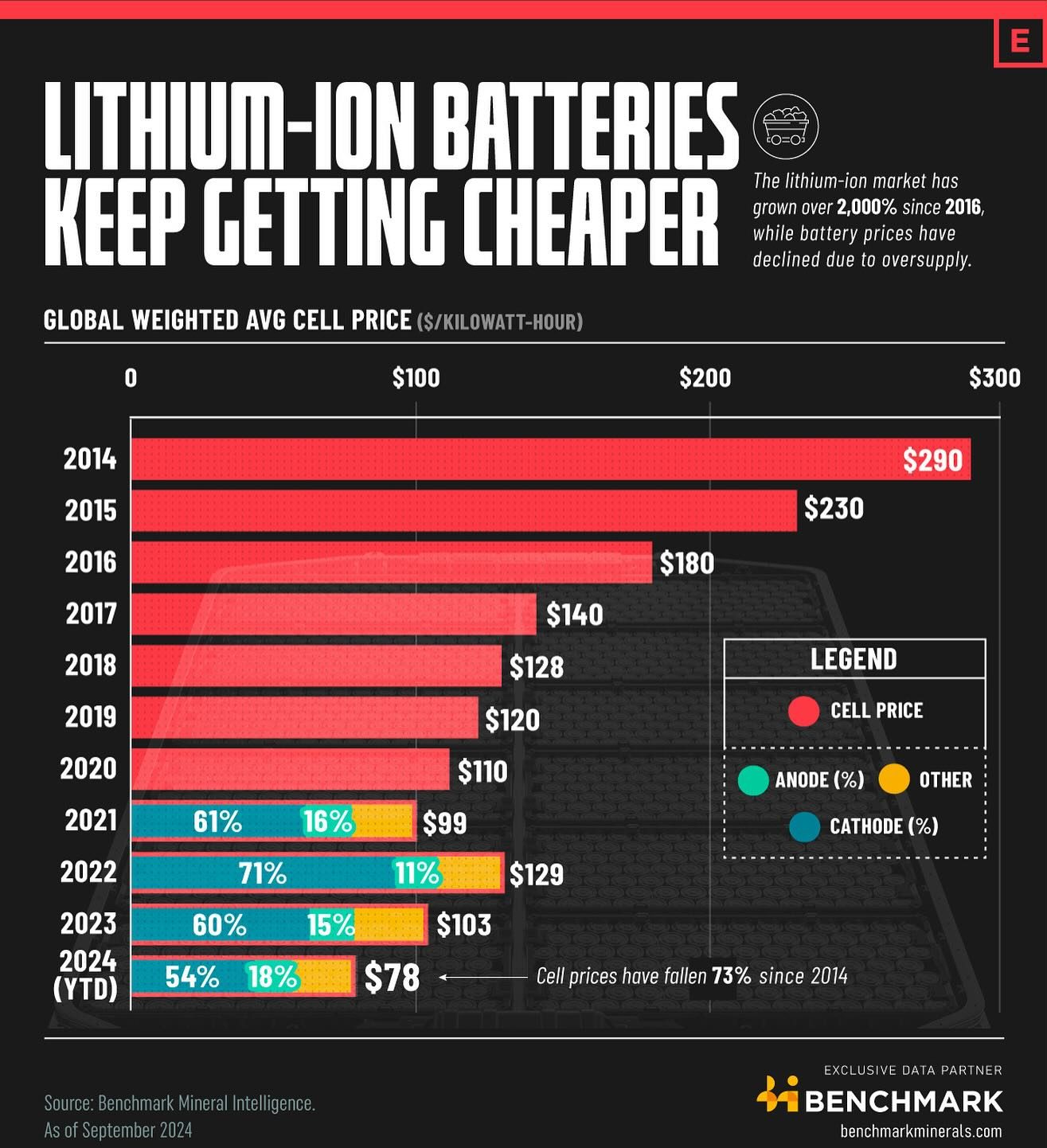
Lithium-ion batteries have long been the powerhouse of modern energy storage, driving everything from portable electronics to electric vehicles (EVs). Understanding their price trends is crucial for industries relying on these technologies. The cost of lithium-ion battery cells has seen a remarkable decline, dropping from an average of $290 per kilowatt-hour in 2004 to $103 in 2023, with projections indicating further decreases in 2024.
Why This Matters
The decreasing cost of lithium-ion batteries has significant implications for various sectors. For the automotive industry, the downward trend is particularly noteworthy, as it directly influences the affordability of electric vehicles. As battery prices drop, electric vehicles become more accessible to a broader market, fostering greater adoption and accelerating the transition to cleaner energy.
Additionally, the cost of lithium-ion batteries affects the viability of renewable energy storage solutions. Lower-priced batteries make it more feasible to store energy from renewable sources like solar and wind, enhancing grid stability and promoting a more sustainable energy landscape.
Understanding the Price Decline
Historical Price Trends
Over the past decade, lithium-ion battery prices have experienced a substantial decline. In 2014, the global weighted average cell price stood at $290 per kilowatt-hour. By 2023, this figure had plummeted to $103, marking a significant reduction in cost.
Several factors have contributed to this trend:
- Technological advancements: Improvements in battery technology and manufacturing processes have increased efficiency and reduced production costs.
- Scaling of production: As demand for lithium-ion batteries has surged, manufacturers have ramped up production, leading to economies of scale.
- Increased competition: The entry of new players into the market has intensified competition, driving down prices.
- Oversupply: Specifically, the oversupply of lithium-ion batteries from China has played a pivotal role in pushing prices lower.
The graph from Benchmark Minerals, a leading provider of data, illustrates this trend clearly, showing a steady decline in prices year over year.
Components of Battery Pricing
The cost of lithium-ion batteries can be broken down into several key components:
- Anode: The anode, typically made from materials like graphite, is crucial for the battery's performance and cost. Innovations in anode materials have contributed to overall cost reductions.
- Cathode: The cathode, often comprising materials like lithium cobalt oxide or nickel manganese cobalt (NMC), is another significant cost factor. Advances in cathode technology have helped lower prices.
- Other components: This category includes the electrolyte, separators, and other miscellaneous materials and processes involved in battery production.
The graph not only highlights the total cell price but also provides insights into how each component contributes to the overall cost, giving a comprehensive view of the pricing dynamics.
Future Price Trends
Looking ahead, several factors are expected to continue driving down lithium-ion battery prices:
Oversupply and Market Dynamics
The oversupply of lithium-ion batteries, particularly from China, is likely to persist, exerting downward pressure on prices. This oversupply is driven by increased production capacity and slower-than-anticipated growth in certain sectors, such as the electric vehicle market. Despite the slowdown in electric vehicle adoption, market saturation in this sector isn't expected to last indefinitely.
Technological Innovations
Continued advancements in battery technology promise further cost reductions. Research and development efforts are focused on improving energy density, enhancing battery life, and reducing material costs. These innovations will pave the way for even more affordable lithium-ion batteries in the coming years.
Practical Tips for Industry Insiders
For businesses and investors in the battery industry, staying informed about price trends and their underlying factors is essential. Here are some practical tips:
Monitor Market Trends
Keep a close eye on global market trends and the competitive landscape. Tracking oversupply conditions, technological advancements, and market demand can help in making informed decisions about production and investment.
Leverage Data Analytics
Utilize data analytics to gain deeper insights into battery pricing. Tools and platforms like Benchmark Minerals can provide valuable data on price trends, component costs, and market dynamics, enabling data-driven decision-making.
Focus on Innovation
Invest in research and development to drive down costs through technological advancements. Innovations in anode and cathode materials, as well as improvements in manufacturing processes, can lead to significant cost savings.
Diversify Supply Chains
Building a diversified supply chain can help mitigate the impact of oversupply and market fluctuations. Diversification can involve sourcing materials from multiple regions and suppliers, reducing reliance on any single market.
Important Takeaways
- The price of lithium-ion batteries has fallen dramatically over the past decade, driven by technological advancements, increased competition, and market dynamics.
- The cost of lithium-ion batteries is influenced by the anode, cathode, and other components, with each component contributing to the overall price.
- Future price trends are expected to continue declining due to oversupply, technological innovations, and market dynamics.
- Industry insiders should monitor market trends, leverage data analytics, focus on innovation, and diversify supply chains to stay competitive.
Conclusion
The declining price of lithium-ion batteries is a game-changer for various industries, from automotive to renewable energy. Understanding the factors driving this trend and staying informed about future developments is crucial for businesses and investors. By leveraging data insights, fostering innovation, and adapting to market dynamics, industry stakeholders can navigate the evolving landscape of lithium-ion battery pricing effectively.
Watch the Reel
Questions readers ask
How much have lithium-ion battery prices decreased since 2014?
Lithium-ion battery prices have seen a significant decrease since 2014. The average cost per kilowatt-hour was around $493 in 2014, it dropped to $115 by 2023. This drop is attributed to advancements in battery technology, increased production, and market competition.
What factors are driving the cost reduction of lithium-ion batteries?
The cost reduction of lithium-ion batteries is driven by several key factors, including technological advances that improve manufacturing processes and energy density. Additionally, increased production scales and market competition among battery manufacturers have led to economies of scale, which lower costs. Finally, government incentives and industry investments in research and development further contribute to these reductions.
How does the price drop of lithium-ion batteries impact the electric vehicle market?
The price drop of lithium-ion batteries has a significant impact on the electric vehicle market by making EVs more affordable. Lower battery costs reduce the overall price of electric vehicles, making them more accessible to consumers. This, in turn, drives the adoption of electric vehicles, contributing to a reduction in greenhouse gas emissions and dependence on fossil fuels.
What can we expect from battery price trends in 2024?
Analysts predict that the trend of decreasing lithium-ion battery prices will continue into 2024. Projections indicate further price drops due to ongoing technological improvements, increased manufacturing capacities, and sustained market competition. This trend is expected to benefit industries relying on energy storage, particularly the electric vehicle and renewable sectors.
How do the battery prices in 2023 compare to 2004?
The price of lithium-ion batteries in 2023 is significantly lower than in 2004. In 2004, the average cost was approximately $290 per kilowatt-hour, while in 2023, it dropped to $103. This dramatic reduction reflects advancements in technology, increased production, and competitive market dynamics, making lithium-ion batteries more affordable for a wide range of applications.
What role does market competition play in lithium-ion battery price reduction?
Market competition is a significant factor in the reduction of lithium-ion battery prices. As more companies enter the market and existing players increase their production, competitive pressures drive down prices. Companies strive to offer better value and efficiency to attract customers, leading to cost reductions that benefit both consumers and industries relying on clean energy solutions.
Related deep dives
Similar reads based on topic and creator.


Recent articles
Fresh deep dives from the latest Reels we unpacked.




Comments
Be the first to comment.