The Nüshu Symbols – a Visual Language
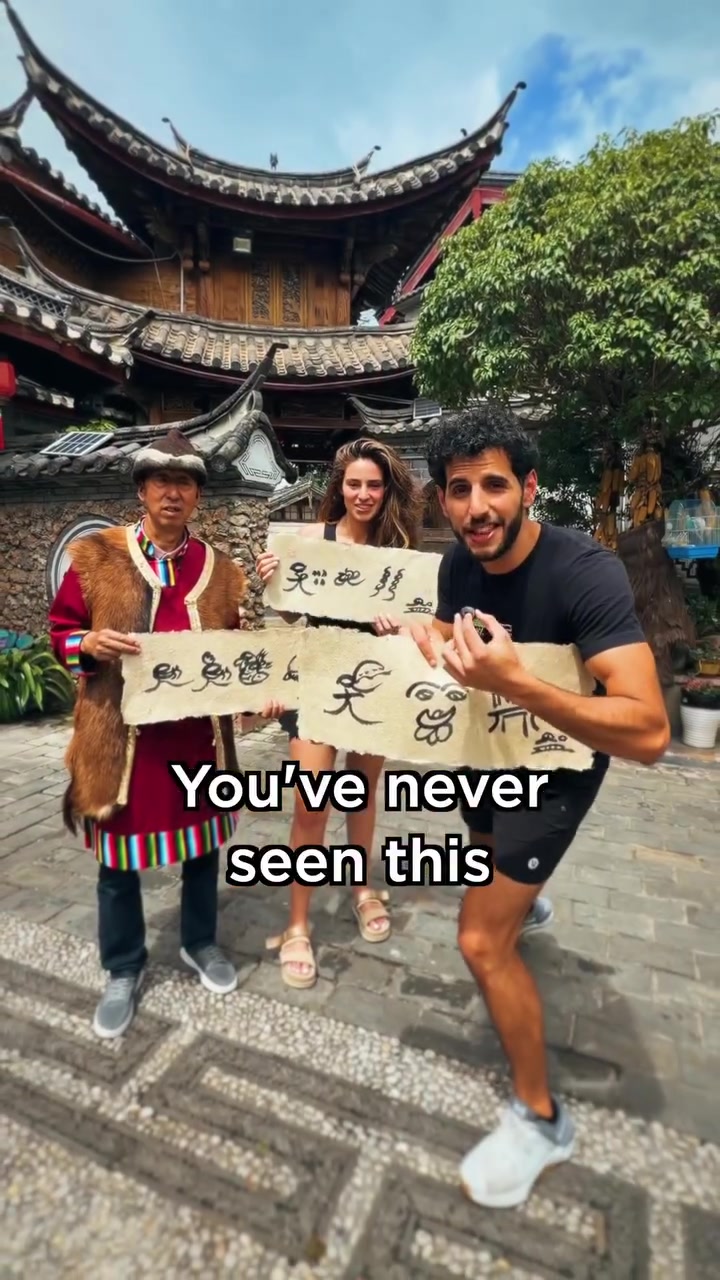
Nüshu is a unique written language developed in the Jiangyong County of China. This is the visual language with pictures that are used as words. The symbols were initially created by women for women to exchange stories and emotions. The Nüshu script operates with a limited range of characters which makes them easily understandable. This is not a form of art as most people may assume. It is a language that women in China used for expressing themselves. Scholars believe that the language was developed by women in the Qing Dynasty to communicate with one another. This language was written vertically, unlike Mandarin. The script does not cater to the everyday use of written language, it is used for poetic, personal, and secretive messages. Nüshu has two different scripts which have a modern and an ancient script. Modern scripts are used for formal communications. Ancient scripts are used for informal purposes. The modern script is easier to learn and use. It is used for conversations with family members, and their close relatives. The ancient script is used for passing down written wisdom and maintaining records. The symbols are not just represented as pictures, they are used in combination with different characters to form sentences. For example, a house symbol with two human characters denotes a happy family. Modern Nüshu in particular, could be seen as the female equivalent of Chinese Pinyin, providing a standardised way to communicate orally. The script is said to be dying, with only 300,000 people who understand it to date. The language is rarely spoken and at the same time not many women have been taught to read and speak it.
Nüshu and Beyond: Generational Wisdom Across Cultures
Nüshu cannot be attributed to a single generation or culture, as its principles are widely seen in cultures across the globe. How humans interacted or communicated has evolved over centuries, however the way they used pictures to communicate has not changed. Throughout history, various civilizations around the world have used visual symbols for communication. Take for instance, cave paintings. They act as an ancient form of pictograms. These symbols were used by humans for thousands of years. Similar symbols can be seen in the Mayan, Aztec, and Egyptian civilizations to communicate. In Nüshu, a belly with food means full while an empty belly denotes the feeling of hunger. Hieroglyphics in Egypt were used for reading and writing. These were pictures that denoted different meanings, and they could not be understood by a person who did not know the meaning of each symbol. More recently, the rapid rise of emojis in digital communication has mirrored the way Nüshu operates. Emojis give users a visual representation through which they can converse. They are used to display a variety of emotions and expressions such as joy, sadness, anger, and surprise. From using images for commercial purposes to using them in social media, visual language is one of the oldest ways to communicate and convey meaning. This language of images crosses boundaries and languages. This might be the reason why Nüshu has survived for generations.
The Language of Belonging
Nüshu is rooted in the culture of the people with whom it was developed for. Women who were underprivileged or illiterate used this language for personal or secretive purposes. Like the many other languages, dialects and scripts in the world, there is a story behind it. The stories of Nüshu are the stories of the women who lived, the language they spoke, and the emotions they shared. The meaning of Nüshu itself is a riddle. It cannot be deciphered from the script. The meaning of the word was derived from the characters used to form the language. The word ‘Nü’ means female and ‘Shu’ means writing.
How It Operates
There are many tales about Nüshu and a lot of theories. It is believed to have originated in the Liangshan Area also known as Liangshan region in the Hunan Province. This is where the Miao women lived. During those times, the society was divided between males and females. The women of the Liangshan region were not allowed to go to school. The language was used to keep these women connected and also for them to fill in for their grandchildren. There are no exact details on when and how Nüshu was developed. Some researchers, however, have proposed that the language might have begun in the late Qing Dynasty. This is based on the claim that the language was developed in a village near the Liangshan region. Women who lived in this area used to move to different parts of the region within this village to start their own families. Women who lived farther away in the village would then write Nüshu to keep in touch with their families. The practice became so widespread that it became the language of women. Researchers have found that Nüshu existed in all the villages in the Liangshan region.
The Scoop on the Symbols
The symbols in Nüshu are shapes and forms that represent daily living, natural elements, and emotions. The language is made up of 730 characters. When these characters are used together, they form sentences and stories. They are also known as ‘Female Pictograms’. Traditional Nüshu script is difficult to master. It takes years of learning and practice to fully understand it. The language is made up of complex symbols that are a combination of different characters. It is not easy to learn the symbols unless a person has inherited it from their immediate ancestors. In the 1950s, the Chinese government passed a law that banned all the dialects and languages that threatened the national language. Nüshu was banned. Anyone who taught or spoke this language was penalized. With the ban on Nüshu, there has been a steady decline in the number of people who speak the language. There is a need to preserve and protect this language.
How to Embrace Nüshu
Reconnect with your roots, channel your inner artist, and bring Nüshu to life. Each character is a piece of art, so let your creativity guide your strokes. To keep the tradition of Nüshu alive, one can learn this language and also teach it to the next generations. For anyone hoping to dive into this legacy, here are a few pointers to get you started:
- Start Small: Begin with the basics. Learn to recognize and write the fundamental symbols and gradually build up your vocabulary
- Visit the Village: If possible, visit the Liangshan region in China to see the origins of the language firsthand.
- Learn the Culturally Rich Activities: Activities like embroidery and writing. These are not only ways to express emotions but also a way to keep the language alive.
- Keep it Traditional: Stay true to the traditional methods of writing Nüshu. Do not take shortcuts in learning or writing the language.
- Embrace the Community: Surround yourself with people who understand and speak the language. They will help you learn the language better and they can also help preserve the language.
The Soul of a Signal
The rise of emoji use today might seem like a product of novel technology. In the age of Siri, Yell, and Alexa, however, the advent of emoji happens to be like the return of the wheel. Symbols have been at the core of human communication since time immemorial, and seeing things through a modern lens should help us appreciate this fact even more today.
Watch the Reel
Questions readers ask
What makes Nüshu unique compared to other forms of visual communication like emojis or hieroglyphics?
Nüshu is unique because it's a fully functional language used by women in China's Jiangyong County to write poems, and personal messages, unlike emojis. It’s not just a set of symbols for emotional expression, instead it's a structured language with its own grammar and syntax. Hieroglyphics, on the other hand, were used for a broader range of purposes in ancient Egyptian society, including religious texts and official documents.
How did Nüshu evolve from its ancient form to the modern script?
Nüshu evolved from an ancient script used for informal, personal communication to a modern script that's more standardized and easier to learn. The modern script is used for everyday conversations and formal communications, while the ancient script is reserved for passing down wisdom and maintaining records. This evolution reflects the language's adaptation to changing cultural needs and literacy levels.
Can anyone learn Nüshu, or is it limited to specific groups?
In theory, anyone can learn Nüshu, but historically it was developed by and for women in Jiangyong County. Today, with only about 300,000 people understanding it, learning opportunities might be limited. Efforts to preserve and teach the language could make it more accessible to a wider audience in the future.
Is there any effort to revitalize Nüshu and prevent it from dying out?
The article doesn't specify any current efforts to revitalize Nüshu, but given its cultural significance, there might be initiatives to preserve and promote it. These could include educational programs, cultural events, and digital resources to teach the language to new generations and keep it from disappearing completely.
How does Nüshu compare to other pictorial languages or scripts like hieroglyphics?
Nüshu and hieroglyphics both use visual symbols to convey meaning, but they evolved in different cultural contexts. Hieroglyphics were used in ancient Egypt for a wide range of purposes, including religious texts and official documents, while Nüshu was specifically developed by women in China for personal and poetic communication. Hieroglyphics are more complex and were used for a broader range of purposes, while Nüshu is more focused on personal expression and poetry.
What are some examples of how Nüshu symbols are used to form sentences?
Nüshu symbols can be combined with different characters to form sentences. For example, a house symbol with two human characters denotes a happy family. This combination of symbols and characters allows for a range of expressions, making Nüshu a versatile and nuanced language despite its limited character set.
Recent articles
Fresh deep dives from the latest Reels we unpacked.



Comments
Be the first to comment.